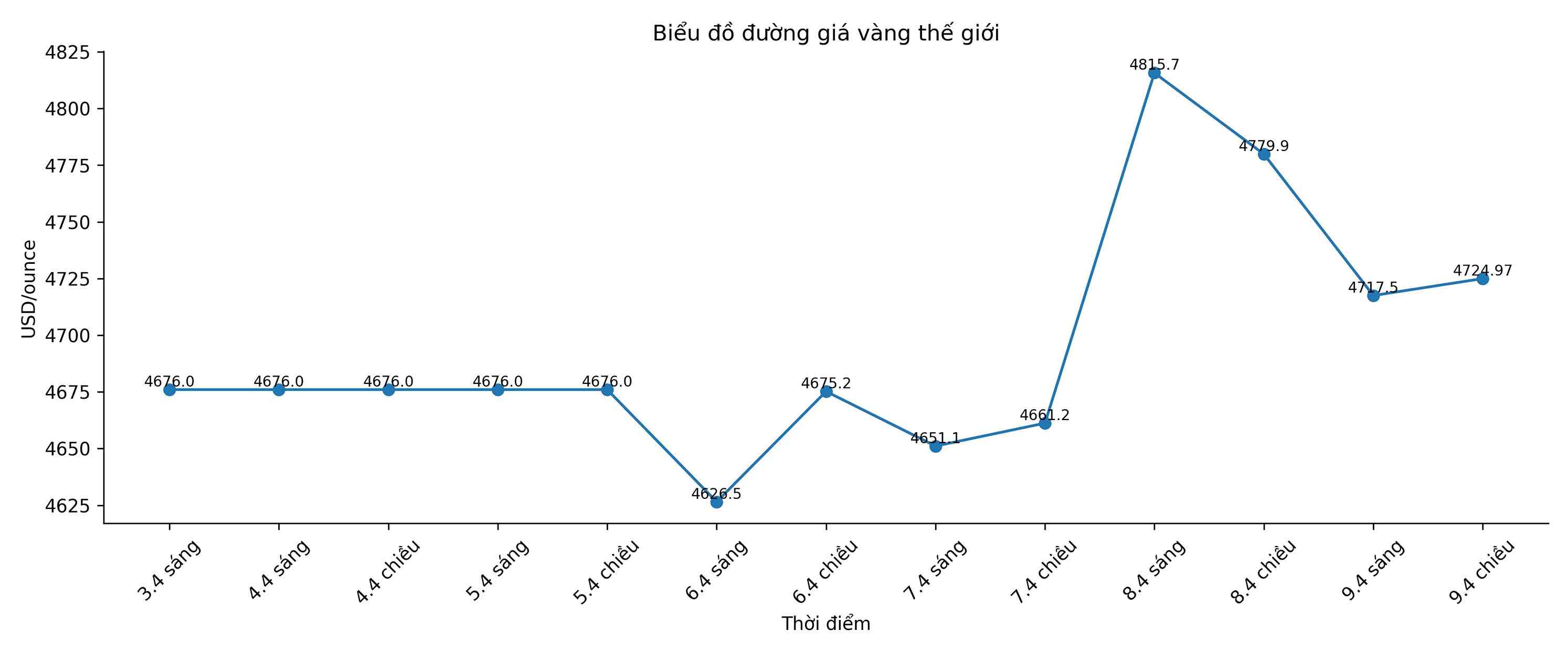
Gold prices went sideways after two consecutive rising sessions as investors consider the prospect of achieving a diplomatic solution to the Iranian conflict, amid sporadic fighting that still risks breaking the fragile ceasefire.
The precious metal fluctuates around 4,715 USD per ounce, after increasing by 1.5% in the previous two sessions. The White House said the US will conduct direct talks with Iran, while Tehran accused Israel's attacks in Lebanon of violating the recently reached ceasefire agreement and continuing attacks targeting Gulf countries. The Strait of Hormuz is largely blockaded even though Iran has made a commitment to ensure safe circulation.
Oil prices recovered after recording their sharpest one-day drop since April 2020, while stock markets rose and the USD weakened on Wednesday, thereby supporting gold prices – assets valued in greenbacks. Since the conflict began nearly six weeks ago, gold prices have tended to fluctuate in the same direction as stocks, as traditional safe-haven roles have weakened as investors have to sell assets to offset losses in other channels.
Entering its sixth week, the war has pushed energy prices up sharply and increased inflation risks, making the possibility of central banks delaying interest rate cuts or even raising interest rates higher. This is detrimental to gold, as the precious metal does not yield and often benefits when borrowing costs are low.
In the opposite direction, a prolonged conflict could also weaken economic growth, affecting the labor market and creating a basis for interest rate cuts. Minutes of the monetary policy meeting in mid-March of the US Federal Reserve show that policymakers are balancing between these two opposite scenarios for the economy.
As of 3 pm Vietnam time, spot gold prices fell slightly by 0.56% to 4,724.97 USD per ounce. Silver prices fell 0.3% to 73.83 USD per ounce. The index measuring the strength of the USD fell 0.8% in the previous session.