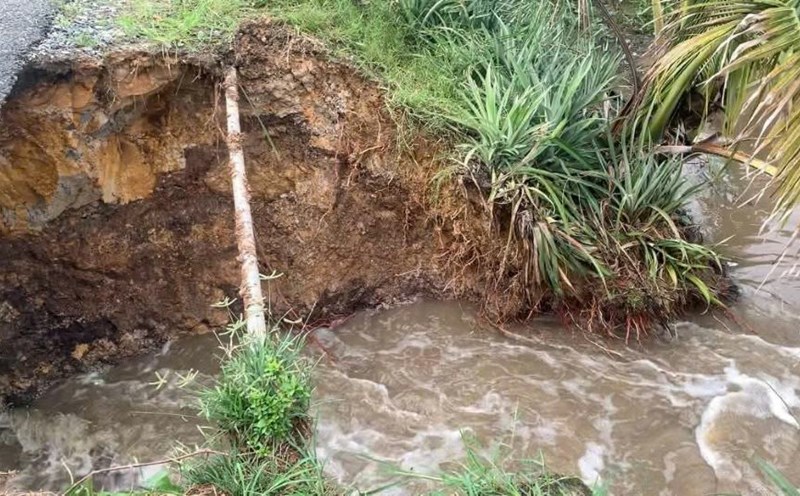
Along Mac Dinh Chi street, from the center of old Soc Trang city to the Tran De area (now Tran De commune, Can Tho city), rice fields are ripe, brilliantly yellow in a coastal area. In Tran De commune, more than 15km from the sea gate, farmers are busy bringing harvesters to the fields; fields further away are also "red-tailed", ready to harvest completely before the 2026 Lunar New Year.
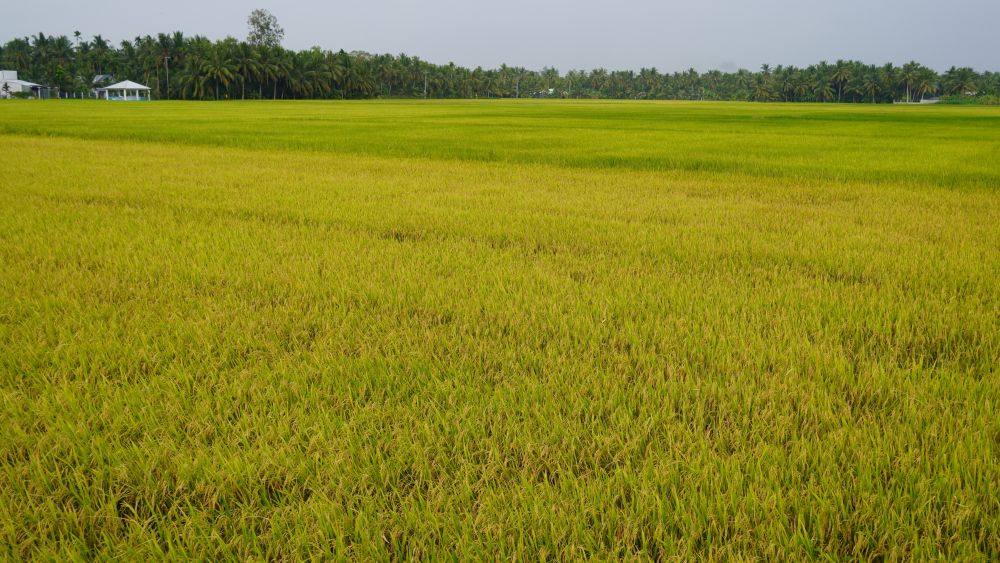
Just finished harvesting the Winter-Spring rice crop, Mr. Lam Xia, a farmer in Tran De commune, said that his family cultivates about 1.5 hectares, with a yield of about 650 kg/crop of OM18 rice purchased by traders at a price of 6,000 VND/kg.
According to Mr. Xia, although it is a coastal area, thanks to proactive water sources, farmers sow early, so the rice is harvested completely before salty water appears. "Do it early to harvest early to be sure. After this crop is finished, let the soil rest, no more cultivation, wait for rain to fall before redoing," he said.
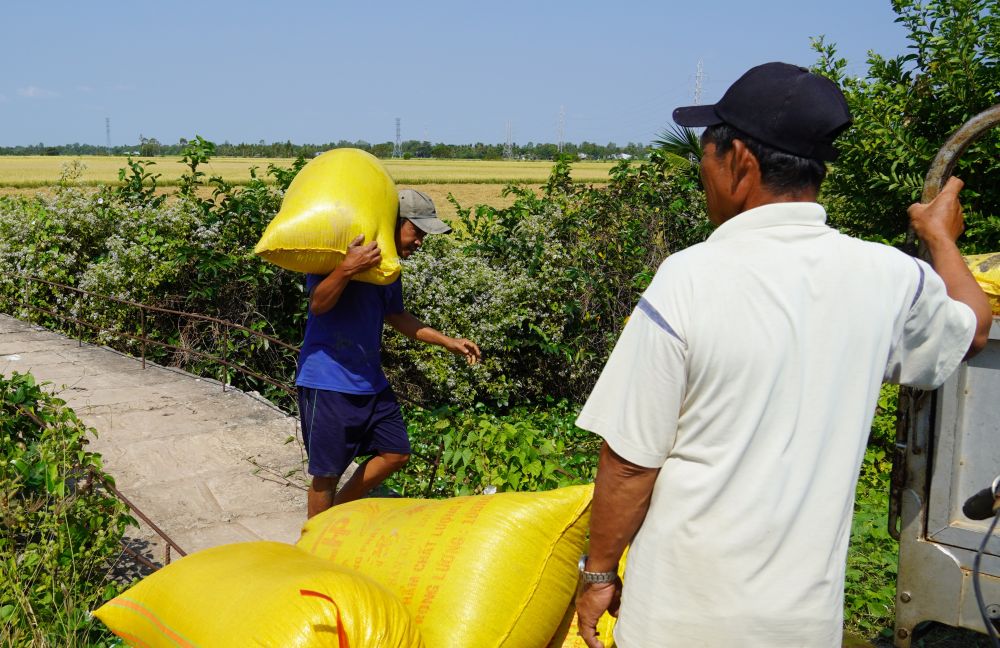
In Tai Van commune, Mr. Lieu On has also just completed harvesting 1.4 hectares of Dai Thom Thai rice seedlings, with a yield of 800 kg/cong, sold at a price of 6,500 VND/kg, with a profit of over 2.5 million VND/cong. According to Mr. On, for many years, his family has always proactively sown early to harvest in time before Tet. "Working early to have money to prepare for Tet, and also avoid drought and salinity at the end of the season. That is the experience learned after many years of rice farming in this area," he shared.
Not only in the coastal area, in the internal field area of Tai Van commune, Mr. Tan Khang, who cultivates 13 hectares of ST25 rice seedlings, is also urgently pumping water out, preparing for harvest in the next 15-20 days. "When harvesting is finished, we stop, we don't continue because the dry season is coming, the risk of water shortage and saltwater intrusion is very high," Mr. Khang said.
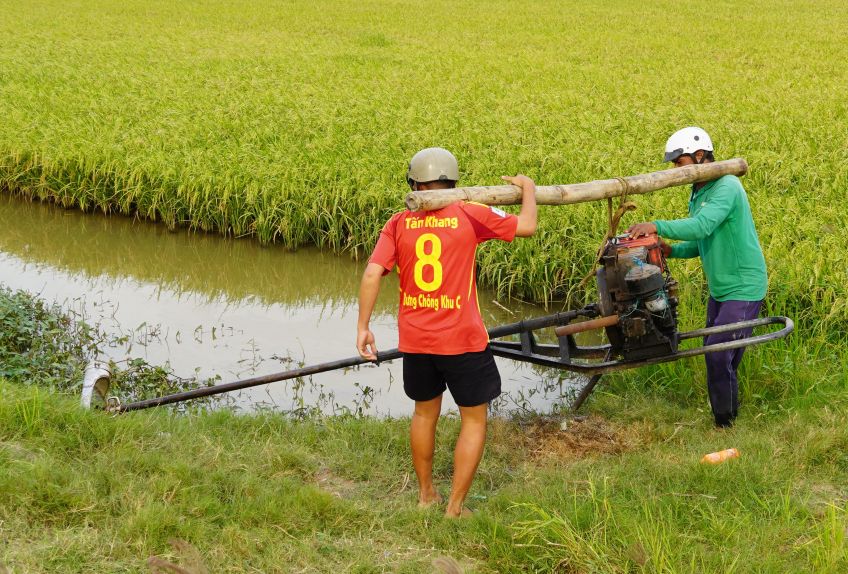
According to local people, Tran De district, former Soc Trang province is a coastal area, located in open irrigation areas, often affected by saltwater intrusion and shortage of fresh water in the dry season. From the actual production, farmers have changed farming habits, proactively sowing early, and choosing suitable varieties to ensure harvesting before saltwater intrudes deep into the fields.
Mr. Thach Thang, a farmer in Tai Van commune, said that this year's Winter-Spring crop, his family chose ST25 variety because it has few pests and diseases, high resistance and good economic value. "Short-term seeds are harvested before Tet; long-term seeds are harvested after Tet for about 10-15 days before entering the peak of drought and saltwater intrusion. Thanks to strictly complying with the crop schedule, for nearly 10 years, his family's rice area has not been damaged due to lack of water or saltwater intrusion," Mr. Thang said.
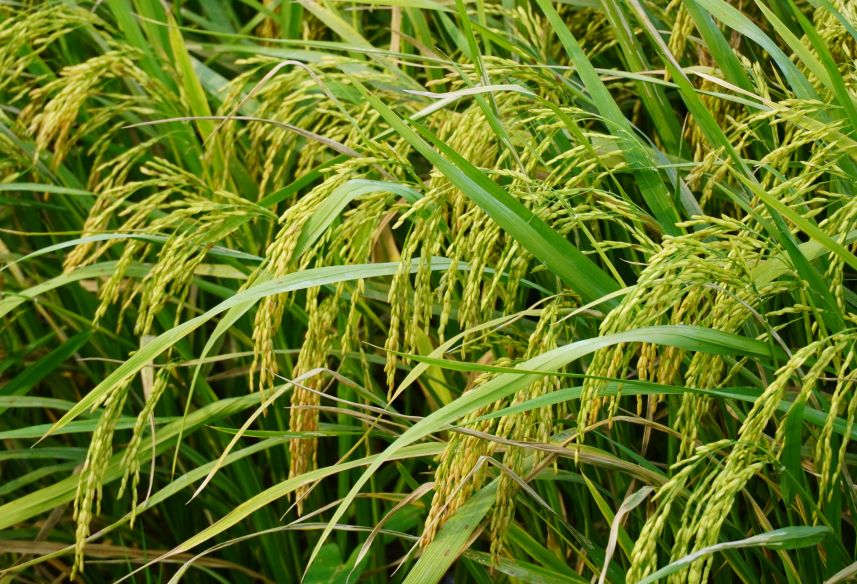
Along with the proactiveness of farmers, the work of forecasting saltwater intrusion, operating saltwater drainage culverts and propagating crop schedules is regularly implemented by the local agricultural sector, helping people firmly grasp information, proactively store water and sow at the right time. High-quality rice varieties such as ST, OM18, OM5451, Dai Thom continue to be widely produced because they are well adapted, have few pests and diseases and bring high economic efficiency.
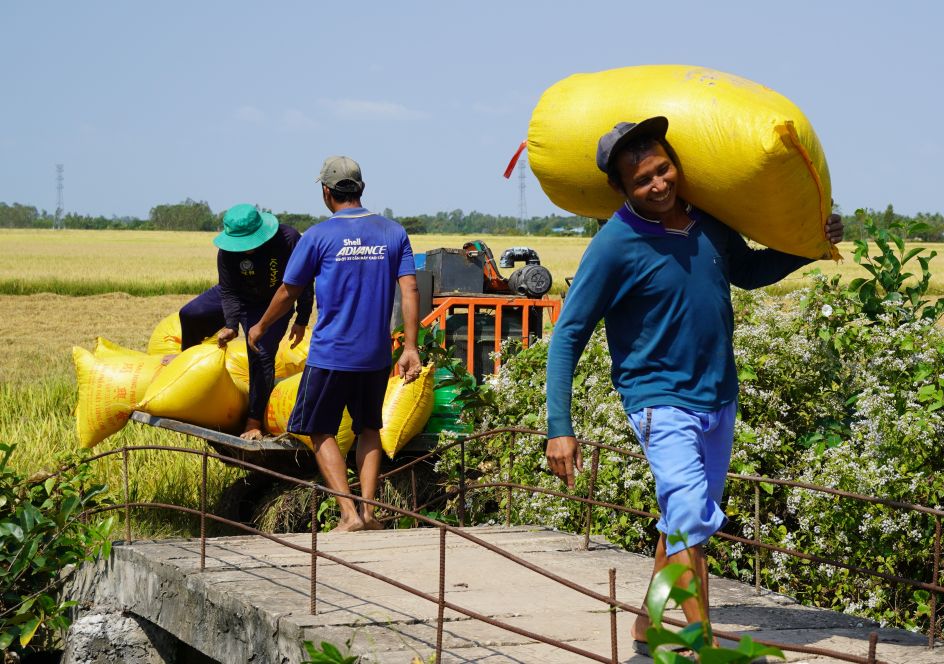
Proactively ending the early Winter-Spring rice crop early, no longer being enthusiastic about the late Winter-Spring crop is the flexible adaptation of coastal rice farmers today. Many farmers said that after the end of the Winter-Spring crop, they will let the land rest until about May, when the fresh water source is stable, to replant. According to people, continuing production during the dry season peak poses a very high risk of water shortage, easily leading to damage.
Rice farming now does not just look at the sky, but must calculate water, calculate salinity. It is better to let the soil rest, wait for rain to fall, fresh water is abundant, and then according to the agricultural schedule, sow for sure," Mr. Lieu On shared.