
Famous betel village
Betel grown in Van Son village has a very characteristic spicy aroma, you can recognize it right after eating it, and cannot be confused with betel from other regions.
According to local people, this difference comes from the soil and climate of the coastal land of Thach Khe. The sandy soil is light, retains moisture well but is not waterlogged, winter is not too cold, summer is not too dry, creating conditions for betel trees to develop stably and maintain their own flavor.
For the same betel variety, if taken to another place to plant, the leaves will fade, the spicy taste will be significantly reduced, and there will be no more faint cinnamon scent. Therefore, betel in Van Son village has long been considered a "betel that suits the soil" only here, which is very difficult to replicate elsewhere.
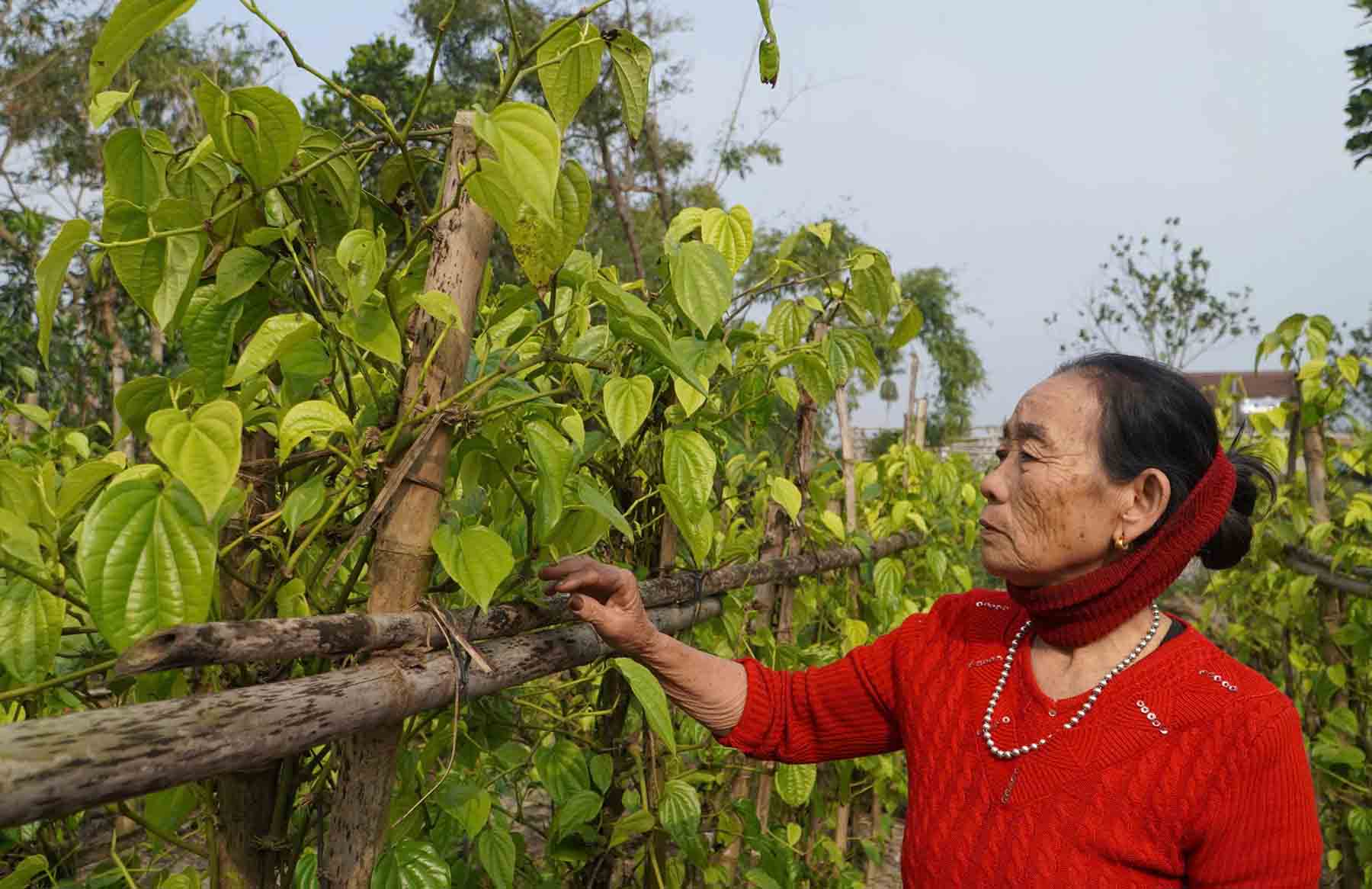
Ms. Nguyen Thi Lieu (born 1953, residing in Van Son village) said that her family has been growing betel trees since her ancestors, through grandparents and parents. "I was born with betel trees in the garden. Previously, almost every house in the village had betel trellises. Betel is the main source of livelihood for many families," Ms. Lieu said.
At one point, Ms. Lieu's betel garden had nearly 200 trees, harvested all year round. Especially during Tet, betel trees sell very well, each crop bringing in about 9-10 million VND. Betel trees are picked in batches, each batch of 50 leaves, requiring even, dark green leaves, no tears, no spots.
Thanks to its special quality, Van Son betel was once chosen as a precious product to offer during important ceremonies. Since then, the name "king-offering betel" has been passed down among the people, showing the people's respect for this endemic betel variety.
However, this Tet season, many betel gardens in the village cannot harvest. After storm No. 10, betel was infected with fungus on a large scale. Worryingly, Van Son betel variety, once infected with disease, is very difficult to save, and pathogens easily survive in the soil, forcing people to wait several years to replant.
The biggest worry is not only crop failure, but also seed loss. When the whole village's betel is infected with disease, it is very difficult to find healthy betel varieties," Ms. Lieu shared.
Keeping the profession amidst many challenges
Among many betel gardens damaged, the betel garden of Mr. Nguyen Ba Bay's family (born 1950, residing in Van Son village) is still maintained. Attached to betel growing since 2015, his family currently has about 130 betel trees.
According to Mr. Bay, betel is a "difficult" plant, requiring growers to take very careful care of it. Winter must keep warm, summer must be shady, do not let it get watery but also do not let it dry. The most important thing is to regularly check to detect fungal diseases early, because just a small mistake can spread germs very quickly.
Betel is fertilized three times a year in February, July and October, mainly with cow manure to make the leaves thicker, greener and retain its aroma. Thanks to proper technical care, after the storm, Mr. Bay's family's betel garden still yields regular harvests.
Currently, I harvest about 40 to 50 betel leaves per day, traders come to the garden to buy, earning about 500 thousand VND," Mr. Bay said.
Due to many betel gardens losing crops, betel prices this year have increased by about 250 VND/session and are expected to increase further during the Tet holiday.
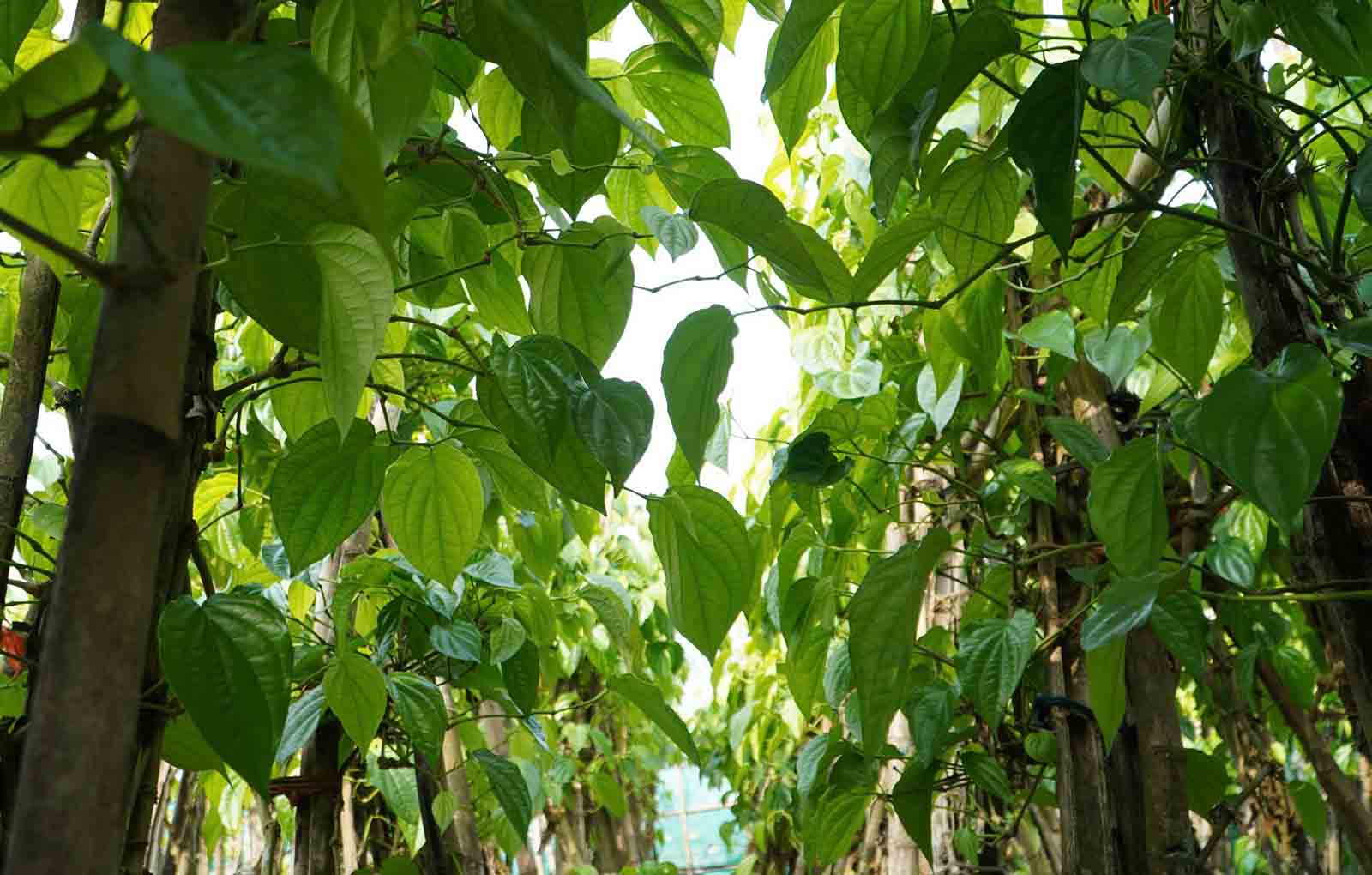
Not only is it a livelihood, betel trees are also deeply associated with the cultural life of Van Son people. In weddings, death anniversaries, Tet holidays, betel is indispensable. However, currently the number of betel growing households has gradually decreased. Betel growing requires large investment capital, high risks, while many young workers leave their hometowns to work far away, few people continue the traditional craft.
Mr. Tran Quang Hung - Chairman of Thach Khe Commune People's Committee - said that the whole commune currently has more than 300 betel-growing households, mainly concentrated in Van Son, Bac Hai and Nam Hai villages.
The locality is researching to build Van Son royal betel village into a tourist destination, combining traditional agricultural production with cultural experiences, in order to preserve craft villages and create sustainable livelihoods for people.


