
Busy since the beginning of December
In the days leading up to Tet, the skillful hands of Ms. Le Thi Nguyet (68 years old, An Giang province) are rushing to weave each strand of Indian almond grass, weaving a new mattress to deliver to customers.
Ms. Nguyet confided: "In my hometown, people mainly use mattresses for sleeping or drying rice. Normally, it's casual, but during Tet season, customers order in time. Everyone likes to use new things during Tet, so from the beginning of December, people have started ordering.
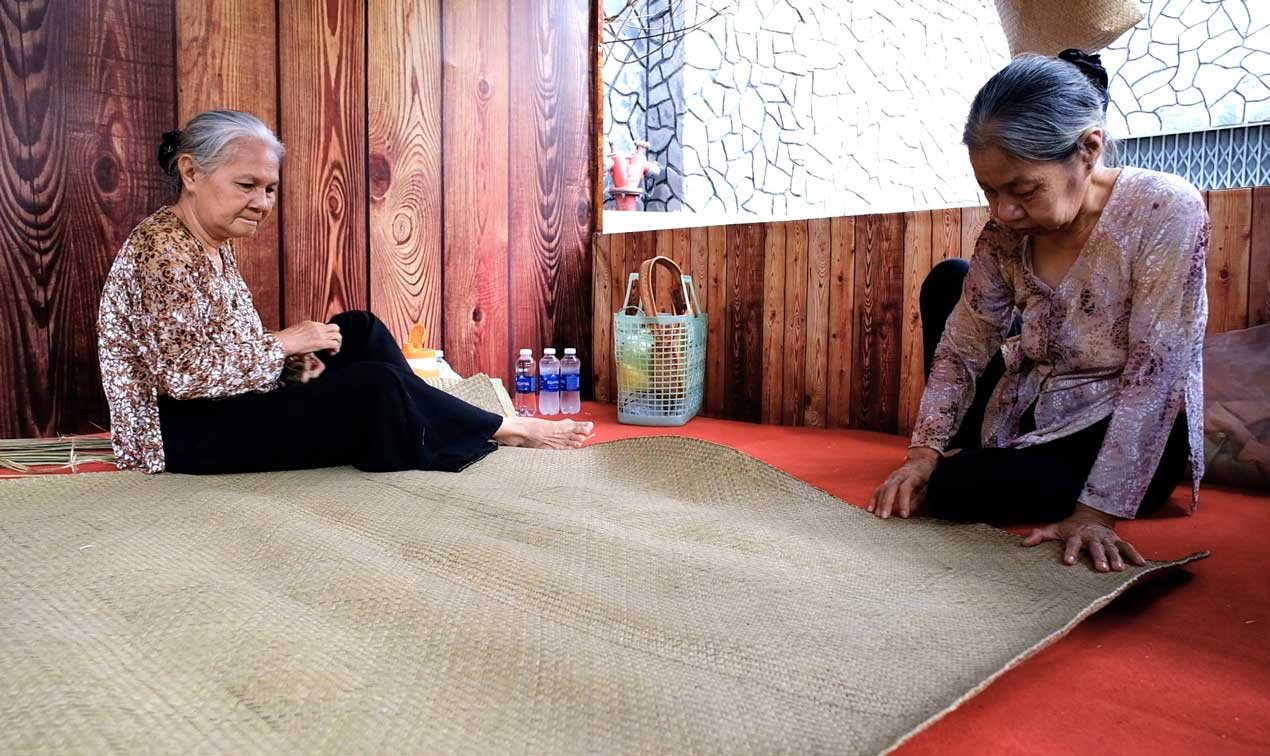
According to Ms. Nguyet, to make a 1.6m x 2m mattress, it takes 3-4 days of hard work. The stage is also very elaborate, the acacia grass bought must be dried and pressed twice until it is soft enough to be able to be knitted. The price of each mattress ranges from 250,000 - 500,000 VND, depending on the size, bringing a valuable income for the elderly in rural areas at the end of the year.
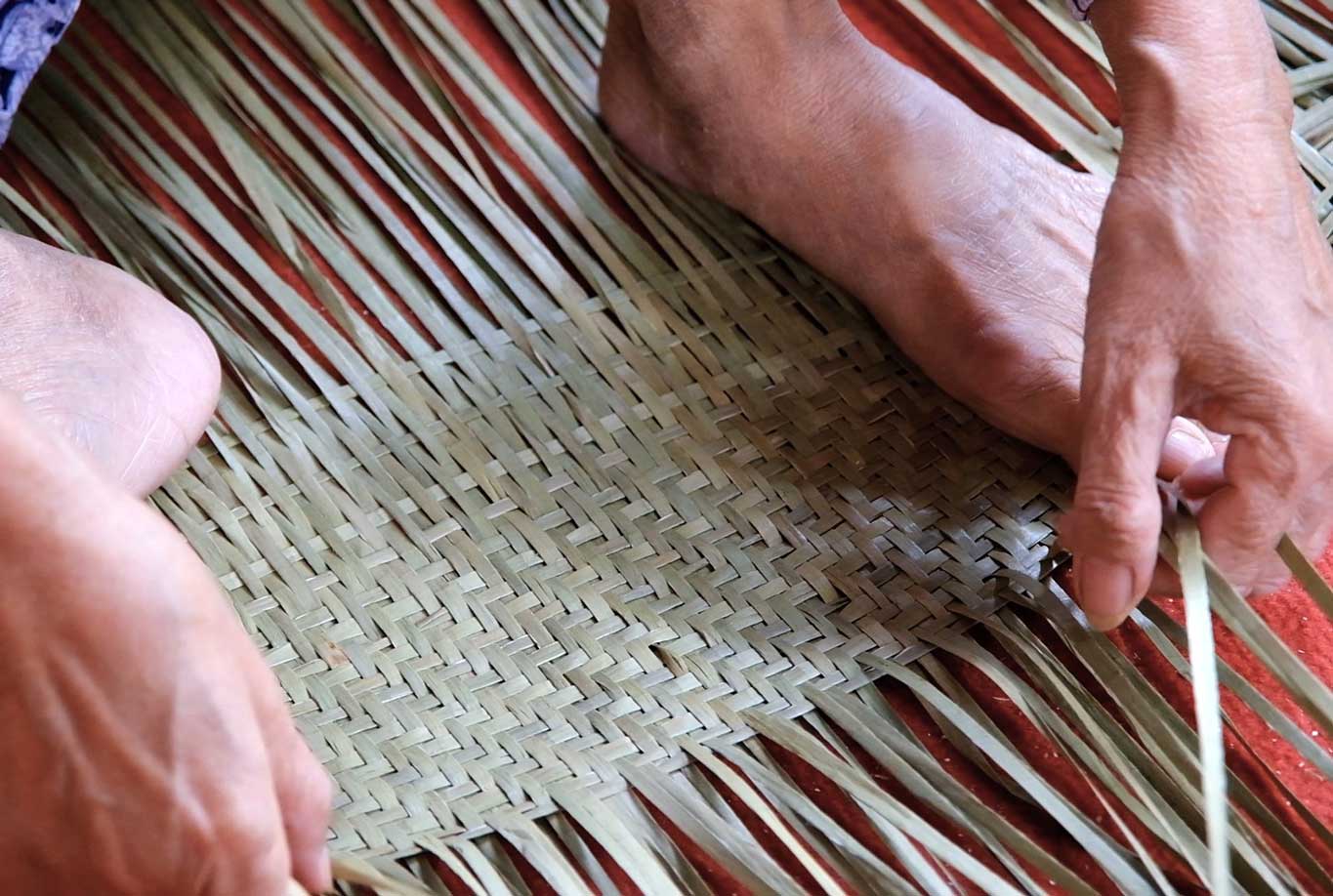
Having been attached to Indian almond trees for more than 40 years, Mrs. Nguyen Thi Lai's (64 years old, An Giang province) hands seem to have imprinted the calluses of the profession. For her, knitting is not only a livelihood but also a family memory. "She passed it on to her mother, her mother passed it on to us. This job has been done for more than 40 years, now it's sad to quit, I can't stand it anymore," Mrs. Lai confided.
Ms. Lai recalled that in the old days, the acacia mattress was an indispensable item in every Mekong Delta family, from being used for sleeping, drying rice to spreading it on death anniversaries. But now, modern mats are gradually taking the upper hand, making acacia mattresses no longer as popular as before, but every spring, people still find and buy grass mattresses as a way to preserve the traditional flavor.
The joy of tireless hands
Although they are old and their health is no longer as good as in their youth, Mrs. Lai and Mrs. Nguyet still take advantage of weaving from morning to afternoon, only taking a little rest at noon to deliver Tet goods in time. For them, Tet season is not only a busy season but also a season of joy.
When people order a lot, I am very happy, because I have extra income for Tet. And if there are fewer customers, I work as a wholesaler for the warehouse," Ms. Nguyet said.
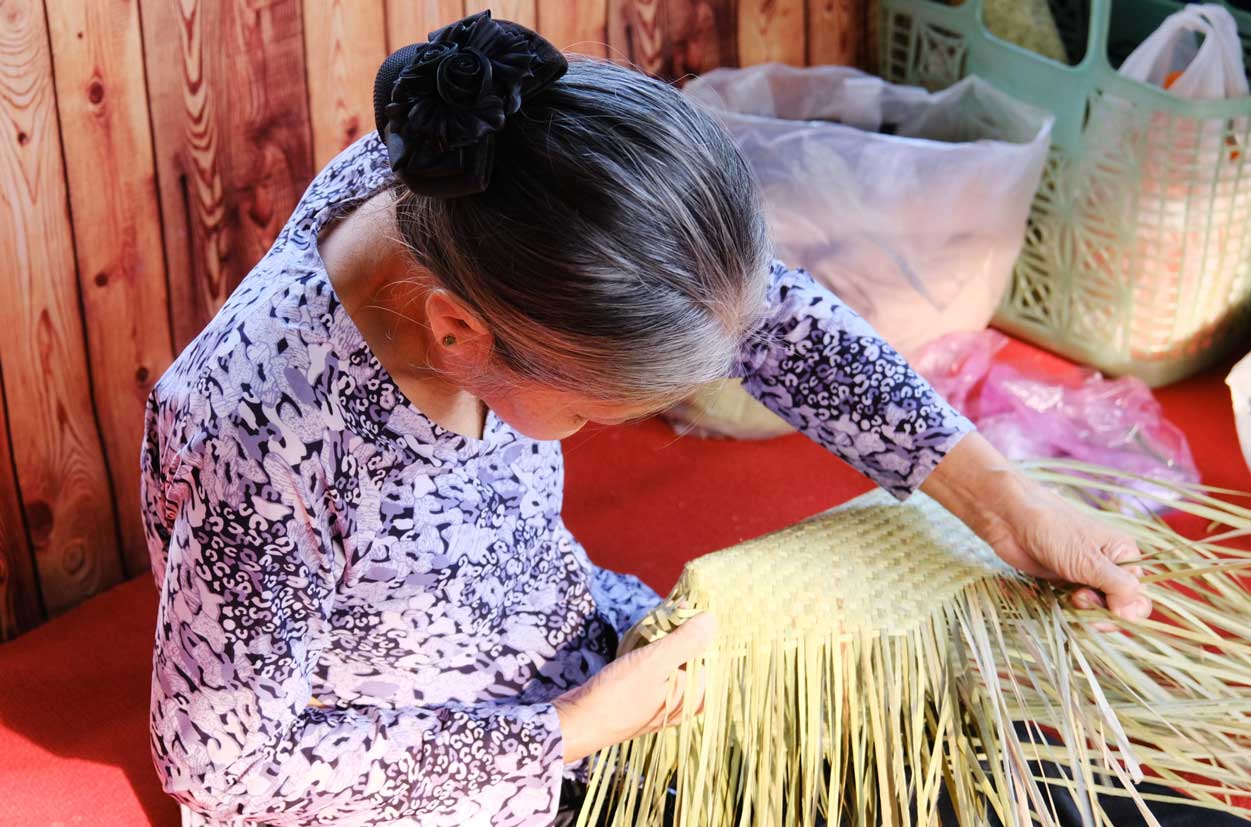
Although concerned that few young people today are still interested in the profession of continuing the profession, women like Mrs. Nguyet and Mrs. Lai still affirm: "As long as I have health, I will still work, both to have income and to relieve homesickness about the profession.
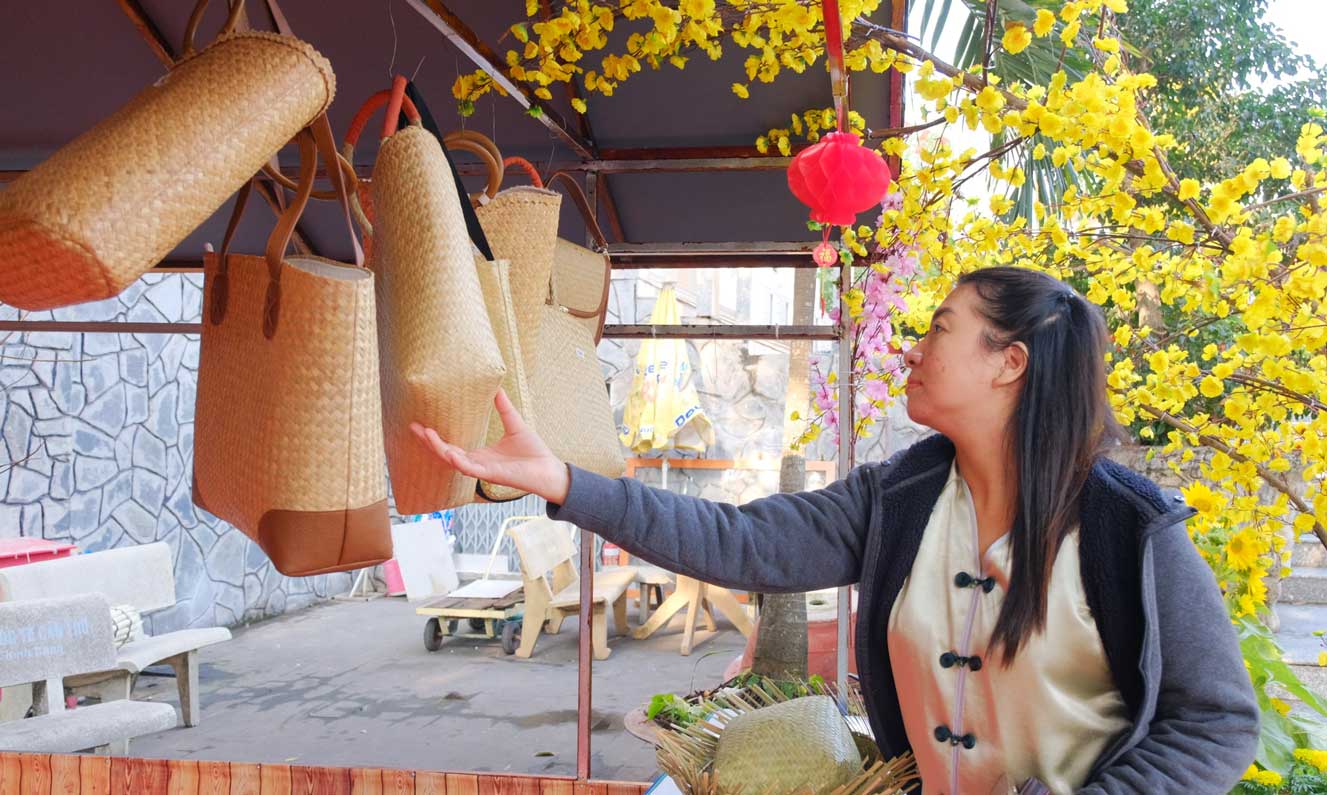
To adapt to the modern pace of life, Ms. Lai and many others have learned how to "renovate" traditional crafts: "Now we not only weave mattresses but also weave handbags. Tourists really like baskets made of Indian almond grass. I also cooperate with people in the neighborhood to sew leather into baskets, making them modern. The combination of tradition and modernity makes products easier to sell," Ms. Nguyet shared.


