
Over the past time, many cases related to counterfeit goods and goods infringing intellectual property rights have been continuously detected by functional forces, showing that the situation of violations is still complicated.
Reporters' records at some fashion wholesale markets in Hanoi show that after the peak inspection period, many stores have closed or restricted operations. Roll doors have been closed, and there is no longer a scene of customers coming in and out to buy and sell as before.

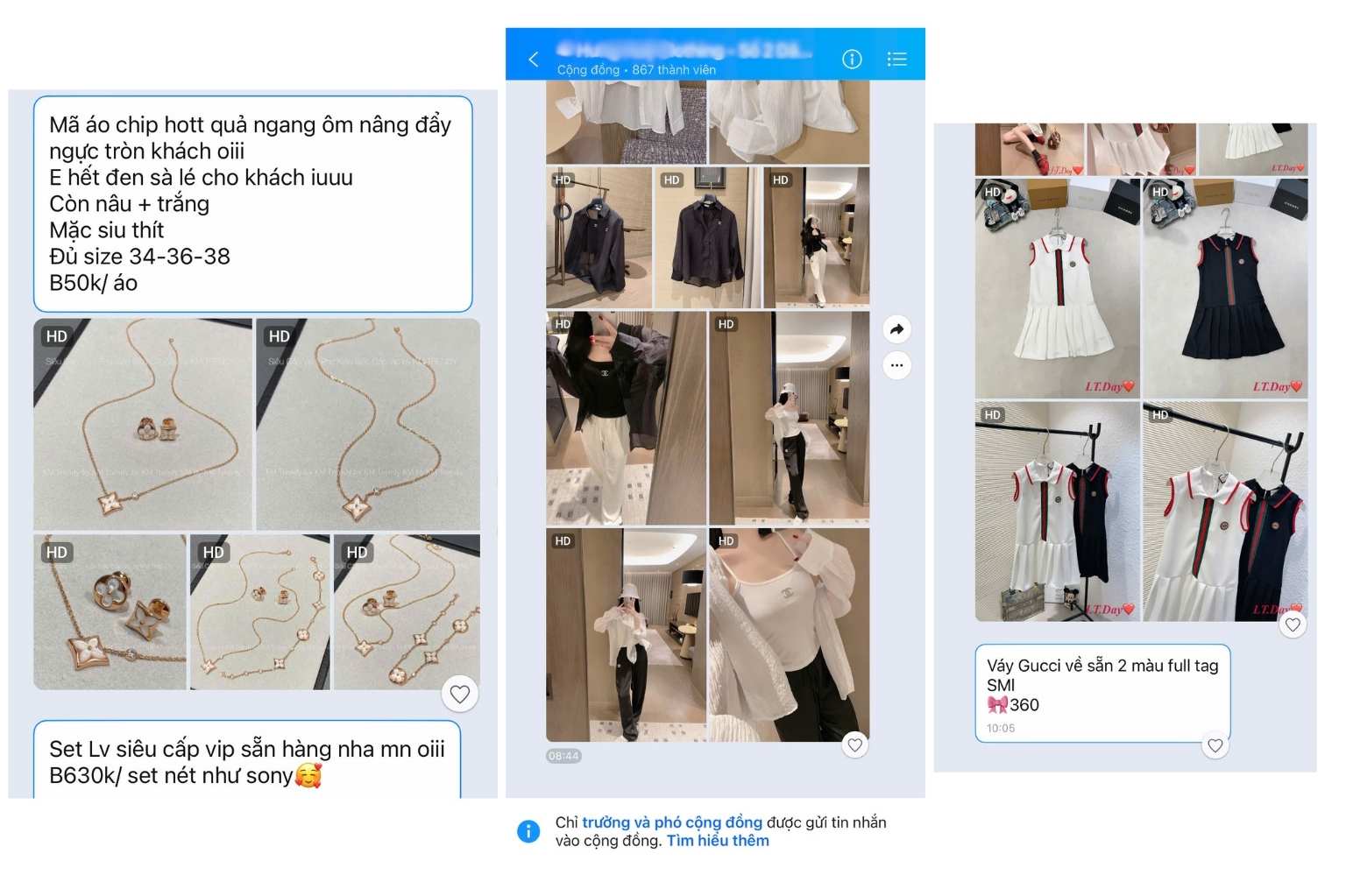
A person who regularly takes goods at wholesale markets said that many familiar wholesalers no longer trade directly. Instead, the exchange mainly takes place through Zalo or Facebook groups for regular customers.
According to this person, in the group, sellers continuously post images of each item of clothing, shoes, and handbags with product codes and selling prices. Customers in need only need to take a screenshot of the product and send it back to the seller to confirm the order.
Now many outlets do not open for sale as before. They only accept regular customers. Customers who take large quantities will be given a private delivery location, not transacting right at the store," this person shared.
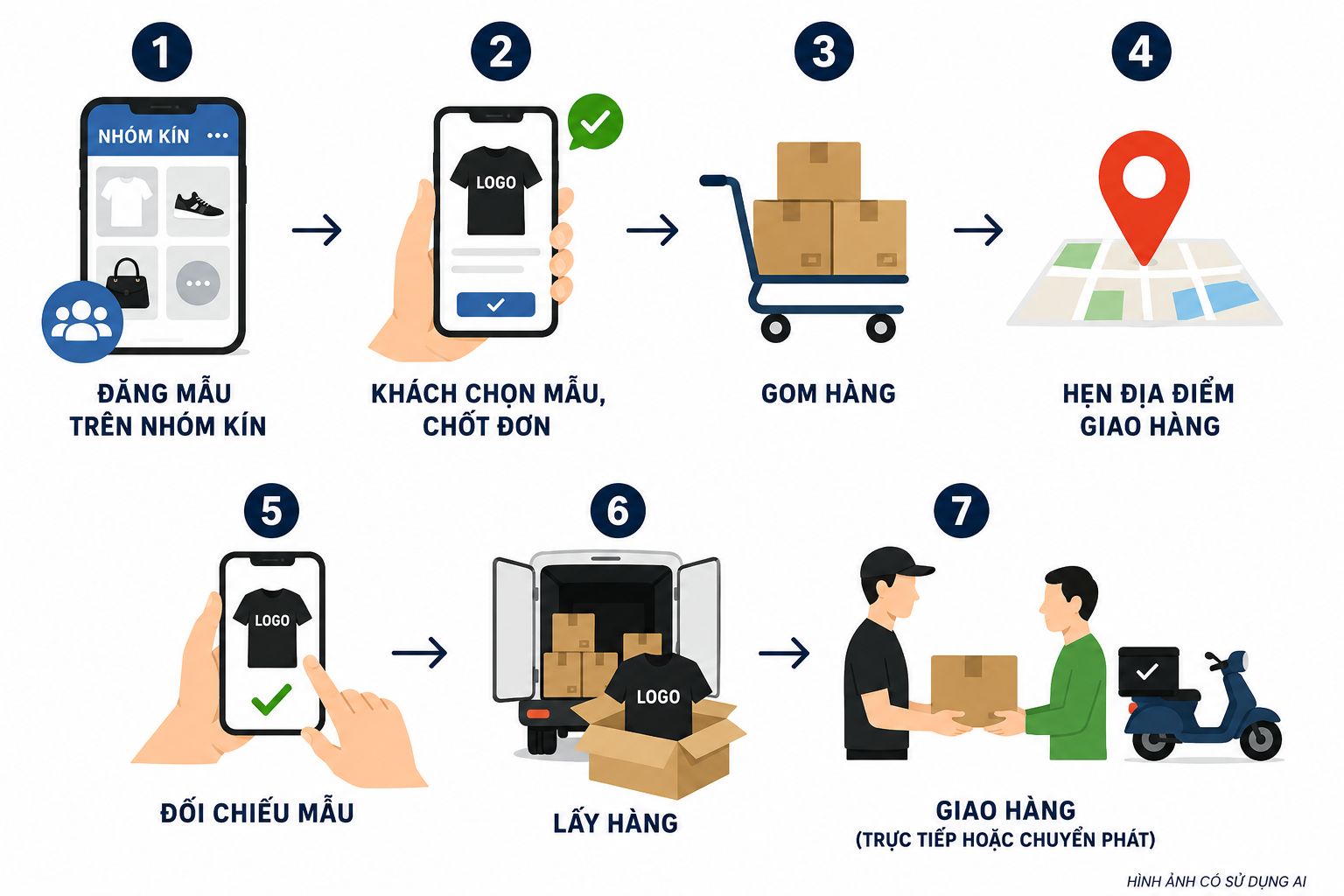
Changing the way of receiving and delivering goods to "avoid" inspection
Reporters followed the person taking the goods to the transaction point of the VÍC store at 37 White House row (Ninh Hiep market, Hanoi), at the time of recording, the rolling door of the store was closed, there was no buying and selling activity inside. Instead of transacting at the store, the delivery and receipt of goods took place on a truck parked in front.
When they arrived, customers opened the product image that had been pre-set up on the phone for the staff to compare the code. After checking, the staff opened the cartons containing goods to get the correct product ordered.
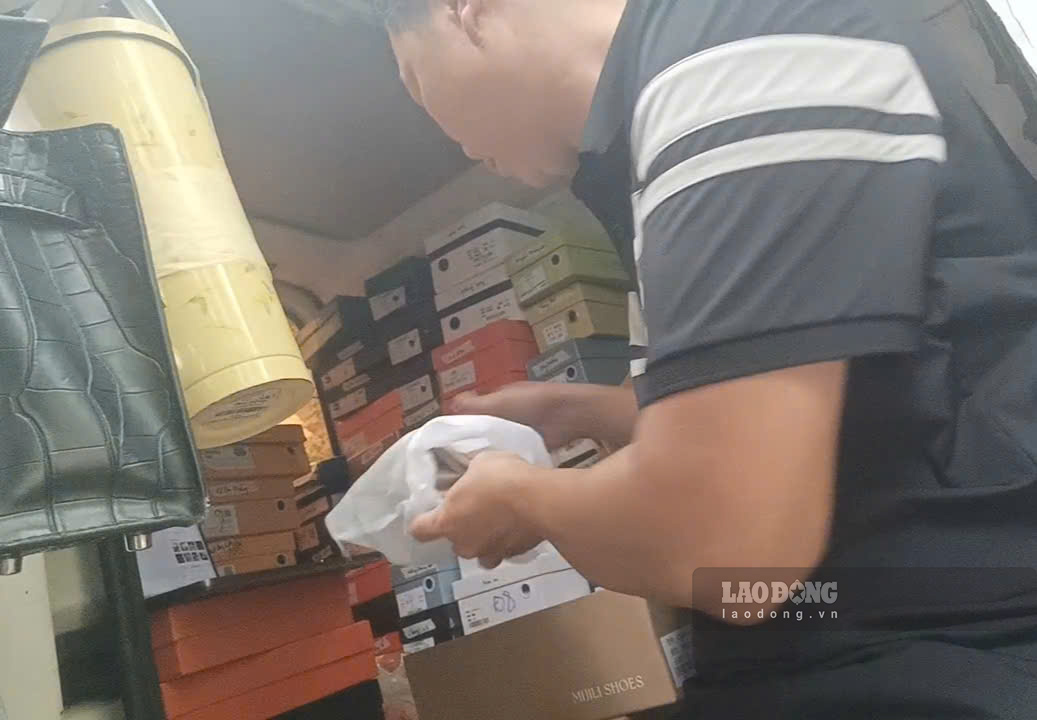
According to the reporter's observation, in the truck there are many cartons containing clothes, shoes and handbags with the names and logos of famous fashion brands. Goods are not displayed publicly but only taken out when customers come to receive them.
During the exchange, sellers introduce many products with names and logos of international fashion brands with prices ranging from only a few hundred thousand VND to more than 1 million VND.
A Gucci brand sandal is quoted at about 350,000 VND, while on the brand's official website, this model is priced at about 500 USD (about more than 13 million VND). In particular, according to observations, there are also products with Louis Vuitton logos quoted at about 500,000 - 700,000 VND, while on the official website they are no longer sold because these are limited editions or special collections of the brand.
When asked why the selling price is much lower than genuine goods, the seller said: "The genuine goods do not have this price. These are super-class goods, almost identical to genuine goods. The more quantity you take, the cheaper the price".
The seller also instructed reporters to join the Zalo group to see more samples. Customers will choose products, send back the code or screenshot to finalize the order. According to the seller, these transactions are carried out in the form of "gathering goods", that is, gathering many pre-orders and then proceeding to deliver or send goods. For customers in provinces, after completing the "gathering", goods will be packaged and transferred to the shipping unit.
The group has full images and prices for each model. Customers choose first, when they arrive, just open the confirmed photo and I will get the correct product code," the seller said.
According to this person, more frequent inspections in recent times have caused many business households to change their sales methods. Instead of displaying and transacting publicly, product introduction, order closing and delivery appointments are all carried out through online platforms or closed groups.
Reality records show that after the peak inspection period, some business establishments have switched from direct sales to transactions through social networks and only deliver goods after customers confirm the product in advance.
This also poses requirements for functional forces in detecting, collecting evidence and handling acts of intellectual property rights infringement when trading activities are increasingly shifting to the online environment and non-public transaction forms.
Changing transaction methods does not mean escaping responsibility
Talking to Lao Dong newspaper on the morning of July 14, lawyer Luong Huy Ha - Director of Lawkey Law Firm, Hanoi Bar Association, said that the fact that subjects change transaction methods does not change the nature of the violation if functional agencies have sufficient grounds to determine that it is an act of producing and trading counterfeit goods or counterfeit goods for goods labels and packaging.
According to lawyer Ha, the Law on Intellectual Property and Decree No. 98/2020/ND-CP have clearly stipulated sanctions for the act of trading in counterfeit goods with goods labels and packaging of famous brands. Depending on the nature and severity of the violation, violators may be administratively sanctioned or prosecuted for criminal liability.
For administrative handling, the fine for individuals may be up to 50 million VND, in case of violating organizations, it may be doubled. In addition to fines, functional agencies can also apply measures such as confiscating exhibits, means of violating, revoking the right to use licenses or professional certificates according to the provisions of law.
Lawyer Luong Huy Ha said that in cases where sufficient elements constitute a crime, the violator may also be prosecuted for criminal liability according to the provisions of the Penal Code on the crime of producing and trading in counterfeit goods. Depending on the act and type of goods, the violating individual may face a prison sentence of up to 20 years or life imprisonment, while commercial legal entities may be fined up to tens of billions of VND or suspended from operations according to regulations.
The lawyer also noted that the responsibility in preventing and combating counterfeit goods does not only belong to the functional forces. Consumers need to prioritize choosing goods with clear origins and origins, and at the same time notify functional agencies when signs of violation are detected. In case they clearly know that the goods are counterfeit but still intentionally participate in consumption for profit, the buyer may also be considered for legal responsibility as an accomplice, depending on each specific case.


