
Vietnam in general and the Mekong Delta in particular are entering a stage of strong infrastructure investment with a series of highways, large bridges and inter-regional connection projects. These projects are gradually removing traffic bottlenecks, expanding development space and increasing connectivity with major economic centers.
However, international experience shows that infrastructure only creates opportunities. To transform opportunities into growth, localities need to build an environment strong enough to maintain
New-style cities will determine competitiveness
The expansion of administrative space and strengthening regional linkages are creating a new shift for many localities in the Mekong Delta. After the merger, Vinh Long has an area of more than 6,296 km2, a population of over 4.25 million people and sets a target of GRDP growth of about 10% per year by 2030.
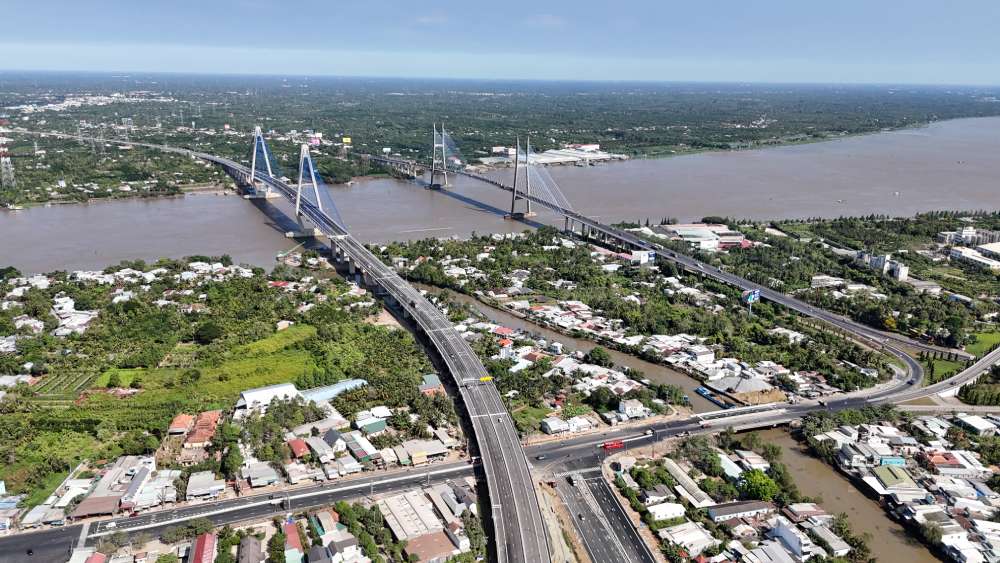
Although the development potential is large, scale does not mean competitiveness. According to experts, as infrastructure becomes more and more complete, the decisive factor is the ability to form modern cities that are attractive enough to attract businesses, experts and high-quality human resources.
Accordingly, the competition is not only in transport infrastructure but also shifting to urban quality. Modern cities not only provide housing but also must integrate workspaces, commerce, education, services and resorts. When these functions operate synchronously, cities will become a driving force for economic development instead of just real estate products.
From project development to creating new growth poles
On T&T's investment map in the Mekong Delta and the gateway area, businesses do not develop individual projects but build an ecosystem consisting of three pillars: urban areas, international standard services and commerce.
In the South of Ho Chi Minh City, T&T City Millennia, over 267 hectares wide, is planned to become an integrated megacity, connecting the Southeast region with the Mekong Delta. Besides housing, the project develops commercial, service and utility spaces. Recently, T&T Retail cooperated to develop the Little Hong Kong commercial complex right in the urban area, contributing to the formation of a new trading pole at the gateway to the Mekong Delta.
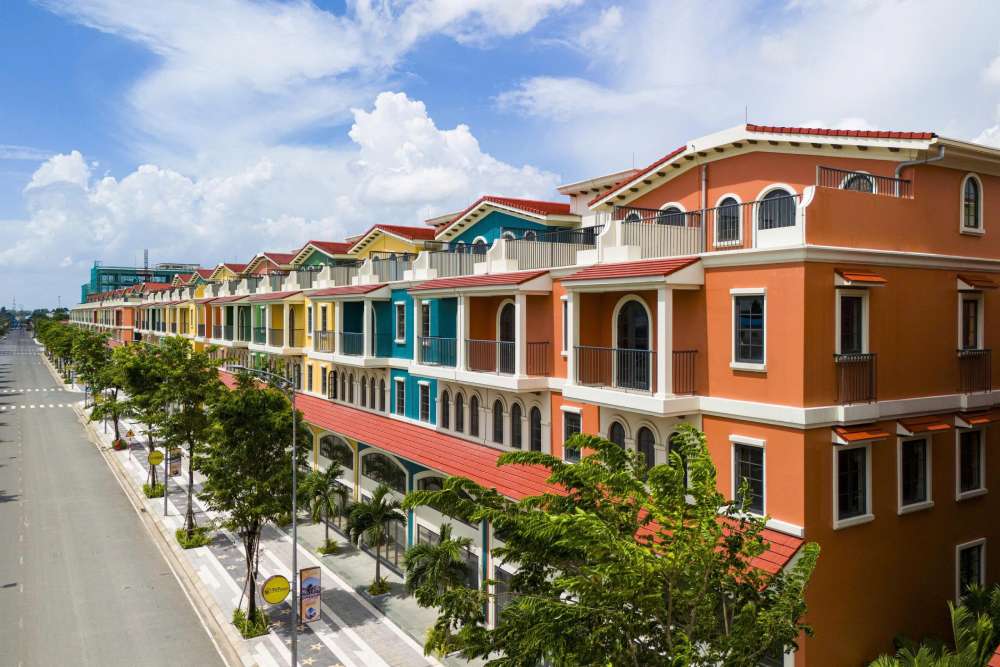
This strategy continues to be expanded into the regional center. In Vinh Long, Phuoc Tho Residential Area is developed according to an integrated urban model with Hilton Garden Inn hotel. In An Giang and Dong Thap, T&T also cooperates with Hilton to develop international branded hotels.
According to Mr. Lam Do, Development Director of Hilton Vietnam, the Mekong Delta is a strategic area that Hilton has researched for many years. When inter-regional infrastructure is invested synchronously and development orientations are increasingly clear, the region has met the conditions to attract a new wave of investment in the hotel and service sector.
A common point in T&T's projects is taking urban areas as a foundation, international services to elevate destinations and trade as a driving force to create vitality for urban space. From T&T City Millennia to projects in Vinh Long, An Giang and Dong Thap, all aim to form an integrated urban network, contributing to creating new growth poles for the whole region.
Urban construction from ecological advantages and local identity
For the Mekong Delta, urban development is not only about expanding space but also adapting to natural conditions and promoting local identity.
Climate change, saltwater intrusion and freshwater shortage are long-term challenges. According to Assoc. Prof. Dr. Tran Dinh Thien, protecting the Mekong River flow and preserving livelihoods for people is a national task. Therefore, an urban area that wants to develop sustainably must adapt to the unique ecological conditions of the region.
This is also the direction of T&T in Phuoc Tho Residential Area. Instead of maximizing construction density, the project takes advantage of the three sides adjacent to the river to organize space according to the philosophy of "living with the river". About 30% of the area is reserved for green trees and water surfaces, combined with parks, riverside walking paths and open spaces to regulate microclimate.
The project's architecture is inspired by the Florida style but combined with the characteristic landscape of the Mekong River, creating a modern space still imbued with local identity. In addition, riverside pedestrian streets, community living spaces and highlights inspired by traditional pottery villages contribute to preserving Vinh Long cultural memories.
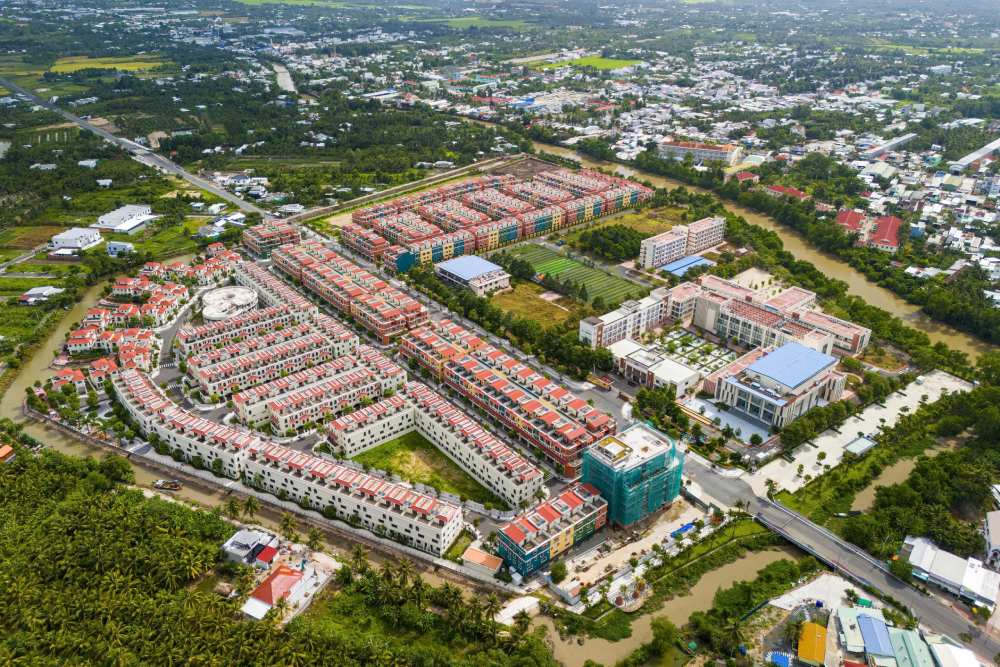
This approach helps many international partners, including Hilton, see Vinh Long as a destination rich in identity and with potential for developing unique tourism and resorts. At the same time, making the local natural and cultural ecosystems a part of urban values also opens up a more sustainable development direction for new urban areas of the Mekong Delta.


