
Exports increase, logistics is still pressure
Ho Chi Minh City's exports are maintaining growth momentum, but logistics costs, requirements for origin, technical standards and the ability to deeply participate in the global supply chain are creating new pressure on businesses.
On September 21, speaking at the Conference on promoting import and export and the supply chain of Ho Chi Minh City organized by the Ho Chi Minh City Department of Industry and Trade, Mr. Nguyen Loc Ha - Standing Vice Chairman of the Ho Chi Minh City People's Committee - said that developing import and export associated with logistics services and improving the capacity to participate in the global supply chain is not only the task of the Industry and Trade sector or the business community, but also contributes to improving competitiveness and creating growth momentum for the city.
According to Mr. Ha, in the past time, the city has focused on directing the issuance of an action plan to implement the strategy of import and export of goods to 2030 and an action plan to implement the strategy of developing logistics services; at the same time, implementing many solutions to promote economic growth, exports and market development. This is the basis for concretizing orientations and organizing synchronous implementation in the coming time.
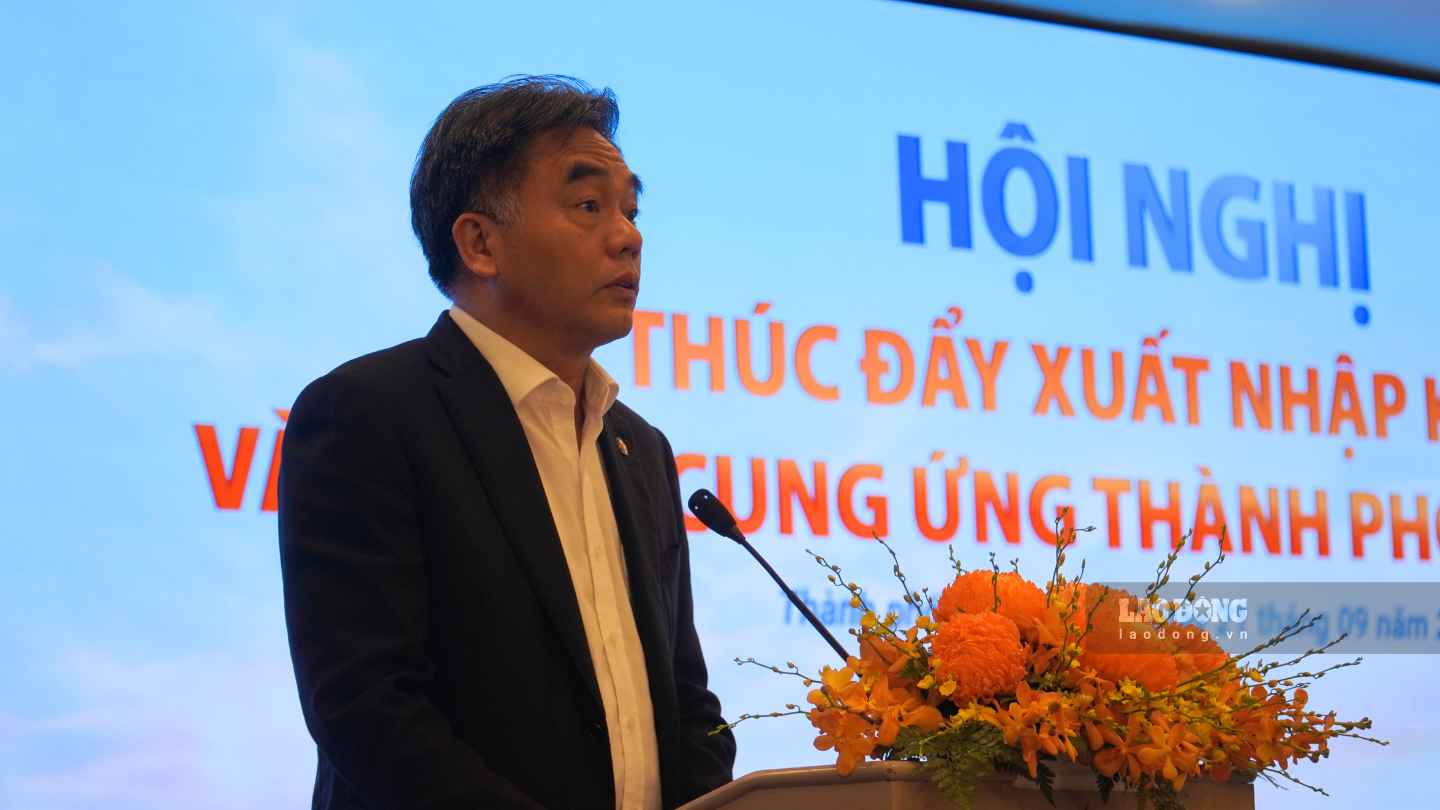
Mr. Le Van Danh - Deputy Director of Ho Chi Minh City Department of Industry and Trade - said that the Industry and Trade sector is implementing solutions to develop industry, trade, import and export and support production and business.
In the first 8 months of 2026, Ho Chi Minh City's total import and export turnover reached 138 billion USD, an increase of 9.9% compared to the same period in 2025. Exports reached 65.8 billion USD, an increase of 7.82%; imports were about 72 billion USD, an increase of 11.86%, mainly serving machinery, equipment, raw materials and components for production and export. Trade deficit was about 6.86 billion USD.
Although geopolitical tensions in the Middle East increased logistics costs, Ho Chi Minh City's import and export still increased quite well. Businesses have proactively diversified markets, supply sources and transportation methods to adapt.
The need for support on rules, criteria of origin, documents and procedures for origin confirmation is still high. This is a condition for businesses to take advantage of FTAs, limit the risk of origin fraud and meet requirements for quality, technical standards, and international supply chains.
Identify the right bottlenecks to reduce costs
Dr. Bui Ba Nghiem - Senior Specialist, Import-Export Department, Ministry of Industry and Trade - said that there are 9 groups of solutions, from institutions, infrastructure, regional linkages, improving business capacity to training, green transformation and digital transformation in logistics.
First of all, it is necessary to identify where and which stages import-export and logistics enterprises are stuck. Logistics is a whole chain from input, production, output to reverse logistics, so it is necessary to correctly identify bottlenecks to have appropriate solutions.
Dr. Bui Ba Nghiem proposed that Ho Chi Minh City build a digital platform on import and export, coordinate import and export and logistics, with real-time data on business difficulties, as a basis for departments and sectors to handle or propose to the Central Government.
According to Dr. Bui Ba Nghiem, businesses need to improve capacity, update policies, market characteristics, build stable raw material sources and diversify suppliers.
Dr. Bui Ba Nghiem said that businesses need to gradually master core technology and strategic technology. In June, the Prime Minister issued Decision 808 on the list of strategic technology and strategic technology products.
When mastering technology and building a diverse and stable supplier system, businesses have conditions to create high-quality products that meet international standards.
Ho Chi Minh City's export competitiveness is not only in selling prices but also depends on the chain from raw materials to logistics. Reducing costs needs to be accompanied by improving the quality of the supply chain, data connection and business capacity.


