
Recently, the Ho Chi Minh City market has recorded an increasing number of artists, businessmen and celebrities participating in the F&B sector. Recently, a famous businessman opened a pho restaurant in the center of Ho Chi Minh City, with the lowest price of 99,000 VND/bowl.
Lao Dong Newspaper exchanged with Mr. Luu Nhat Tuan - Vice Chairman of the Ho Chi Minh City Culinary Association - about the attractiveness and factors that determine the existence of F&B models.
According to you, what does the increasing number of entrepreneurs, artists and celebrities participating in F&B reflect on the attractiveness and level of competition of the industry in Ho Chi Minh City?
- The increasing number of people participating in F&B shows that the market still has great attraction. Regular eating and drinking needs, a wide market attracting investors. For celebrities, F&B is also a way to transform personal reputation into a model.
According to iPOS.vn and Nestlé Professional, F&B revenue in Vietnam in the first 6 months of 2026 reached about 432,700 billion VND, an increase of 6.55% compared to the same period in 2025. The whole country has about 329,200 stores, down 0.1%; 52.01% of businesses plan to expand in the second half of the year. This explains why F&B continues to attract new capital flows, including businessmen, artists and celebrities.
However, opportunities are not evenly distributed. About 43% of F&B establishments recorded lower revenue than the same period. While 25.64% of food businesses grew, this rate in the beverage group only reached 15.82%. The above figures show that the scale of the whole industry increased but the results between stores were strongly differentiated.
F&B has a relatively low entry threshold but a high survival threshold. Opening a restaurant is not too difficult, but maintaining quality, controlling costs, retaining personnel and creating customers to return is the long-term problem.
In Ho Chi Minh City, competition is even fiercer when customers have too many choices. Restaurants not only compete with brands in the same segment but also with office lunch, convenience stores, food delivery services and all other choices in the same spending item.
Therefore, the increasing number of participants shows that F&B is still attractive, but this is no longer a market, but just having capital, beautiful premises or a reputation is guaranteed to be successful.
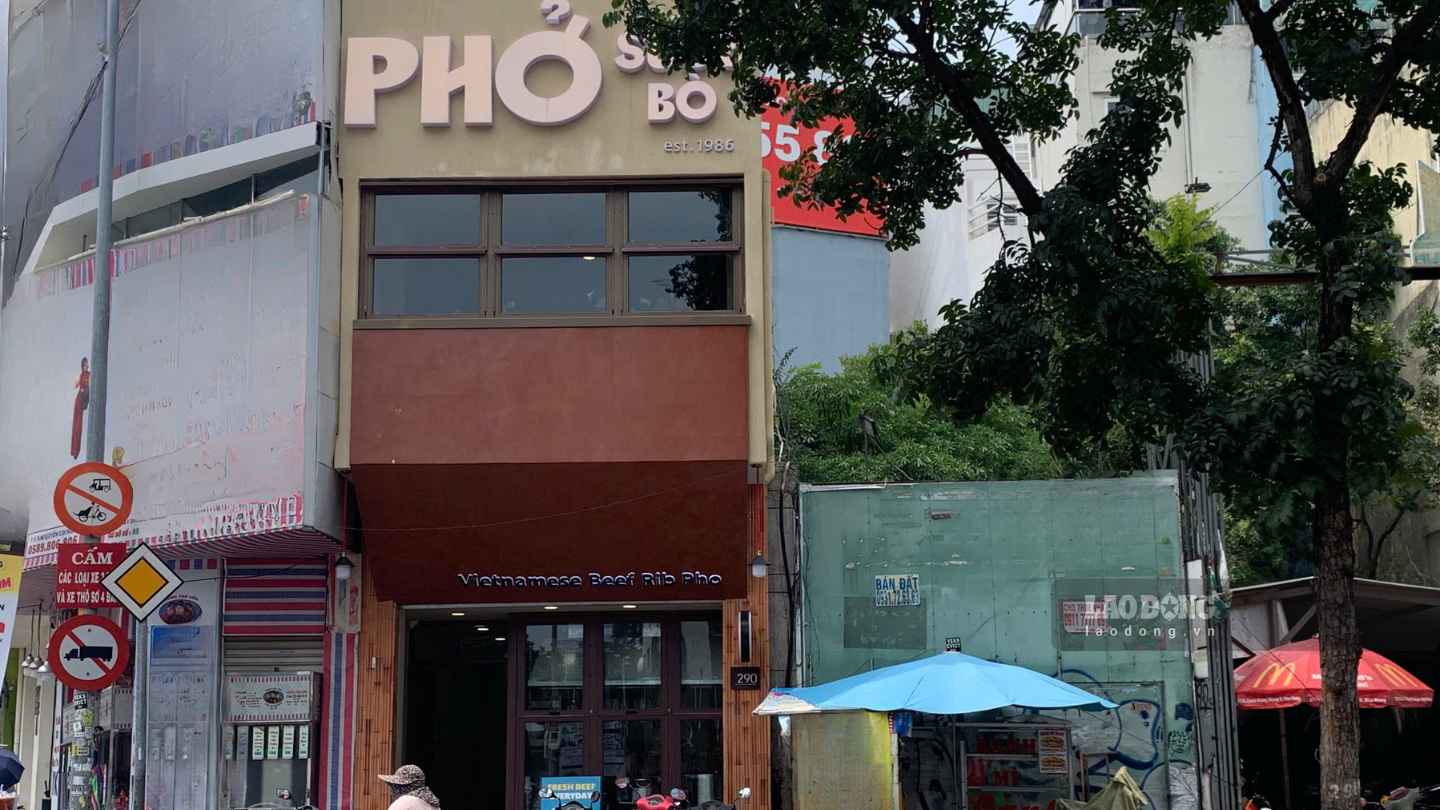
With a F&B brand associated with celebrities, does the advantage of fame and initial customer base create a sustainable competitive advantage?
- The fame of celebrities creates a clear advantage in the opening phase, reducing access costs and creating initial customer base. However, this is not yet a sustainable advantage. Celebrities can attract first-time customers, but the food and service determine the ability to return.
In my opinion, personal fame only becomes a long-term advantage when it is converted into three real assets: Products with identity and stable quality; Operating system not dependent on the presence of the shop owner; Customer community returns, instead of just having followers on social networks. It can be shortened that fame helps sell the first bowl; quality and operation only sell the millionth bowl.
In the context that consumers are sensitive to prices and have many choices, where should the F&B model focus on long-term existence?
- Need to understand "sensitivity to price". Consumers do not necessarily reduce spending but consider more carefully the value received. The report for the first 6 months of 2026 shows that the percentage of customers spending less than 50,000 VND for dinner decreased from 47.61% to 36.93%, while the group spending from 71,000 VND or more increased from 28.12% to 38.76%. Customers are still willing to pay higher if the product is convincing enough.
Therefore, the issue is not whether a 99,000 VND bowl of pho is expensive or cheap, but what customers receive and whether they return or not. Sustainable models must first of all have delicious food, stable quality and corresponding value. Value also lies in service, hygiene, space and convenience.
Besides, there is a suitable location and the ability to control cost of goods sold, personnel, premises, promotions, and delivery. Businesses need to monitor cost of goods sold, labor costs, break-even revenue and profits of each point of sale.
Sustainable F&B needs five factors: delicious dishes, commensurate value, stable experience, suitable location and profitable operation. Communication can create customers, but products and operations can retain them.
Thank you, sir!


