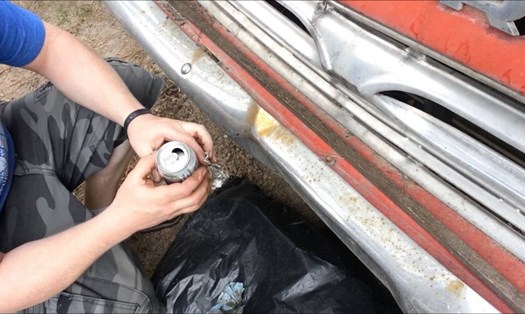
Rust is one of the most common problems on cars, especially for cars that are frequently exposed to rain, high humidity or dusty environments.
Initially, rust marks may just be small spots on the surface, but if not treated promptly, they can spread, reducing structural durability and increasing repair costs.
Rust on cars usually appears in three main forms:
Surface rust
The first is surface rust, and this is the earliest and easiest stage to fix. This condition usually forms when the paint layer is scratched or peeled off, revealing the metal underneath.
Rust forms patches
Next is rust closing into patches, which occurs when corrosion is prolonged. The metal surface begins to peel off, become rough and larger rust patches appear.
Corrosion rust
The most serious is corrosive rust, when the rust has penetrated deep into the metal, forming a hole in the body or frame of the car. In many cases, the car needs professional repair or replacement of damaged parts.
Effective handling
To treat rust effectively, car owners should prepare some basic tools such as sandpaper, iron brushes, rust conversion solution, body powder, anti-rust lining paint, appropriate color repainting and protective equipment such as gloves and eye protection glasses.
The rust treatment process begins by cleaning the affected area. The car owner should wash away dirt, grease and peeling rust patches and then completely dry them before proceeding with repairs.
Then, use sandpaper or iron brush to remove the rust layer. For heavier corroded areas, rust conversion solution can be used to neutralize the oxidation process and prevent rust from continuing to spread.
If a deep hole or small hole has appeared on the surface, the car owner can use specialized powder to fill it. After the material is completely dry, rub rough to create a flat, even surface with the surrounding area.
The next step is to apply anti-rust primer to protect the metal layer underneath. When the primer is dry, repaint according to the car's color, then apply a layer of glossy paint to increase durability and water resistance. The paint layers should be thin and even to prevent paint from melting or creating a rough surface.
To prevent rust, periodic maintenance plays a very important role. Car owners should wash the car regularly to remove dust and moisture accumulation, check for scratches on the body to repaint in time, and keep the undercarriage area clean, because this is a place that is easily corroded but is often not noticed.