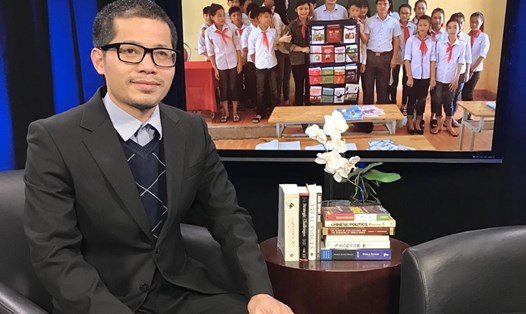
Lao Dong Newspaper reporter had a conversation with education expert Tong Lien Anh - Deputy Director of the Institute of Lifelong Learning about the current situation of reading culture in Vietnam, existing barriers and approaches for sustainable reading spread.
As someone who has promoted reading culture for many years, how do you see the current situation of "reading promotion" in Vietnam?
- If reading has become a natural habit like drinking morning coffee, perhaps we don't need to "encourage" and remind each other so much.
The biggest bottleneck, in my opinion, is not the lack of campaigns or messages, but the fact that reading is still placed in a "moral framework". That is, reading books is associated with the feeling of "should do", "must do well", rather than a natural, interesting need. When reading is not associated with joy and everyday life, it is very difficult to become an intrinsic choice.
We have many book fairs, many reading promotion programs, but reading culture is not only a story of raising awareness, but also a story of policies and systems. Investment in public libraries, in the publishing ecosystem, and in reading space is still not commensurate. When the "reading infrastructure" is still thin, reading behavior is difficult to sustain.
In schools, if reading is not concerned or mainly associated with checking, summarizing, and the pressure of right and wrong, it is very difficult for children to feel joy. The important question is: Are we teaching children to read to compete, or to understand, to explore, to dialogue with themselves and the world?
Reading culture cannot be formed from short-term campaigns. It needs a long-term ecosystem where policies, education and social life operate consistently, so that reading becomes a natural choice.
Young people today are often attracted to fast, concise, and easy-to-understand information... on social networking platforms. In your opinion, why do children read less and less books and should we change the way we make books to adapt?
- This is a question that easily falls into two extremes: Either blame young people for "lack of patience", or force books to "follow" fast trends.
In my opinion, it is necessary to look at it more fairly: Today's young generation reads a lot, but is reading in other ways. They still receive information, still learn, but through videos, social networks, podcasts... Reading books is becoming weaker in this competition.
However, that does not mean that we should "turn books into videos" or "maximize entertainment". The core value of reading lies in the ability to delve deeper, contemplate and engage in inner dialogue - things that fast formats find difficult to replace.
So, the answer is not to change or keep it, but to innovate the approach but maintain core values. We can design books more beautifully, closer, connected to younger people's lives; can combine multiple platforms: Books go with podcasts, videos or community discussions. But in the end, books must still be a place that brings depth - something that the passing content does not have.
Otherwise, we will lose the very reason for reading.

Besides, if looking broadly at the world, there is a noteworthy policy trend: Some countries are starting to restrict children under 16 years old from using social networks. Pioneering is Australia, with regulations requiring platforms to prevent people under 16 years old from creating and maintaining accounts; Indonesia also has similar steps. In Finland and some European countries, proposals are also being discussed.
These are efforts to re-establish a development environment for children, where concentration and inner life are not fragmented too early by high-speed information flows.
However, policies only create "necessary conditions", but cannot replace internal motivation. If there is no good enough reading environment, no books that are attractive enough and inspiring for adults, that gap is very likely to be filled with other forms of entertainment.
In your opinion, how can books "breach" into the lives and experiences of young people?
- I really like the image of "squeezing in", because it reflects the reality: Books are no longer the center, but are having to find a way back.
In my opinion, instead of trying to attract young people to books, we should bring books with young people.
That means: Books need to appear in places where young people are living and experiencing, cafes, art spaces, tourist attractions, even music and sports events.
Imagine a check-in space that not only has beautiful shooting angles, but also good quotes, sophisticatedly selected books, and gentle interactive activities related to book content. At that time, reading is no longer a separate action, but becomes a part of the experience.
Books do not need to compete with experience, but can become a part that deepens that experience.
Family, school and society - what are the decisive factors in forming children's reading habits, in your opinion?
- In fact, no factor can replace any factor.
Family is where children see reading for the first time. A child who grows up in a house with books, with adults reading books, will naturally develop the feeling that reading is a part of life.
Schools, if they do well, will help reading become a skill and joy of discovery, not a task associated with scores.
And the social environment determines whether reading is maintained or not. If society honors knowledge, if readers are seen as a value, then reading will have motivation.
It is a pity that in Vietnam, these 3 factors are still out of sync: family is busy, schools are heavily focused on exams, society does not create enough space for reading. Therefore, the question is not which is more important, but how to make them go in the same direction.
Forcing children to read books, if not skillfully, will make reading associated with a feeling of being controlled and judged. At that time, children may read but do not love reading.
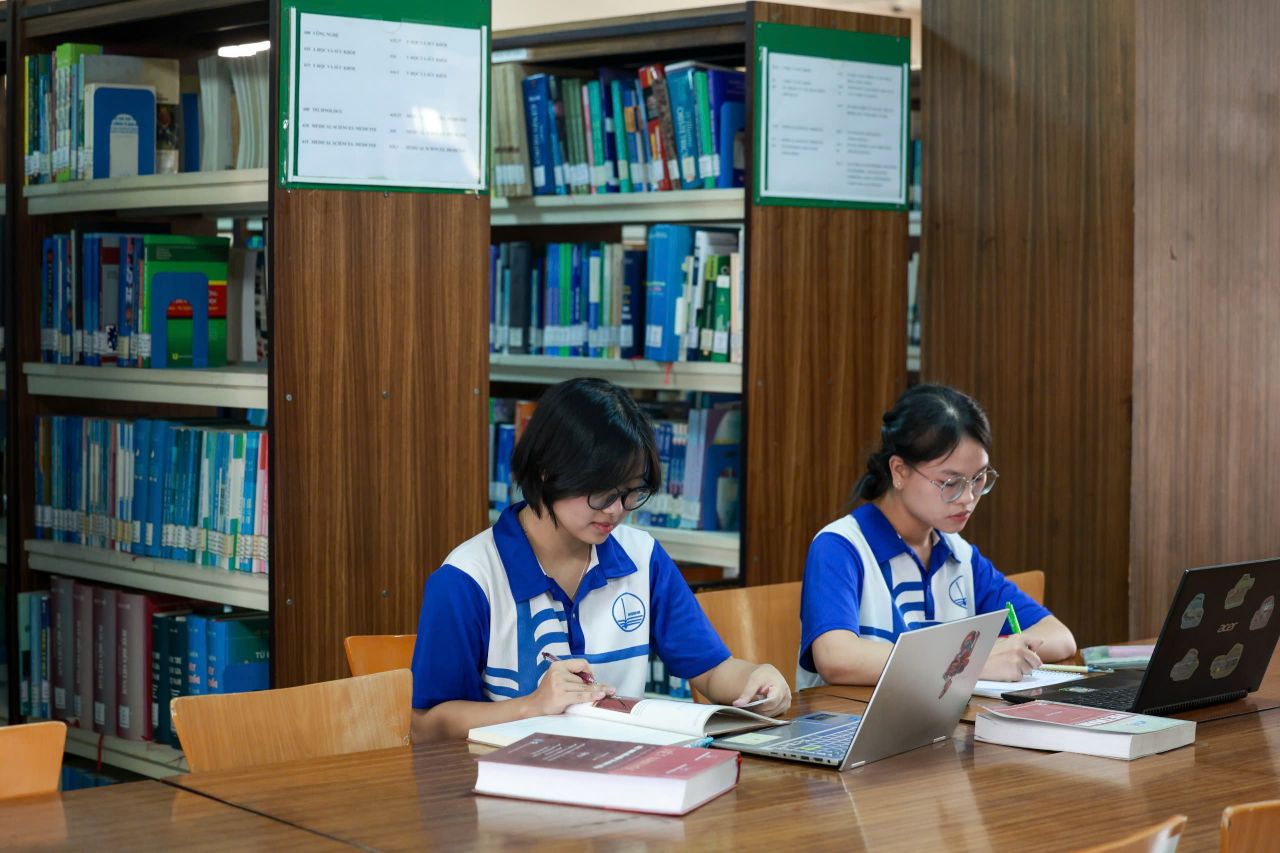
In my opinion, there are three important things:
First, start with joy, not from "value". Don't just say reading books is good, but help children find joy from a specific book.
Second, give children the right to choose. When children choose books according to their preferences, whether it's comics, humorous books or any genre, they are learning something very important - Reading is theirs.
And the most important thing is that adults need to become a part of reading culture. Children do not learn much from advice, but from what they see every day.
Looking deeper, nurturing reading habits is not "teaching children to read", but building a positive relationship between children and reading - which requires time, patience and a lot of companionship.
In the context of technological development, in your opinion, should the concept of "reading" be expanded?
- Certainly. Reading is not just reading words printed on paper, but a process of receiving and processing information consciously. This can happen through paper books, e-books, or audiobooks.
This expansion does not reduce the value of reading, but on the contrary, can help more people access knowledge, especially those who do not have the conditions or have not found suitability in the traditional way.
However, the important thing is not the form, but the quality of the reception. A person listening to a book and reflecting on it can "read" deeper than a person browsing dozens of pages.
Therefore, if talking about solutions, I think the most important point is still to build a reading ecosystem, where reading is supported simultaneously by family, school, society and technology.
We can hardly expect a change if we only impact a single link. But if we persistently nurture each part, from small reading spaces, truly meaningful reading programs, to long-term policies, reading culture will gradually form naturally, no longer just a slogan, but become a part of everyday life.