National calligraphy artisan Tran Viet Hung is one of such people, a calm calligrapher stepping into the digital age to remind that letters are not only for reading but also to preserve the soul of Vietnamese Tet.
When Tet greetings come from the screen
One late afternoon at a small coffee shop, a few young people were sipping a drink while attentively looking at the phone screen. They did not surf social networks or watch news. On the screen were commands sent to ChatGPT: "Write a New Year greeting for my parents", "Suggest couplets to hang in the living room", "How to have a greeting that is both good and classy". Just a few seconds later, paragraphs or pairs of sentences appeared neatly, roundly, ready to be copied and sent.
That scene is no longer unfamiliar in recent Tet seasons. When artificial intelligence enters life, words also step into digital space. Writing wishes and composing New Year's greetings, which used to be a matter requiring a little thought and contemplation, is now faster and more convenient. AI can create dozens of versions of wishes in just a few clicks.
Even many people bring these "born from machines" words to ask calligraphers to rewrite them in Chinese ink on red paper, hanging them on the wall as a New Year's wish. In a way, technology has penetrated very deeply into the seemingly very traditional rituals of Vietnamese Tet.
Looking at it from the outside, it is a natural adaptation. Modern life needs to be fast, neat, and convenient. But also from here, a silent question is raised: When words can be "produced" in series by machines, what will the value of words in the Tet cultural space remain?
Tet is an opportunity for us to slow down, look back at the past year and send wishes for the coming year. In that flow, wishes and parallel sentences are not simply beautiful words but also places where people place their wishes, beliefs and even very personal expectations for their families.
When letters are written just for show, to be on time, to be convenient, the letters are still there, but the soul part may have subsided somewhat.
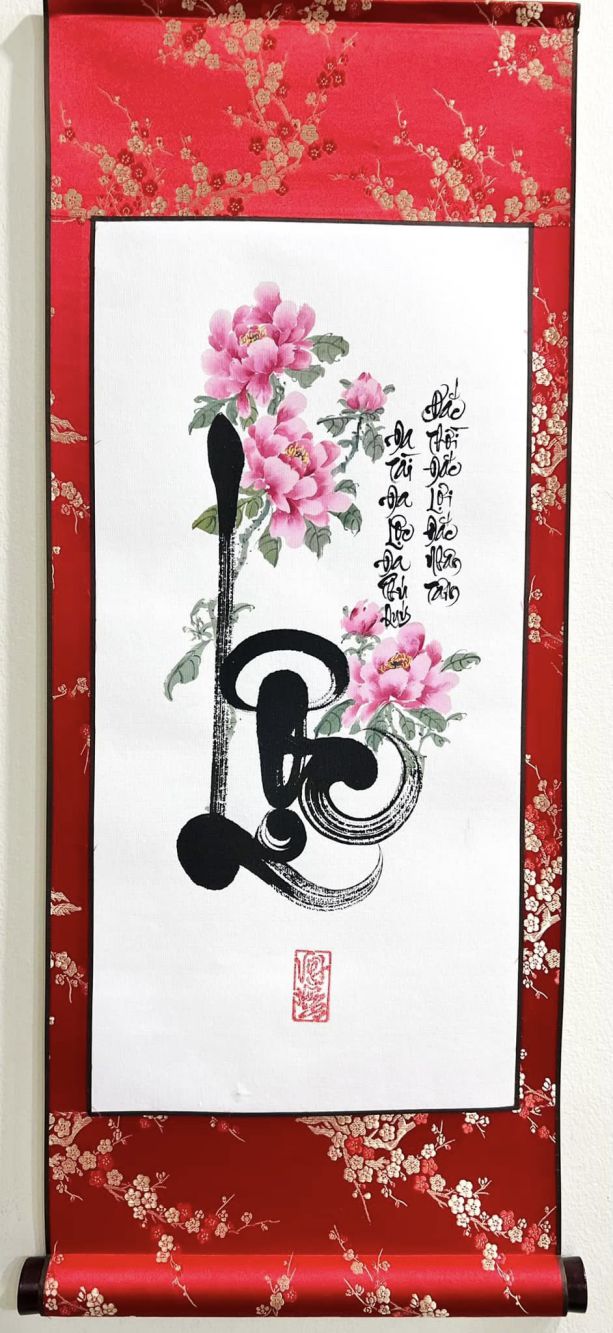
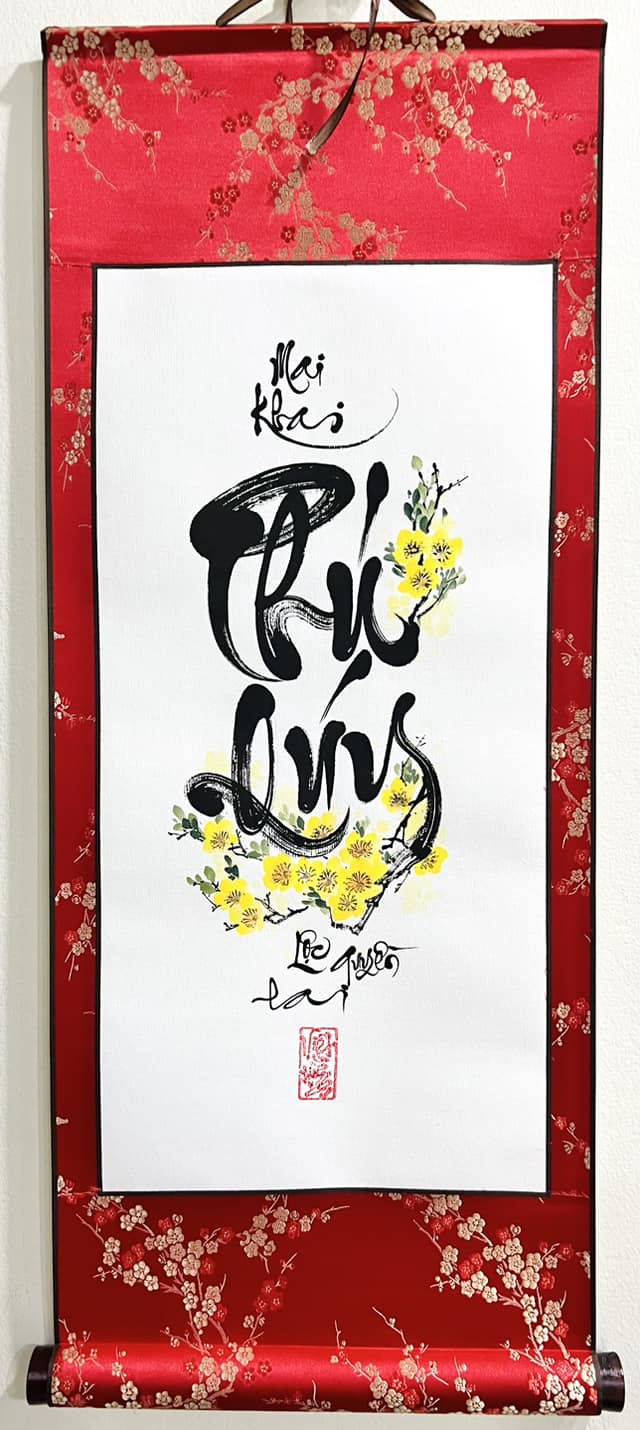
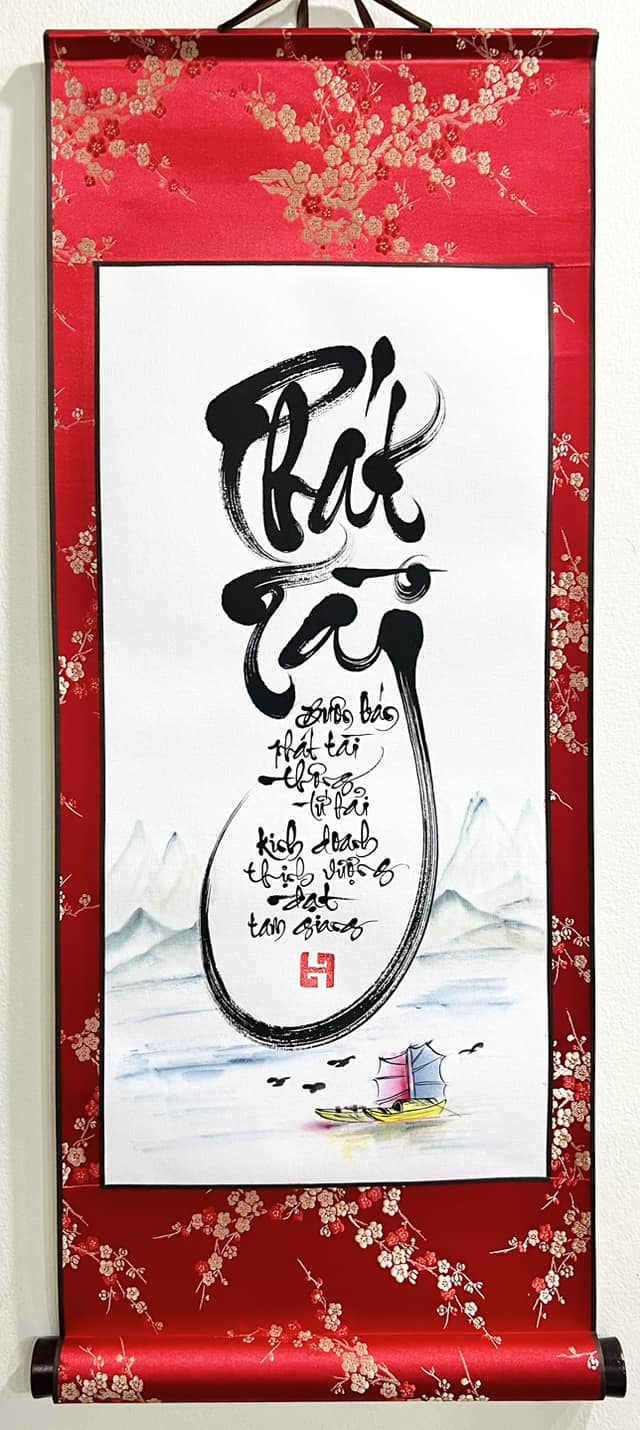
Teachers in the digital age
In a small room faintly smelling of ink, national calligraphy artist Tran Viet Hung still maintains the old habit: grind ink slowly, try the pen carefully before putting the first stroke on the paper. In him, people can easily recognize a very different calmness from the hurried pace of life out there.
Speaking about many young people using AI to suggest wishes or parallel sentences, he does not deny the convenience of technology.
“I consider it a very good information support tool. If used to look up ancient traces, learn about documents, and traces of ancestors, it is very useful. But with calligraphy, that is a different story. Each stroke or each letter carries the spirit, lifestyle and culture of Vietnamese people. Vietnamese calligraphy is not only a beautiful handwriting but also a way to look back at one's heart, family, and people,” he said.
According to artisan Tran Viet Hung, the most fundamental difference between a parallel sentence suggested by AI and a parallel sentence composed by a teacher lies not only in the word or the meaning but also in the "soul" of the word.
To compose a good pair of parallel sentences, the writer must consider each letter, each rhyme, each parallel sentence. It is necessary to understand what the calligrapher wants, what they are hoping for in the new year. At that time, the calligrapher is not only a calligrapher but also like a poet, a storyteller with ink and paper" - Mr. Hung shared.
In fact, many people have brought parallel sentences prepared by ChatGPT to ask him to rewrite them. But instead of holding the pen immediately, he often spends time explaining: Where is this sentence wrong in rhyme, where is that sentence off-key? More importantly, he wants to explain why that content is still shallow, not deep enough to hang in the house for a whole year, even for many years.
It's not that I can't write. But there are words that are not worthy of being written. A calligraphy can be hung in a family for many generations. No one wants posterity to look at it and think that the teacher wrote such soulless words" - the artisan expressed.
For him, asking for calligraphy at the beginning of the year is not a transaction of buying and selling. It is a meeting. The calligrapher tells about his wishes, the calligrapher listens and sends back in each stroke a wish, a reminder, a guiding principle for the whole year.
Artisan Tran Viet Hung does not deny that calligraphy must also change to go with the times. But he believes that there are things that cannot be replaced. Artificial intelligence can produce words, but cannot replace people to understand people. Vietnamese calligraphy carries the mission of Vietnamese culture, close, simple, associated with each person's birthplace. Today's calligraphers are the embodiment of the origin of ancient Taoism, which is why machines cannot replace them.
Out there, the world is still running very fast. Words continue to be digitized, Tet continues to be technologized. But in Vietnamese houses every spring, there will still be red papers, black ink strokes and values that can only be preserved by slowness, by human hands and by respect for words.
In the digital age, perhaps the important thing is not choosing to stand aside or enter technology.
but knowing what I need to keep. For people like Artisan Tran Viet Hung, what needs to be kept is not only the letters but also the soul of the letters, which is also the soul of Vietnamese Tet.