
One of the highlights at the program is the presence of Doi Tam drum village (Ninh Binh province) - a craft village preserved for more than 1,000 years. With its characteristic shape, traditional materials and crafting techniques preserved through many generations, Doi Tam drums give visitors the opportunity to learn more deeply about a long-standing Vietnamese craft.
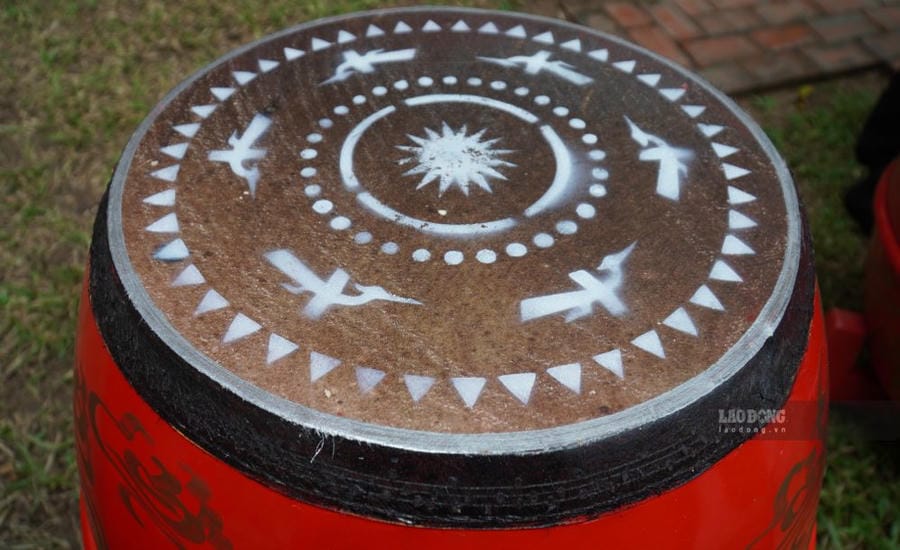
Artisan Pham Chi Theu - artisan of Doi Tam drum village said that the easiest point to recognize of Doi Tam drums lies in the shape. The drum body always has a certain bulge, the ratio between the body and the drum surface is calculated appropriately. This shape creation method not only helps the drum balance its form but also directly affects sound quality.
Whether the drum is big or small, it gives a very suitable volume. Between the drum body and the drum surface, there is always the most adaptive ratio to create many levels of sound: big drum, small drum, happy drum, sad drum," artisan Thêu shared.
According to artisans, each drum can create a different sound, depending on the size and crafting technique. Therefore, to make a product that meets requirements, artisans not only need skill but also experience accumulated over time.
Besides shape, material is an important factor creating the identity of Doi Tam drums. Artisans in the village still pass down the saying: "Buffalo skin, jackfruit mourning/ Beat less, sound more".
Accordingly, buffalo skin is used to make drum faces, and drum trunks are made from jackfruit wood. These are traditional materials that contribute to creating the characteristic sound of the product. Artisan Pham Chi Theu believes that although the market today has changed a lot, artisans still have to preserve the core elements of Doi Tam drums.
Once it is a drum, the face must be in buffalo skin, the body must be in jackfruit tang. At all costs, the identity of Doi Tam drum must be preserved. Having these two elements creates a good product in terms of sound and beauty in the drum body," the artisan said.
From large drums to smaller types of drums, Doi Tam artisans must pay attention to the ratio between the face and body of the drum. This balance both creates a distinctive shape and helps the sound be promoted according to the right purpose of use.
Besides, with a long tradition preserved by generations of craft villages for more than 1,000 years. Drum making techniques are passed down in families and craft village communities.
Faced with the changes of modern life, preserving the profession is facing new requirements. Young people have more career choices, while traditional handicrafts require learning time and a long process of training. To maintain the profession, elderly artisans and skilled workers in the village are trying to spend time guiding and sharing skills with young people.
Older people who have skillful artisans or skilled workers also try to spend time approaching and sharing with younger generations," artisan Thêu said.
According to artisan Theu, passing on the craft not only helps young people learn how to make a drum, but more importantly, understand the value and identity of Doi Tam drums.
Drum making has contributed to creating livelihoods for many generations of villagers. Therefore, although young people can choose other jobs, artisans still want them to spend time learning about and continuing the traditional craft of their homeland.
The art program "One Drum - One Sound of Drum - A Thousand Years of Civilization" takes place from September 14th to 20th at the National Special Relic Site Van Mieu - Quoc Tu Giam. Activities introducing traditional drum making, cultural values associated with drum sounds and creating opportunities for tourists to directly learn about and experience the products of the craft village.


