Cuisine becomes a highlight
For the first time, a city in Vietnam was voted Top 1 in street food. Notably, in the Top 10, Hanoi is also named in 7th place.
The results were announced after a global survey with about 24,000 urban residents. Participants were invited to evaluate the quality, price as well as culinary experiences in their own living areas, from cafes, breakfast locations, high-end restaurants to street food culture.
This ranking gives special attention to destinations that local people rate highest in street food. Ho Chi Minh City tops the list with 63% of respondents choosing it.
According to Time Out, the city's appeal lies not only in Michelin-starred restaurants but also in the simple culinary space nestled in every alley and street corner.
In Ho Chi Minh City, cuisine is not separately located in restaurants but present in the daily rhythm of life. In the morning, people can start with a loaf of bread, a plate of broken rice or a bowl of noodle soup. At noon, there are family rice shops, grilled pork vermicelli, banh xeo. When the city lights up, snail stalls, grilled food carts, sweet soup shops and eateries become rendezvous points.
Ho Chi Minh City cuisine is attractive first of all thanks to its diversity. This is a gathering place for dishes from many regions and residential communities. Pho, bun bo, Quang noodles, Western banh xeo, Chinese dishes at Cho Lon or international culinary styles coexist, transform and find diners.
That intersection does not lose its identity. On the contrary, it creates a unique culinary character of the city: Open, flexible, easy to accept new things but always knowing how to transform to suit the taste and pace of urban life.
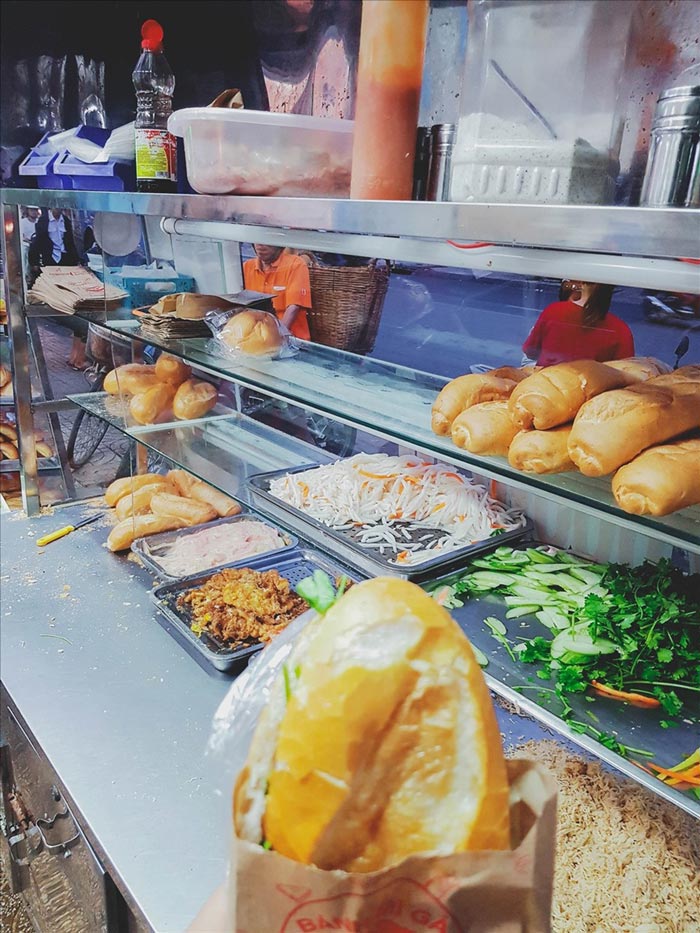
Bread is a typical example. From a dish influenced by the West, city residents have created a loaf of bread with meat, spring rolls, pate, sour dishes, herbs and sauces, both convenient and full of flavor. Bread is not only a fast food but also demonstrates the ability to receive, create and harmonize culture of Saigon - Ho Chi Minh City people.
Street food also has a special advantage in accessibility. Tourists do not necessarily have to book tables or prepare a large expense. Just step out of the hotel, go through a market or turn into an alley, they can start their journey to explore the city with their sense of taste.
The plastic chair, the open kitchen, the dish ordering and the conversation with the seller create a realistic experience that the staged tourist spaces are difficult to replace. Tourists not only eat a dish but also observe how people live, trade and communicate.
Talking to Lao Dong Newspaper, Mr. Tran The Dung - General Director of Vietluxtour Company said that Ho Chi Minh City converges a rich culinary culture, especially nighttime culinary activities. When coming to a new destination, culinary experience is always one of the important needs of tourists.
Currently, Ho Chi Minh City has formed many diverse culinary areas, with their own identity, meeting the needs of many different groups of customers. This is considered a suitable development direction, contributing to enhancing the attractiveness of the destination.
Agreeing with this view, Mr. Tran Quang Duy - Director of Chim Canh Cut Travel Service Joint Stock Company said that culinary experience tours are receiving more attention, as tourists want to explore the unique features of Ho Chi Minh City, where each dish is associated with a separate story.
To become the kitchen of the world
The fact that both Ho Chi Minh City and Hanoi are in the Top 10 destinations with the most attractive street food in the world shows a very positive sign in the development of culinary tourism. This further affirms that Vietnam is one of the countries with abundant culinary resources. Each region possesses dishes, ingredients, processing techniques and culinary customs imbued with cultural imprints. This is also an advantage for Vietnamese tourism to develop products with its own identity in the context that tourists are increasingly prioritizing authentic experiences instead of just sightseeing or relaxing.
However, Assoc. Prof. Dr. Nguyen Thi Thu Phuong - Director of the Vietnam Institute of Culture, Arts, Sports and Tourism said that this advantage has not been exploited commensurately.
The biggest problem today is not the lack of culinary resources, but that we have not yet transformed those values into tourism products with depth, rich interactivity and bringing value to the community as well as tourists - Ms. Thu Phuong assessed - Moving from the thinking of "selling dishes" to "creating co-creative experiences" is not only a requirement for product innovation, but also an important condition to promote culinary cultural values and enhance the competitiveness of Vietnamese tourism in the new context".
Vietnam's orientation, according to Ms. Nguyen Thi Hoa Mai - Deputy Director of the Vietnam National Authority of Tourism, in the Project to promote and promote Vietnamese culinary tourism in the period 2026 - 2035, with the goal of taking culinary culture as the nucleus in the national image promotion strategy: "We not only want to promote food but also want to promote Vietnamese culinary culture. If we only talk about food, it is not enough, the important thing is to tell the story behind each dish, from ingredients, customs, people to cultural values preserved through many generations", Ms. Hoa Mai shared.
Having great potential does not mean that Vietnamese cuisine automatically becomes a strong tourism product. To maintain its attractiveness, it is necessary to simultaneously solve issues of food safety, environmental sanitation, service quality, price listing and traceability of ingredients. It is impossible to promote an attractive food street but to make tourists worry about hygiene, be solicited or encounter prices that are not transparent.
Both Hanoi and Ho Chi Minh City need to plan more unique culinary spaces, ensure infrastructure, waste collection, fire prevention, traffic and business conditions for sellers. Standardization should not lose the natural features of restaurants, but should help local values operate more safely and professionally. Each dish needs to be told with stories about people, raw material areas, formation history and processing methods.
In addition, the service team also needs to be trained in communication skills, foreign languages and cultural knowledge. A salesperson who understands the story of the dish and can introduce it to tourists is a local tourism ambassador.
When cuisine is preserved, told stories and organized into professional products, it is not only a delicious dish for tourists. It is also a resource to create jobs, increase revenue, develop the night economy and build a destination brand.
From honoring street food to becoming a world kitchen is a long but potential journey, as chef Oliver Mette - Culinary Director at Hotel de la Coupole Sapa - MGallery Collection (Lao Cai) said when talking to Lao Dong Newspaper: "Vietnamese cuisine is not only a source of creative inspiration, but also a story of simplicity, balance and cultural depth enough to conquer global diners.