
How to choose jacinthes
To learn more about the "upgrading" journey of wild plants, we went to Tu Dung ecological garden, Nhon Ai commune, Can Tho city. Here, visitors will experience being a true Mekong Delta person when following small ditches, picking water hyacinth with their own hands and making famous dishes.
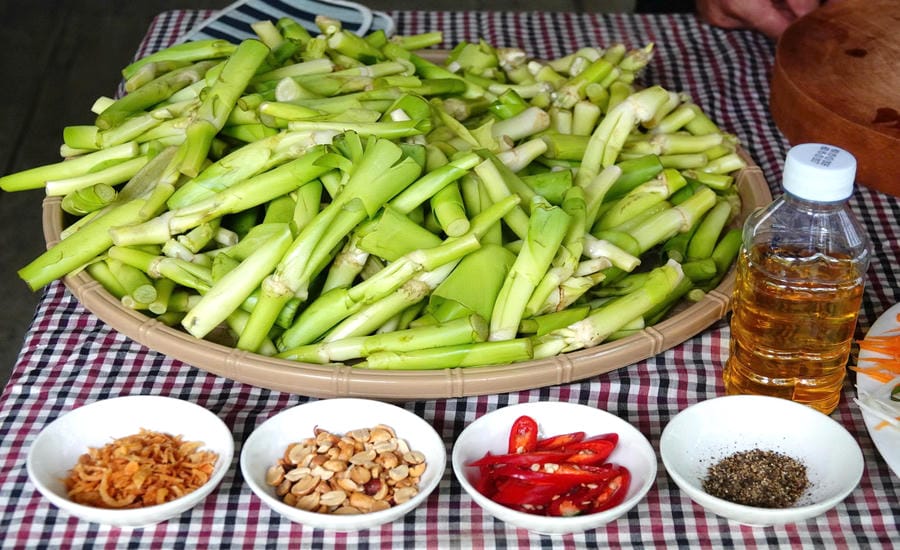
Sitting and chatting by the kitchen porch, Ms. Truong Kim Tien (65 years old) shared that the job seems simple but requires dexterity and a little subtle observation. If water hyacinths want to be delicious and maintain their natural crispness and sweetness, they must choose the youngest part of the plant, absolutely do not be greedy for old stems because they will become fibrous and bitter.
When picking, you must know how to look at the tree, choose long trunks, growing in clean water areas, with clear flow. Amidst a dense cluster of water hyacinth, people only choose the youngest bud that has just sprouted, that part is called by the people of the Mekong Delta with a very affectionate name, "looking at water hyacinth" - Ms. Tien added.
Picked seedlings must be washed many times to remove all the alluvium, separated into small pieces and then processed immediately. Anyone who likes the original flavor, just leave them raw and dip them in braised fish sauce, if you are a little more meticulous, boil them briefly, stir-fry with garlic fat or cook a pot of sour soup to enhance the flavor.
Spicy and sweet from fresh field fish soup
Squinting her eyes looking out at the river in front of her, Mrs. Tien recalled the old days. In difficult times or even peaceful days, people in the Mekong Delta always see water hyacinth as a kind of food-saving vegetable, a loyal friend in daily meals.
My grandparents used to eat water hyacinth very much, partly because at that time grass and river trees were still wild, not polluted by chemicals or waste like now. Old people in the neighborhood often tell each other that young water hyacinth shoots cooked are as delicious and sweet as lotus roots from Dong Thap or Bo Bo of Ca Mau" - Ms. Tien added.
Mentioning water hyacinth sour soup, gourmets all know that this dish, although processed quite simply, does not require super-skilled cooking techniques, but requires meticulousness to maintain the original delicious taste of the countryside.
Before cooking, people often go to the garden to choose a few ripe *bần* fruits. The *bần* fruit must be *bần dĩa*, soft ripe, brought in, crushed with a pestle and then mixed evenly with warm water, filtered out the seeds to get the natural sour juice. In some other regions, depending on habits and available products, the cook can replace the *bần* fruit with ripe tamarind, sour star fruit or fermented rice to create a strong sour taste.
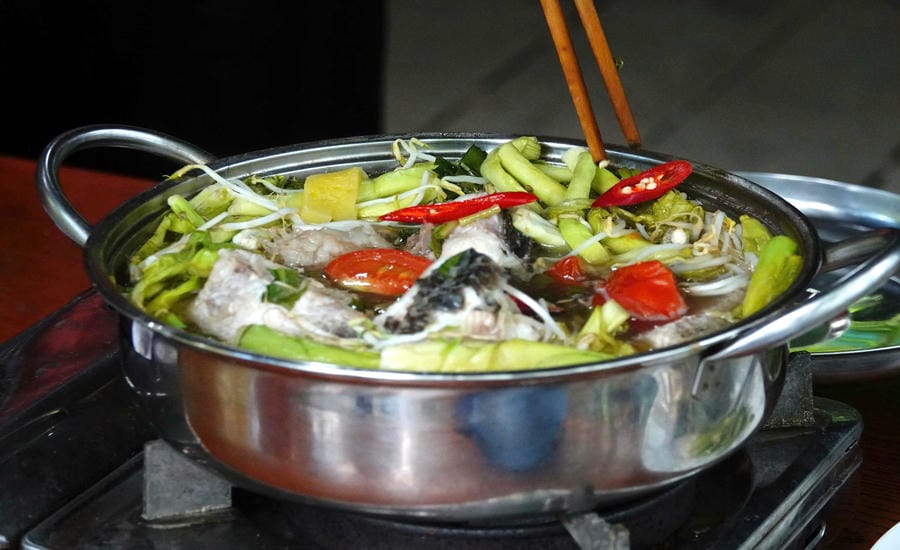
Sharing about the family's sour soup recipe, Ms. Tien added firewood to the stove and explained in detail. Accordingly, when putting the pot of water on the stove, the next step is to add the sour juice from tamarind or Barringtonia fruit and bring it to a boil. When the water starts to boil, add the river fish first (possibly snakehead fish, catfish or gourami). The cook seasons to taste, waits for the fish to cook until it is cooked before adding the water hyacinth in the end.
The jar is very quick to cook, just rinse it with boiling water and you have to take it out immediately to maintain its crispness and sweetness, without being mushy and black. Finally, a handful of chopped coriander, a few slices of chili peppers put in the pot and the fragrant aroma has risen fragrantly, awakening all senses" - Ms. Tien shared.
When putting a piece of water hyacinth into your mouth, diners will feel the feeling of being both soft and crunchy, faintly a hint of the gentle aroma of local herbs and vegetables, mixed with the mild, mild, not harsh sour taste of the broth. For those who have a rich culinary taste and like the spicy taste, making a bowl of crushed chili salt placed right next to it will be the perfect combination.
Garden products
Meeting Mr. Tran Van Dung (familiar name Tu Dung), the owner of this ecological garden, we understood more about the hearts of tourism workers. Mr. Tu Dung shared that what makes tourists from near and far, especially urban tourists, love this dish is not only the delicious and unique taste, but the core lies in the cultural story, historical memories behind the vegetable stalk.
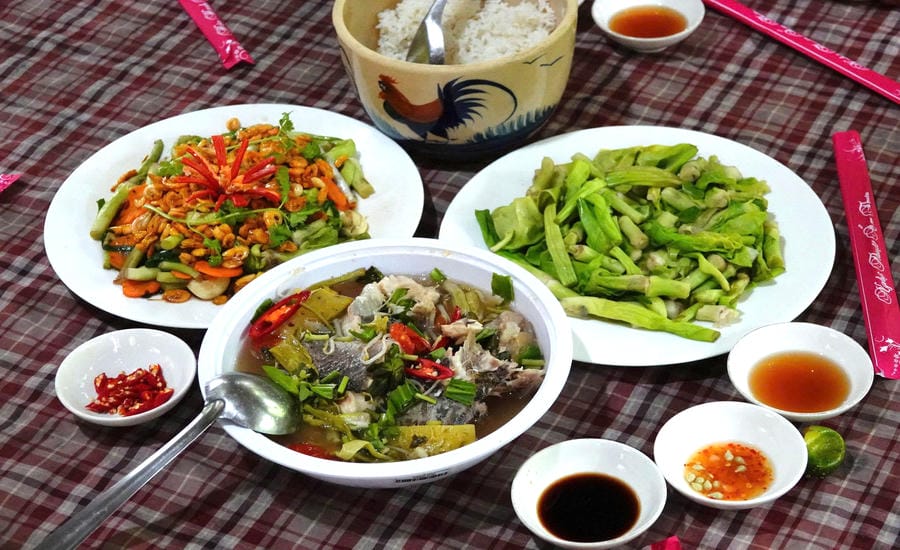
The dishes from water hyacinth are like a time train ticket, evoking the simple, meaningful lifestyle of the people of the Mekong Delta in the pioneering period. That was the time when people always knew how to rely on nature, knew how to take advantage of and cherish each available natural product to cherish and process into warm family meals" - Mr. Dung recounted.
For the first time enjoying this unique sour soup, Ms. Nguyen Thao Vy (a tourist from Ho Chi Minh City) could not hide her surprise: "Who would have thought that the plant, which is inherently familiar and often seen drifting on rivers, could transform into such a delicious and attractive dish.
The female tourist added that nowadays, many young people only know about water hyacinth through handicrafts, knitting tables and chairs, and exported handbags. It was the moment of sitting in a windy garden space, enjoying a hot bowl of sour soup, that Ms. Vy realized the excellent creativity of the Mekong Delta people.
The special point that makes up the soul of water hyacinth soup is the wonderful harmony between the layers of flavors. That is the cool, mild sweetness of water hyacinth seedlings combined with the fatty, sweet, and firm texture of fresh field fish meat.
The trend of bringing rustic, rustic dishes into ecotourism is increasingly developing strongly in the Mekong Delta provinces and cities. Not only Can Tho, many tourist destinations in Dong Thap and Vinh Long are also actively incorporating sour water hyacinth soup, water hyacinth salad or boiled water hyacinth into the main menu to serve visitors. It is the simplicity and originality associated with everyday life that becomes a sharp weapon, creating the attractive and unique features of river and water cuisine.


