
On April 16, Hanoi University of Science and Technology announced the implementation of the Project "Incubator Program for Information Security Human Resources in the Digital Economy in Vietnam", funded by The Asia Foundation - TAF.
The project is implemented under the management of the Ministry of Education and Training, from April 2026 to the end of March 2027.
Speaking at the opening ceremony, Assoc. Prof. Dr. Huynh Dang Chinh - Deputy Director of Hanoi University of Science and Technology - shared that the project is implemented to build and operate the "Cyber Clinic" model at Hanoi University of Science and Technology, aiming to connect training with practice, creating an environment for learners to both be equipped with professional knowledge and directly participate in business support activities.
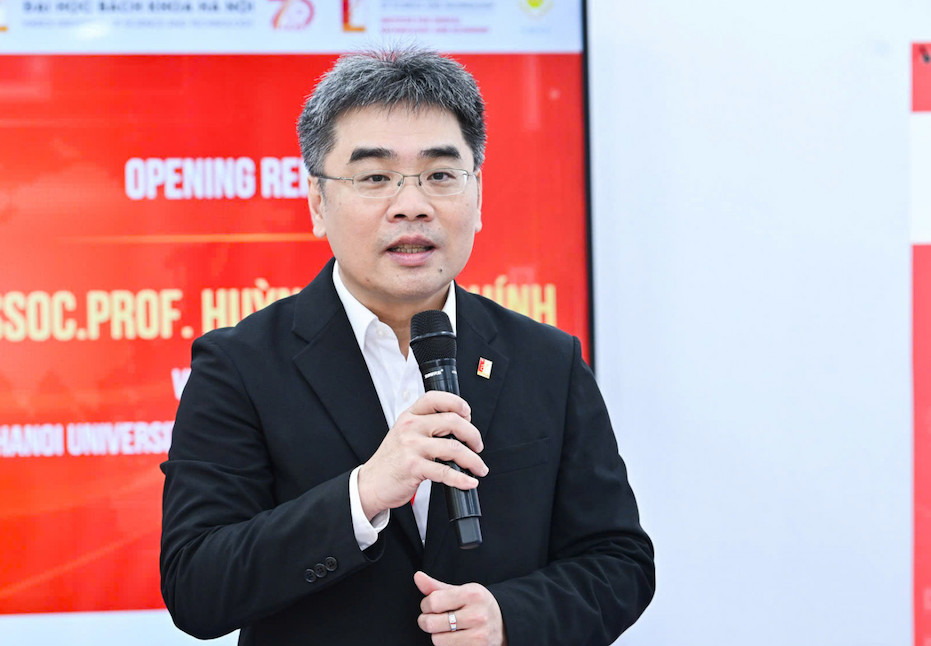
The project is expected to become a starting point to lay the foundation for the sustainable development of Vietnamese businesses as well as the digital economy in the coming time.
To achieve this goal, Assoc. Prof. Dr. Huynh Dang Chinh said that it is necessary to focus on three main axes: Small and medium-sized enterprises; Digital transformation platform; and Human resources in the field of information security.

These three axes do not exist separately, but are linked together through 3 scales: Technology readiness of enterprises; production and commercialization capacity; the companionship of investors and the Government.
In the long term, Vietnam is aiming to develop a safe digital economy. In which, universities and research institutes play a very important role, from providing human resources, developing technology to creating research and innovation results.
Along with that, there needs to be a connection with businesses because if there is only research without the participation of businesses, it will not create practical value.
At the ceremony, Ms. Anthea Mulakala - Senior Director for International Development Cooperation of the Asia Foundation - assessed the cybersecurity incubator model as a practical solution in the context that small businesses are increasingly facing many forms of fraud, fraud and cybersecurity incidents.

This model connects universities, typically Hanoi University of Science and Technology, with the business community; and creates conditions for students to apply knowledge to practice and provide easily accessible network security support for small businesses and organizations in need.
"The model is part of a growing regional network, spanning 13 countries, where universities experiment with different models, share experiences and build a community of practice.Through this network, efforts in Vietnam will both contribute and benefit from lessons in the region" - Ms. Anthea Mulakala said.
Introducing the project, Assoc.Prof. Dr. Nguyen Thi Xuan Hoa - Deputy Director of the Institute of Digital Technology and Economics, the unit directly implementing the model at Hanoi University of Science and Technology - said that the program is being implemented from April 2026 to March 2027 in 7 provinces and cities across the country (Hanoi, Quang Ninh, Dien Bien, Lao Cai, Thanh Hoa, Da Nang, Can Tho).
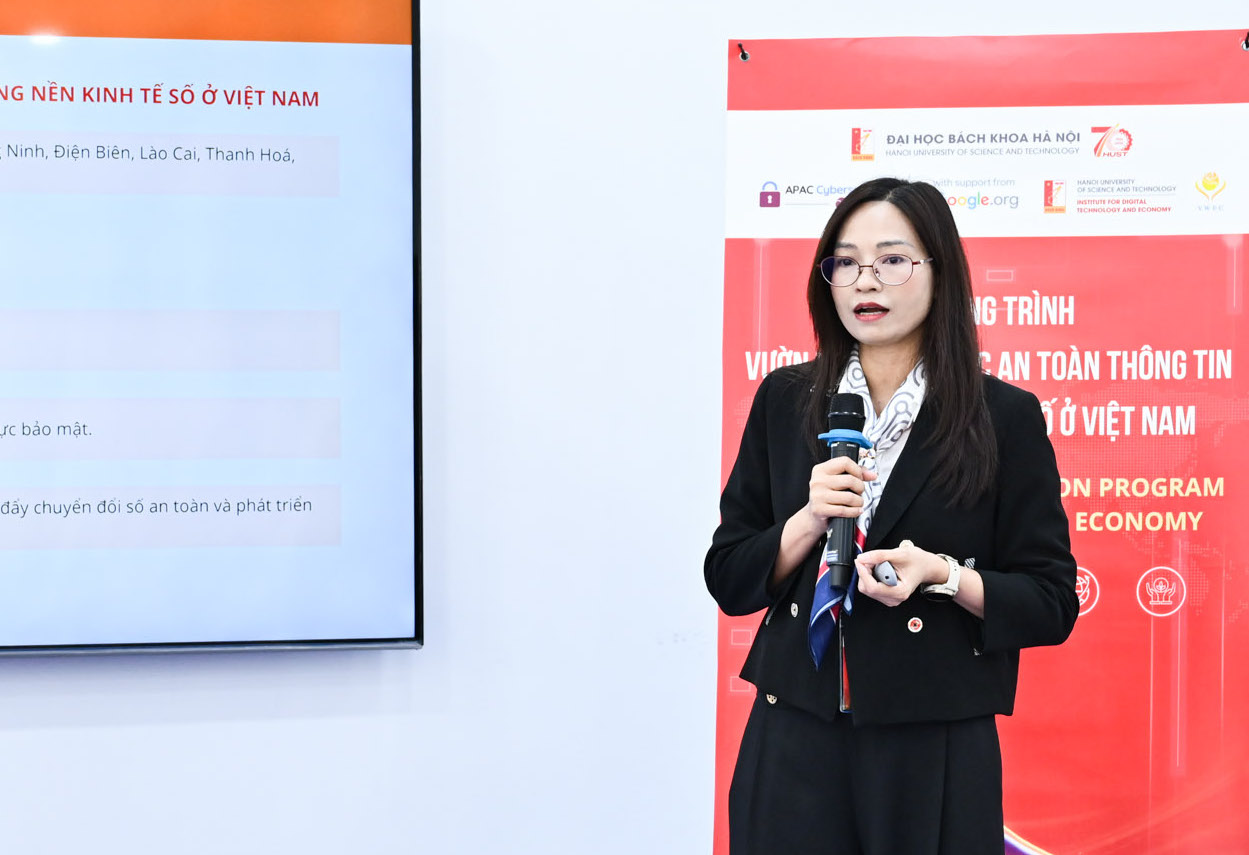
The project to build an information security incubator model at Hanoi University of Science and Technology according to standard operating procedures (Standard Operating Procedures - SOP, accompanied by basic technical systems.At the same time, develop a training program on information security and risk management, with the participation of experts and train a teaching staff.
About 80-100 students will be selected and trained in practical skills to support businesses in digital transformation.The project also provides advice and improves information security capacity for 200-300 small, micro and household businesses.
In addition, the program selects 10 outstanding candidates to develop their careers, share models at seminars, and build a monitoring and evaluation framework to spread the model to the community.


