
Experiment to "maintain the soul" of lotus leaves
Over the past time, Mr. Do Viet Duong (born 1992, residing in Dong Tien ward, Thanh Hoa province) has been known by many people for his rather special job: using lotus leaves in ponds and lakes as materials for art paintings.
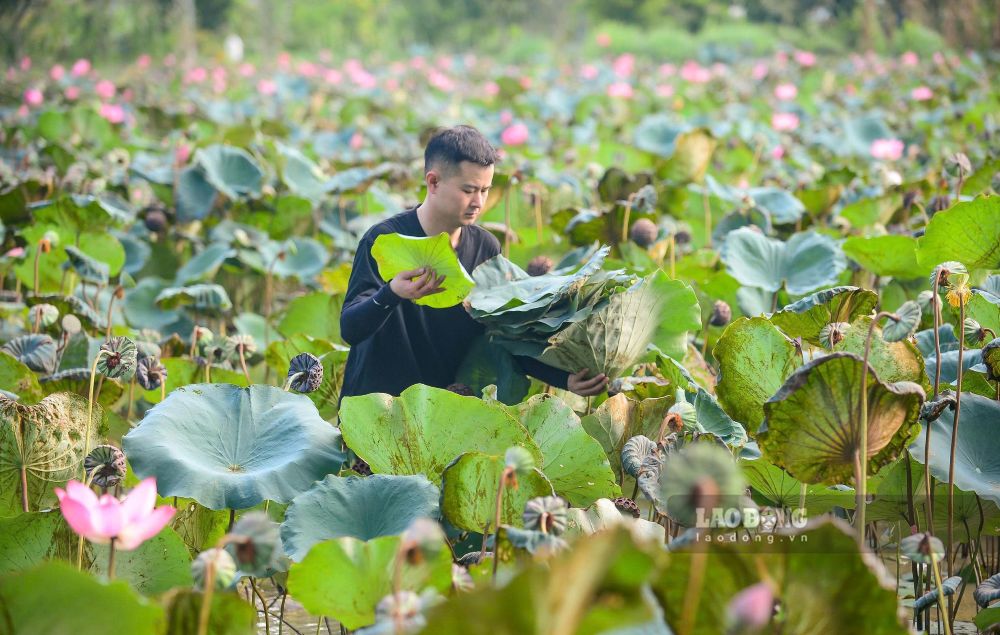
Mr. Duong said that the idea started from his love for lotus flowers. Seeing lotus flowers bloom and then wither, lotus leaves after a season of greening also wither, he always struggled to find ways to preserve that beauty longer.
I think if lotus leaves can be put into painting, each leaf will have a different life, no longer blooming and withering quickly like in nature. From that thought, I started to tinker and learn how to process lotus leaves to make paintings" - Mr. Duong shared.
From the idea to the complete product is a not-so-simple journey. He spent about a year continuously researching and testing. Many times the leaves after treatment were deformed, lost their texture or did not meet requirements. After many failures, he found a method to help lotus leaves transition from fresh to dry but still maintain their shape, nerves and necessary durability.
According to Mr. Duong, to have good ingredients, the selection of lotus leaves must be done from the beginning. Early in the morning, he often goes to ponds and lakes to choose leaves with appropriate size, shape and quality.
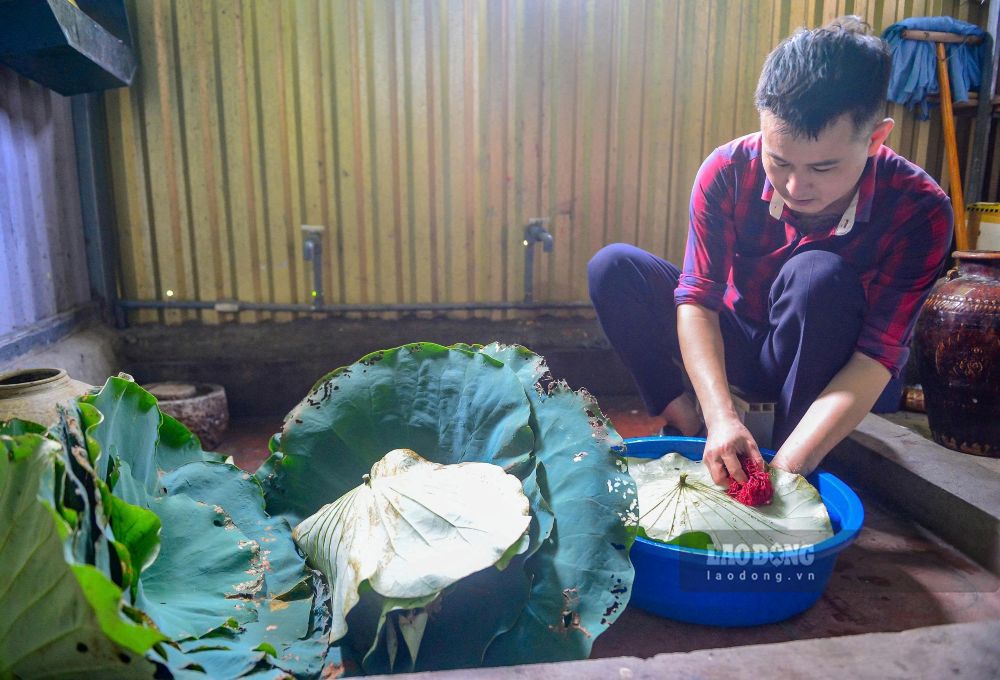
Leaves after being brought back are cleaned of dirt and impurities and then flattened. Next is the treatment stage to maintain the natural structure of the leaves.
“This is one of the most important steps. Just a slight deviation in dosage or treatment time, the leaf may lose its texture, be deformed and no longer be usable,” Mr. Duong said.
After the processing process, the leaves continue to be shaped to create a flat surface, then dried for many days until the moisture is completely removed. According to Mr. Duong, ensuring that dry leaves meet standards is very important, because if there is still moisture, the surface of the painting may blister or peel off after completion.
Before becoming a background for painting, each leaf continues to be shaped again. Then the creation process begins, bringing images and colors into each work.
From simple lotus leaves to million-dollar works
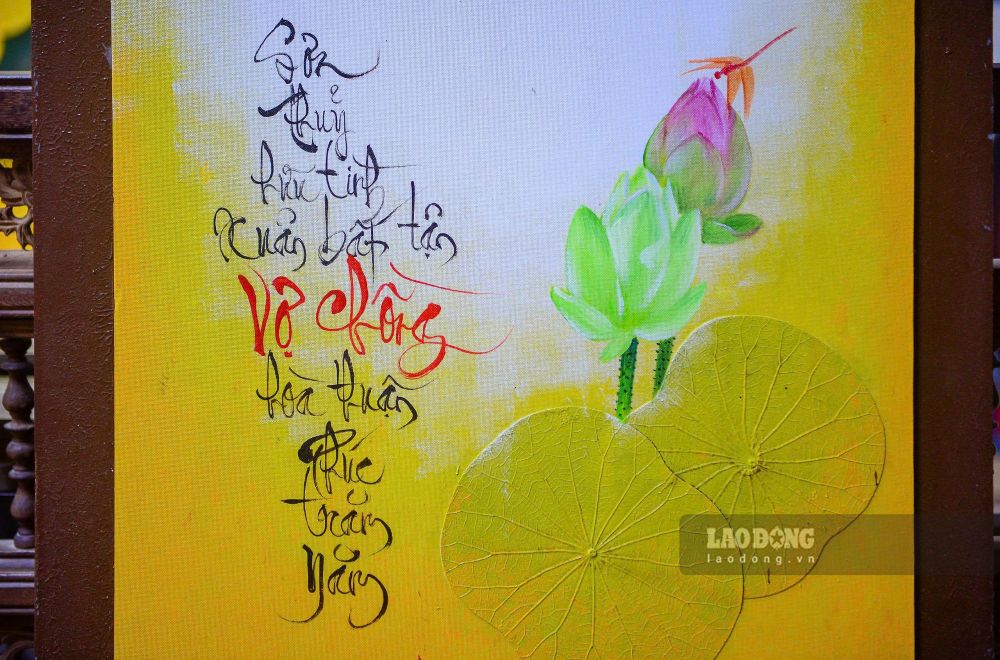
The special feature of lotus leaf paintings is that there are almost no two completely identical products. Each leaf has its own shape, tendon system and natural traces. The painter must rely on the characteristics of each leaf to choose the appropriate content and shaping method.
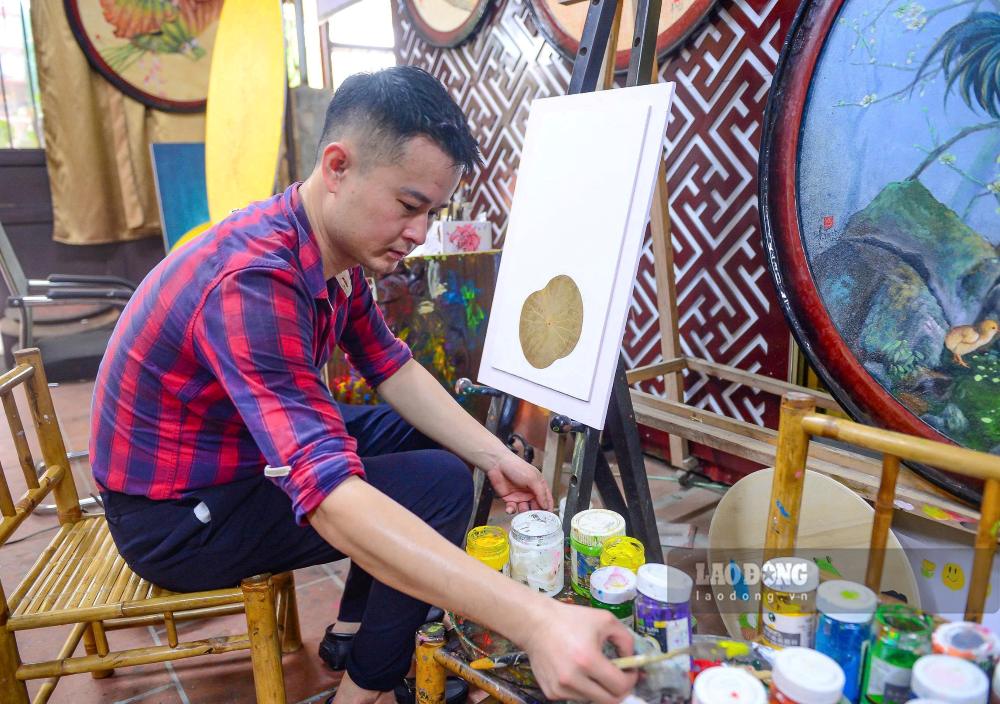
According to Mr. Duong, it is the difference in raw materials and the manual processing process that makes the value of each work not the same. Popular paintings cost from several hundred thousand VND. For works that require a lot of time, complex techniques, and serve customers with high requirements, the price can be up to tens of millions of VND.
Not stopping at existing products, Mr. Duong is continuing to research painting lines using lotus leaves to penetrate light. According to him, this is a much more difficult technique than processing lotus leaves to make ordinary painting blanks.


