
Nearly half a century of preserving the fire of traditional crafts
Passing the age of 66, artisan Nguyen Van Tuom (Bao Ha village, Vinh Lai commune, Hai Phong city) has not yet left the familiar sound of carving, continuing to keep the fire for the profession of sculpting statues and making folk puppets that has been associated with him for 47 years. Every day, he still quietly "blows life" into each piece of wood. Not only is he a craftsman, he is also an actor, instructor and puppet director, carrying in him the concern of preserving traditional art for future generations.
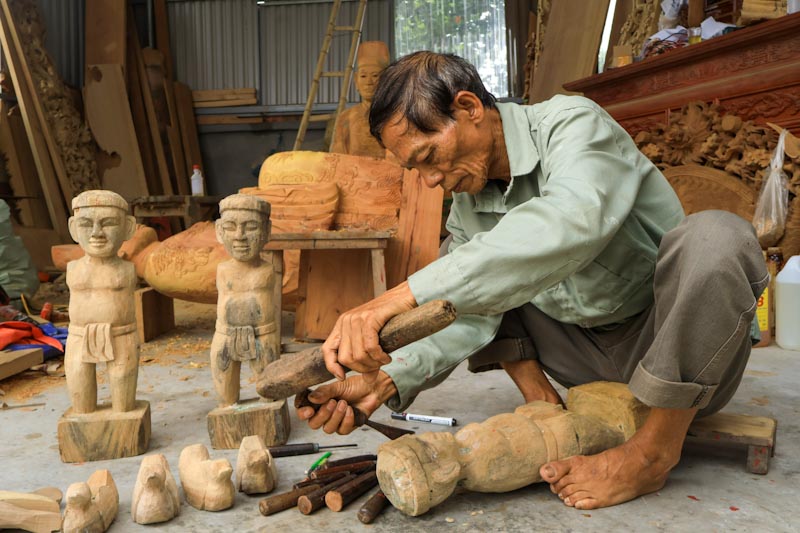
In the small wood workshop in Bao Ha village, the sound of wood chiseling still echoes regularly every day. The calloused hands of the old artisan quickly create shapes for new puppets. For many people, they are just lifeless pieces of wood, but for him, each piece of wood has its own soul waiting to be awakened.
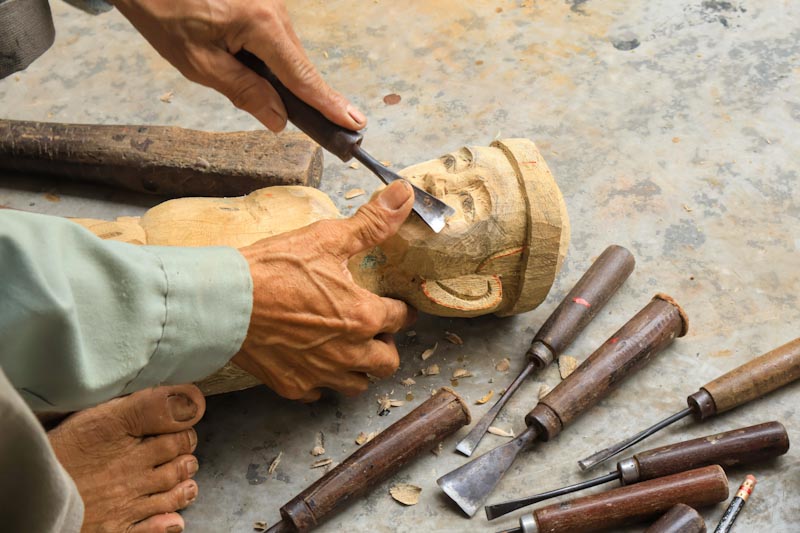
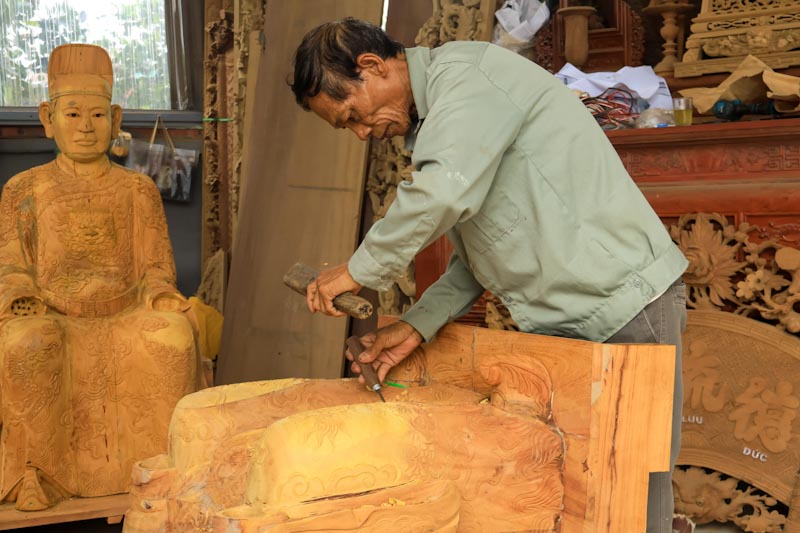
Artisan Nguyen Van Tuom recounted: He came to the sculpture profession when he was in middle school. At that time, artisans in the village taught him each chisel line, how to choose wood and create the aura for the character. Growing up in the space imbued with folk art of the craft village, he was soon fascinated by the rustic statues and puppets that could dance and sing on the water. From his initial love, he gradually saw the craft as part of life. "This is not only a job to earn a living, but also a culture and tradition left by his ancestors," Mr. Tuom shared.
According to him, the most important step to create a puppet is to choose wood. For water puppetry, the type of wood commonly used is ficus wood because of its lightness, softness, easy to carve, and can float on the water surface, helping artists easily control it when performing. "If you choose too heavy wood, the puppet will sink and perform very difficultly. Ficus wood is both light and easy to shape, so from ancient times, the elders have used this type of wood to make water puppetry," he said.
The most important thing when making puppets is not only the technique but also the immersion of the artisan. Every time he creates any character in a play, he must "soul" into that puppet to feel the character and spirit of the character. From the shape, facial features, expressions to colors and costumes, all must express the true spirit of the role.
Being Thach Sanh, you have to feel the gentleness and simplicity of the character. Being mother Dop, you have to have a sharp and witty look," he smiled gently.
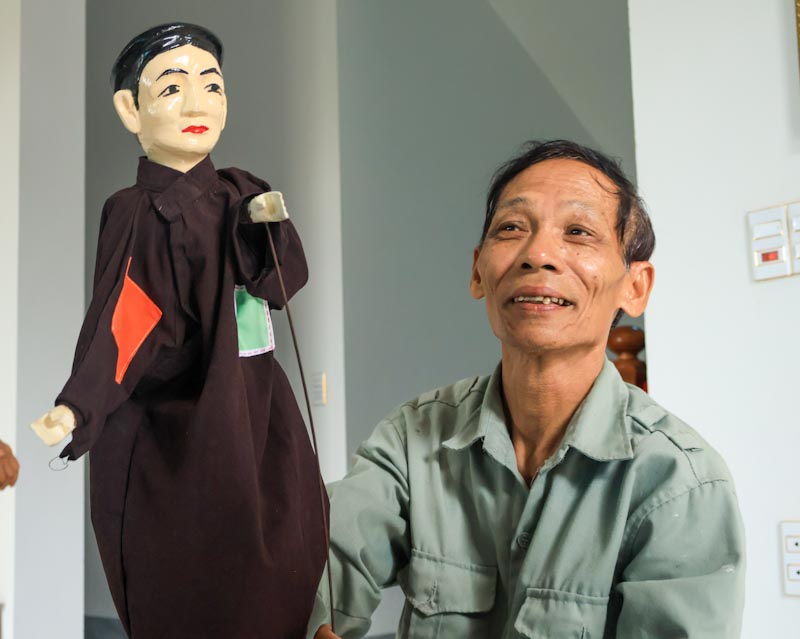
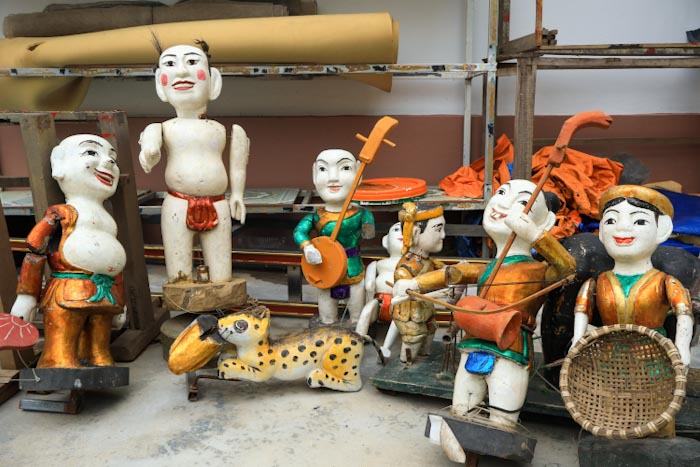
Perhaps that's why his puppets always have a very unique aura. From the mischievous eyes of Uncle Teu to the gentleness of the farmer, everything appears vividly through each line.
Keeping the puppetry soul from the wood workshop to the stage
Not only making puppets, he also directly performs and guides many young puppet actors. "This profession is not just about beautifying. The controller must understand the character so that the puppet has a soul," Mr. Tuom said.
Few people know that artisan Nguyen Van Tuom also once took on the role of puppet director, participating in staging content and performance movements for many folk performances.
After many years of being attached to the profession, he has now passed on the sculpture profession to his son. According to him, with the puppetry profession, not everyone can pursue it for a long time, because this job requires not only dexterity but also a "soul" to be able to send emotions into each puppet.
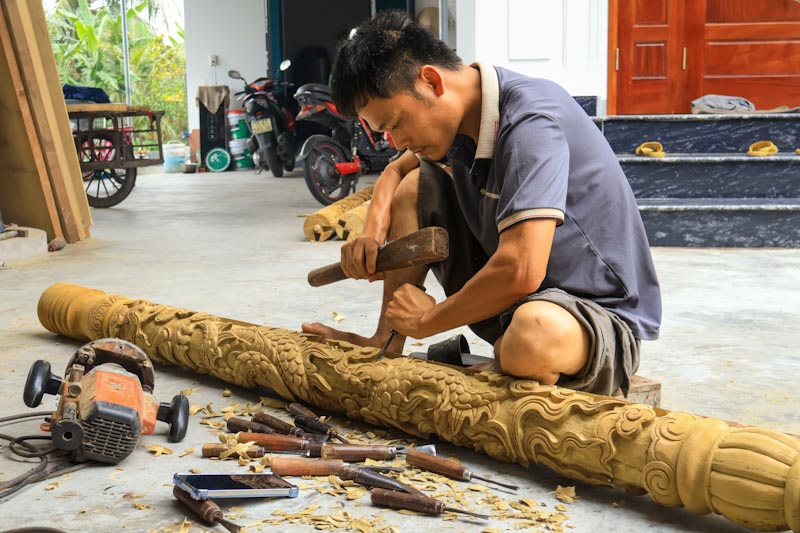
What makes the artisan most concerned is that fewer and fewer young people want to stick with the profession for a long time. Mr. Tuom also once opened a puppetry class for about 50 young people. Although everyone is excited to experience, very few people intend to follow the profession because the job requires perseverance, meticulousness and real passion, while modern life makes it difficult for many young people to spend many years pursuing a traditional handicraft profession with unstable income.


