
Digging secret tunnels to feed guerrillas
Ms. Nguyen Thi Bam was born in Mau Ty year (1888), married when she was only 13 years old. She and Mr. Tran Van Thao (1891-1935) gave birth to 8 children (5 males and 3 females). Ms. Bam was quiet, worked hard, and worked diligently all year round.
Mr. Bam's life went through many upheavals. In 1935, when he was only 44 years old, Mr. Tran Van Thao passed away. Since then, Mr. Bam has been the one in charge, taking care of the whole family.
After the August Revolution in 1945, during the resistance war against French colonialism, his children participated in revolutionary activities very actively. Mr. Bam himself kept cadres hidden, taking care of the resistance cadres with food and accommodation very thoughtfully. Everything from the pond bank to the hills behind his house were dug secret tunnels for guerrillas to hide when the enemy raided.
According to the History of the Hai Phong City Party Committee, also at Mr. Bam's 5-compartment house, the expanded District Party Committee Executive Committee Conference took place at the beginning of October 1948. The conference aimed to assess the general situation and decide to launch the "Overall destruction of bandits, elimination of bandits, attacking enemy posts, launching guerrilla warfare" throughout Thuy Nguyen district. The basic purpose is to "Disperse the bandit apparatus in the district; attack internally some posts and disarm security guards, equip people, guerrillas, and district soldiers to launch guerrilla warfare".
Under the direct leadership of the Party cell and the Administrative Resistance Committee, the campaign on October 25 was urgently prepared. Mass organizations secretly met, prepared forces, flags, weapons, and communications. At exactly 6 pm, in the hamlets, the command drums rang out continuously, the loudspeaker and slogans echoed. The semi-concentrated guerrilla force of the commune combined with guerrillas from neighboring communes to surround enemy posts and posts in Trinh Xa, Nui Deo, Cau Gia, Thanh Lang; calling on enemy soldiers to surrender, and at the same time setting fire to markets in the district, causing the enemy to panic and fear. People were enthusiastic and excited, and the guerrilla force developed strongly. The contributions of Mrs. Nguyen Thi Bam were recognized by the Government and awarded the First-class Resistance Medal.
From ancestral temple to historical relic
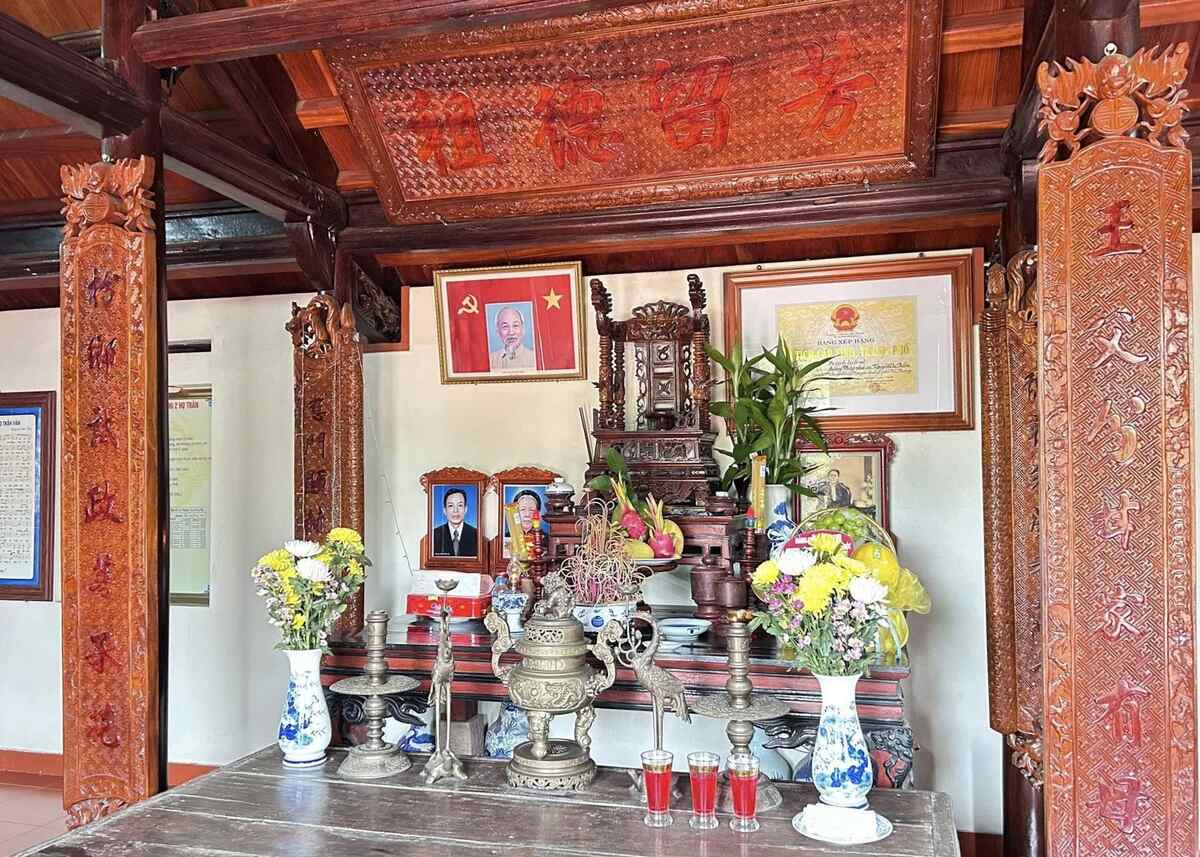
The Anti-French Revolutionary Resistance Facility of Mrs. Nguyen Thi Bam's house was originally the ancestral house of the lineage. The project was built from the winter of Canh Thin year (1880). At that time, the project had a two-digit architectural plan, including 5 front halls and 3 rear halls; between the two buildings was a yard about 2m wide; the East rear hall had a water tank, and the West had a dragon flower tree. In 1960, the rear hall was heavily damaged and was removed. In 2017, the front hall was repaired by descendants in the lineage.
The Anti-French Revolutionary Resistance Facility of Mrs. Nguyen Thi Bam's house is currently facing Southwest. The architectural structure of the building has a Nhat-shaped architectural diagram, in the style of a retaining wall, with a traditional tiled roof. The space of the building is 3 compartments and 2 porches (also known as 5 compartments). Connecting the load-bearing frame by traditional ironwood panels with 2 middle compartments, because the roof structure is in the style of "roof stacking", connecting from the main column to the army column using "gỗ ngỗng", the back of the kẻ performing important tasks, supporting the roof panels at the top; below there is a roof rack. Decoration on the panels is mainly focused on the cheeks of the first sentences, the cheek is raised with stylized leaf themes. Because the two sided compartments are for the roof "roof stacking of gongs", because the armpits are "ván mê". Decorative patterns on the cheek cheeks because the
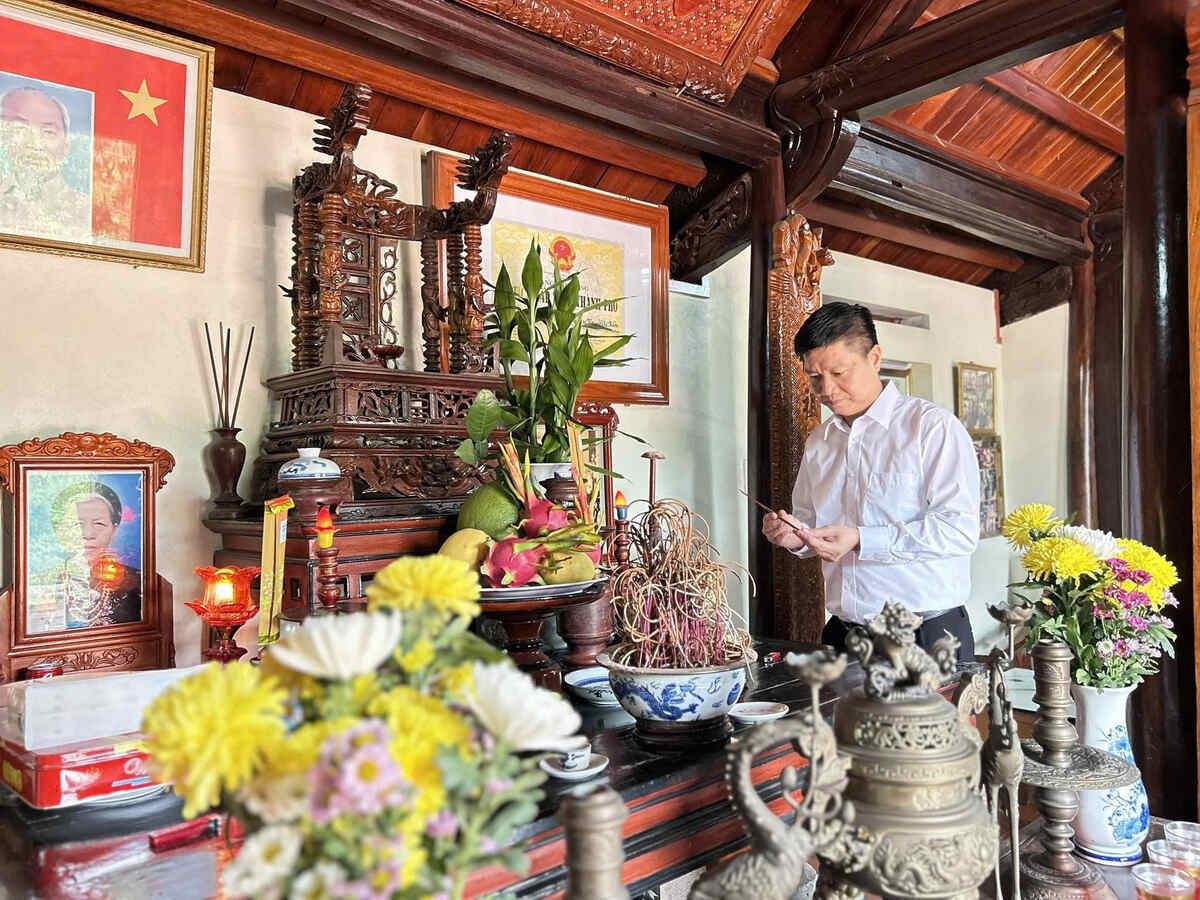
The Relic of the Anti-French Revolutionary Resistance Facility of Mrs. Bam's house is an ancient, beautiful architectural work, artistic architecture typical of the Nguyen Dynasty (late 19th century, early 20th century). With historical and cultural values, in 2019, the Anti-French Revolutionary Resistance Facility of Mrs. Nguyen Thi Bam's house was recognized by Hai Phong City People's Committee as a city-level historical relic.
Currently, the Relic of the Anti-French Revolutionary Resistance Center of Mrs. Nguyen Thi Bam's house is also the ancestral temple of the Tran lineage, a space for descendants of the lineage to gather here every year, organize ancestral death anniversaries, to commemorate and express gratitude for the merits of birth and nurturing of ancestors to later generations. Every year at the relic, descendants of the lineage organize two death anniversaries for Mr. Tran Van Thao and Mrs. Nguyen Thi Bam. The death anniversary is held normally, without rituals. Besides the annual ancestral death anniversary, to bond brothers and descendants of the lineage, the lineage has established a scholarship fund to encourage descendants in the lineage to be obedient and study well, and a charity fund to encourage and help difficult families or those who have lost loved ones.
On holidays, Tet, and celebrating the Traditional Day of Thuy Nguyen Uprising (October 25), leaders of Le Ich Moc ward offer incense at the Relic of the Resistance Revolutionary Base against France, Mrs. Nguyen Thi Bam's house. Thereby, expressing the deep gratitude of the Party Committee, government and people of Le Ich Moc ward to those who have contributed to the revolutionary cause of their homeland and country.


