
Not just a simple painting exhibition, the beloved countryside is the crystallization of more than 40 years of diligently going to the field, observing and composing by him, who devoted his whole life to recording the life, customs and culture of Vietnamese ethnic groups across the country.
From golden ripe rice fields, the Tay Nguyen people's festival to the daily labor images of ethnic minorities in the highlands, each work is not only scenery but also the rhythm of life, the breath of the community.
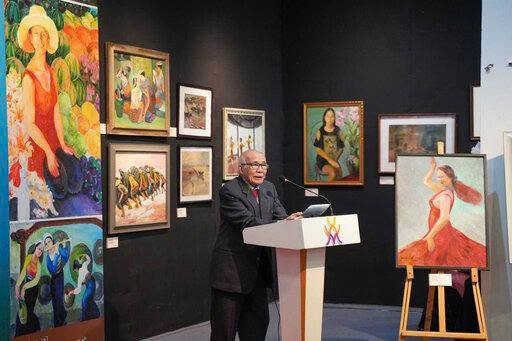
Artist Phan Ngoc Khue is widely known by professionals as a veteran researcher and art critic, especially the massive work on Hang Trong Folk Paintings. However, in "Beloved Rural Areas", people see a very different Phan Ngoc Khue: soaring, lyrical but also full of anxiety.
He paints on many materials: from oil paint, color powder, watercolor to wood carving. Throughout the works is love for the culture of ethnic minorities and rural life in Vietnam.
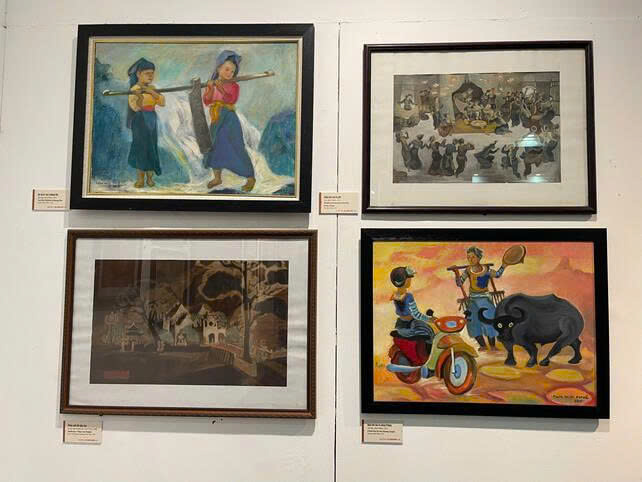
The most special highlight, and also the most profound "soul" of this exhibition, is the painting section created using bee wax dyeing technique (brown bulb/bamboo dyeing).
This is a bold combination of modern painting and traditional handicrafts of ethnic minorities in the highlands (such as H'Mong, Dao).
Unlike ordinary painting materials, beeswax with its thickness, texture and characteristic warm brightness when dyed brown creates a painting surface that is both soft and deep as if forged by time.
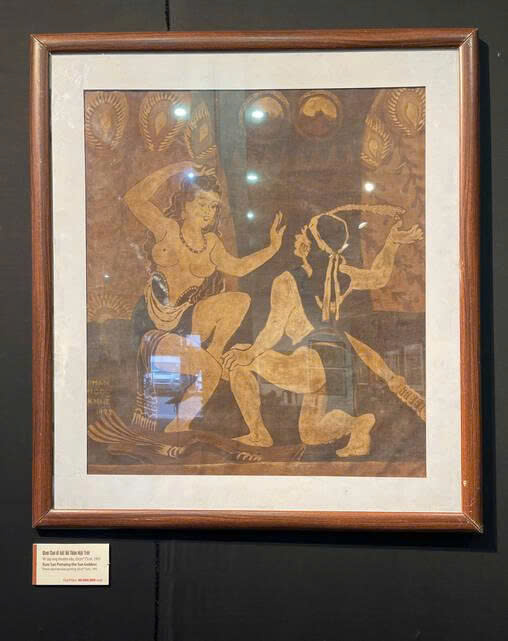
Tools and materials used for wax painting techniques are all extracted from familiar materials in daily life. The painted fabric is mainly flax, woven from flax fibers; after washing, the fabric is flattened by spreading it on a plank and smoothing it evenly with wild boar claws.
Beeswax paintbrushes have a simple structure, consisting of bamboo handles and small copper plates at the top, which are rounded and smooth to easily create strokes. Beeswax is heated to melt completely and always kept in a liquid state throughout the drawing process.
When the pattern is completed, the fabric continues to be boiled to remove the wax layer, then dyed and dried in many suns, creating complete linen fabrics with natural and durable colors.
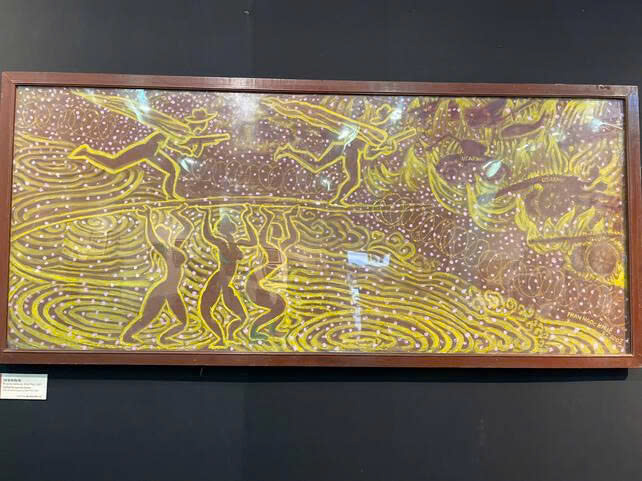
Beeswax material dyed brown with a soft, warm surface, natural dark brown light is not simply a shaping technique, but like a separate artistic language. It has created a strange visual effect that no industrial color can imitate.
The beeswax borders, although not as sharp as iron pens, are rustic and spontaneous, fully depicting the simplicity and sincerity of the highland people. This is the point that makes the exhibition not only admired with the eyes but also felt with memories and emotions.
In the context of increasingly urbanized society, traditional values are gradually fading away, the exhibition is like a subtle reminder of the origins and cultural identity. Phan Ngoc Khue's paintings not only retain simple perspectives on rural life but are also a thank you to the communities he has been attached to throughout his life.
Not only stopping at displaying, the artist also presented 4 works to the Vietnam Women's Museum, showing the deep connection between the artist and the cultural preservation institution - which makes the collection more long-lastingly preserved and shared with the community.
The exhibition "Beloved Countrysides" at the Vietnam Women's Museum opens until January 10, 2026, promising to be an unmissable destination for those who love Vietnamese art, history and traditional culture.


