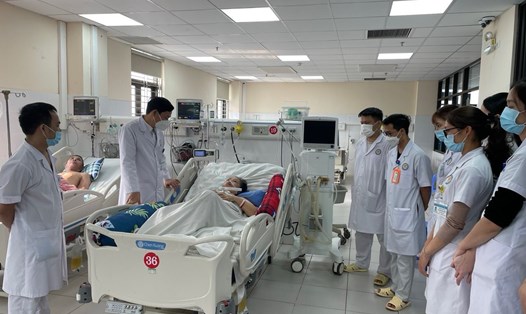
Mild chest pain... then cardiac arrest after a few minutes
A9 Emergency Center (Bach Mai Hospital) received a 44-year-old male patient, who was previously completely healthy, did not smoke, and had no cardiovascular disease.
The patient walked to the hospital on his own due to mild chest tightness. Initial examination, all indicators were stable, and the electrocardiogram only had atypical changes. It is expected that if the tests are normal, the patient may be sent home for monitoring.
However, while waiting for the results, the patient suddenly collapsed, lost consciousness and had cardiac arrest.
Doctors immediately performed cardiac tamponade, electroshock, and endotracheal intubation. After 15 minutes of intensive resuscitation, the patient's heartbeat returned. The results of coronary angiography later showed a stenosis of up to 99% of the anterior ventricular artery (LAD) due to muscle aggregation - the cause of malignant arrhythmia.
The patient was placed with a stent in time and fully recovered, leaving no sequelae.
Hidden Person" causes sudden death in young people
According to experts, coronary embolism is an abnormality that can exist silently. When exerted or stressed, the vessels are compressed, reducing the flow of blood to feed the heart, leading to myocardial ischemia, dangerous arrhythmia, and even sudden death.
Notably, the above case has no risk factors, symptoms are very mild, initial tests are normal. The first manifestation of severe disease is ventricular fibrillation and cardiac arrest.
If not treated promptly, the risk of death is very high.
Do not be subjective with mild symptoms
Doctors warn: Young people are not synonymous with safety. Past chest pains, discomfort in the heart area, even mild ones, can be early warning signs.
Relying solely on electrocardiograms or blood tests may not be enough to detect dangerous lesions.
Currently, modern diagnostic techniques such as photon counting computed tomography help detect coronary artery abnormalities early, including minor lesions or aggregates.
Doctors recommend that you should not be subjective about chest pain, even if it is mild. Early examination and full assessment can help prevent dangerous cardiovascular events, even save the patient's life.