
Businesses that change slowly will reduce the ability to retain personnel.
Talking to Lao Dong Newspaper reporters, Mr. Roland Wee - Chairman of Great Place To Work ASEAN and ANZ - Global Agency for Workplace Culture said that businesses currently have to promote the diversification of supplier networks, restructure operations by region, and accelerate digital transformation and decentralize decision-making to local units.
According to Mr. Roland Wee, short-term response measures are no longer effective enough. The best resilient organizations are often businesses that have built an adaptive structure and a flexible culture before the crisis occurs. "This shows that organizational health is becoming a strategic asset," he said.
Representatives of Great Place To Work believe that the culture of workplaces globally is clearly shifting. If previously labor relations mainly revolved around remuneration and loyalty, now workers expect more from the purpose of work, cohesion and sincere care from businesses.
Along with that is the trend of building a working environment that values "psychological safety", where workers can come up with ideas, experiment and adapt without worrying about risks.
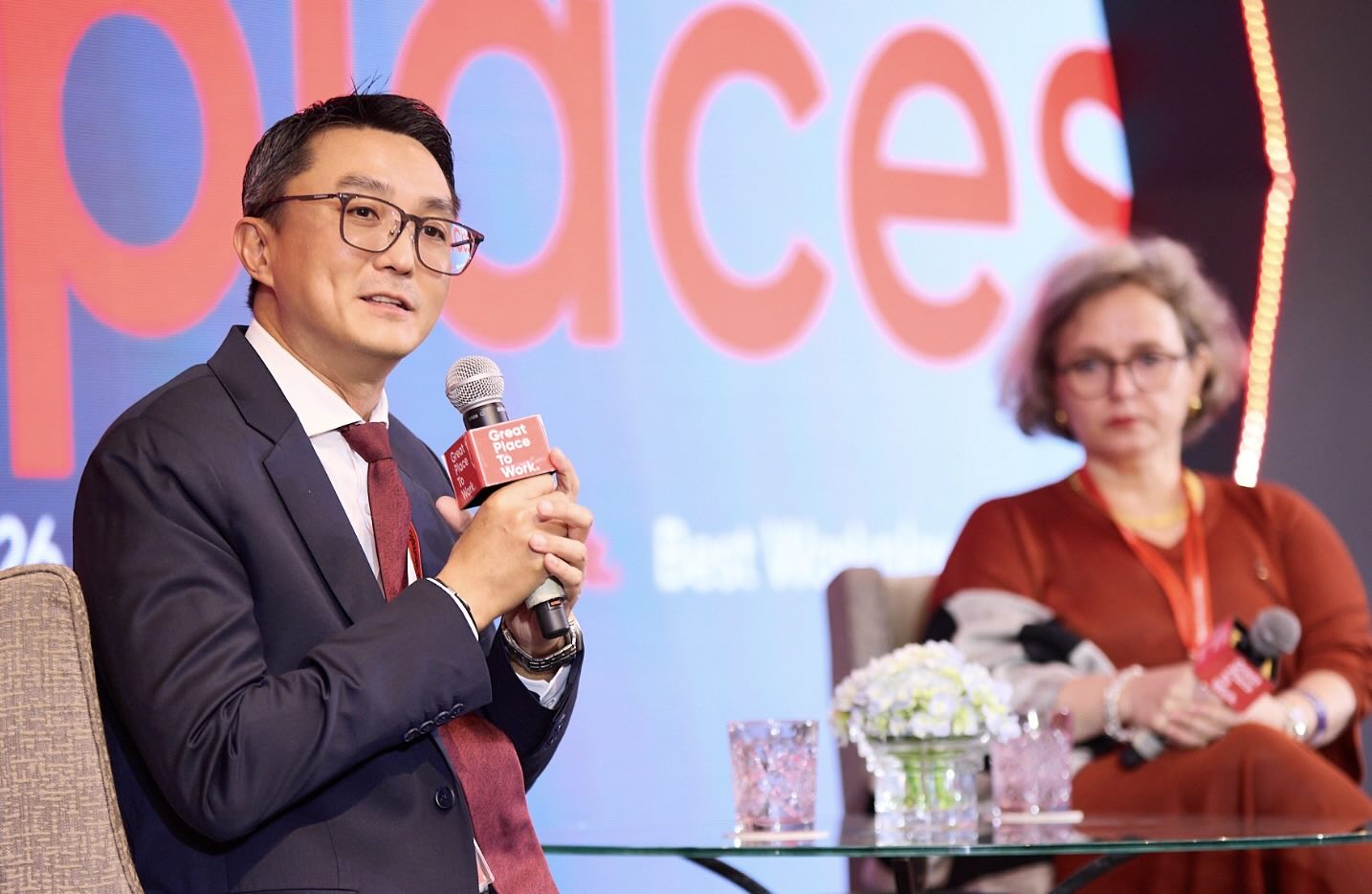
Organizations that are slow to change according to this trend are facing a clear decline in engagement and personnel retention capacity" - Mr. Roland Wee shared at the announcement event of the ranking of the top 35 best workplaces in Vietnam 2026.
The environment determines work efficiency
According to research by Great Place To Work, businesses with a highly reliable working environment often achieve outstanding efficiency in many indicators such as innovation, customer service quality and adaptability to changes. Mr. Roland Wee believes that corporate culture is no longer a formalistic factor but has become a structural advantage that determines the organization's sustainability.
Data in the ASEAN region shows that personnel in highly trusted organizations are 4 times faster in adapting to change and 3 times more committed than the general level. At businesses in the "Best Workplaces" group, innovation activities are even further promoted in crises thanks to workers feeling safe when proposing new ideas.
From a personnel perspective, Mr. Roland Wee said that the "command and control" management model is gradually losing its effectiveness. Instead, businesses need leaders who know how to listen, communicate transparently, delegate power and build trust for the team.
According to him, in 2026, workers not only need technical expertise but also need to build adaptive capacity, collaborative ability and mental resilience to work in a constantly changing environment. "The most valuable personnel is not necessarily the most knowledgeable person, but the person with the best resilience and cooperation," he said.
AI creates a major shift in business operations
Besides economic fluctuations, the rapid development of AI is also creating a major shift in business operations. Mr. Roland Wee assessed that the speed of AI development in the past time is "incroyable", when many milestones that were once predicted to take a decade now only take place in about 18 months.
According to him, AI is no longer just an internal automation tool but has become a "direct productivity layer", deeply integrated into the analysis, research and decision-making process of professional personnel. However, this development also entails an increased risk of anxiety and reduced cohesion if businesses do not manage the transition process in a understandable way.
However, the view on AI has now changed in a more positive direction. Instead of seeing AI as a technology that replaces humans, many businesses are considering it as a tool to help "amplify" human resources.
According to Great Place To Work, the level of AI application is currently clearly differentiated among businesses. Some organizations have integrated AI into core processes such as research, data analysis or customer care, while many other businesses are still at the testing stage.
The future of the labor market is not a battle between humans and AI, but human capacity is multiplied by AI to serve the meaningful goals of the organization" - Mr. Roland Wee emphasized.


