
The Front needs to play a role in connecting businesses, scientists, and people.
On the afternoon of May 11, at the first working session of the 11th National Congress of the Vietnam Fatherland Front, term 2026-2031, Workshop Center No. 5 discussed the topic: "Innovating operating methods, building a team of Front officials close to the people, close to the people, accompanying the people, promoting the application of science and technology, digital transformation in the era of national rise".
Mr. Bui Quang Huy - Member of the Party Central Committee, Vice Chairman of the 10th Central Committee of the Vietnam Fatherland Front, First Secretary of the Central Committee of the Ho Chi Minh Communist Youth Union; Ms. Bui Huyen Mai - Non-professional Vice Chairman of the Central Committee of the Vietnam Fatherland Front, Chairwoman of the Central Committee of the Vietnam Fatherland Front of Hanoi City chaired the discussion center.
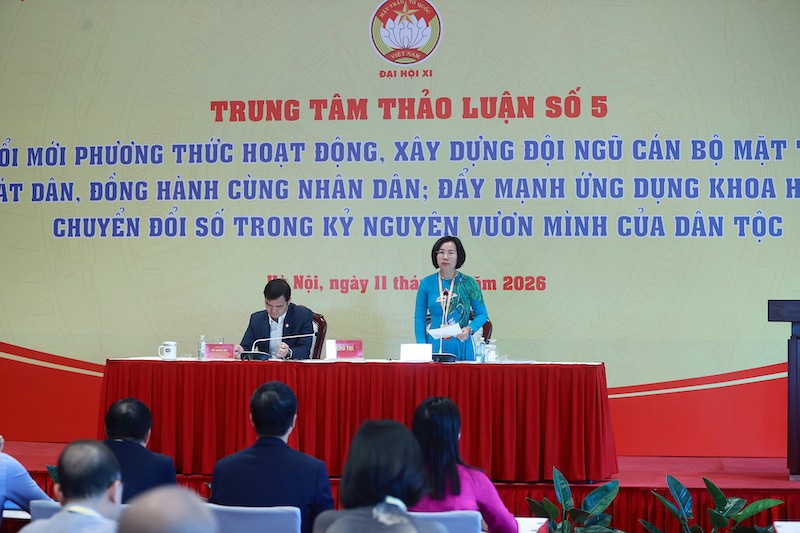
Speaking at the discussion center, Assoc. Prof. Dr. Vo Si Tuan - Director of the Institute of Oceanography said that from the practical work of marine research, he found that the application of science and technology in seafood exploitation and marine farming is still very limited.
The reason is not that people do not want to apply technology, but because the marine economy of fishermen and farms is still spontaneous, small-scale, everyone does their own thing, leading to difficulties in deploying science and technology.
From that reality, he believes that to apply and transfer science and technology effectively, it is necessary to develop high-tech industrial marine farming.
Assoc. Prof. Dr. Vo Si Tuan said that the whole country has tens of thousands of households raising aquatic products, but the situation of cages and rafts distributed spontaneously, lacking connection, often facing epidemics, storms and floods and many other risks, causes great economic damage.
Citing the damage caused by Typhoon Yagi in Quang Ninh recently, Assoc. Prof. Dr. Vo Si Tuan said that Van Don district alone suffered damage of more than 2,000 billion VND. With current technology, the marine farming industry can hardly effectively cope with climate change and natural disasters.
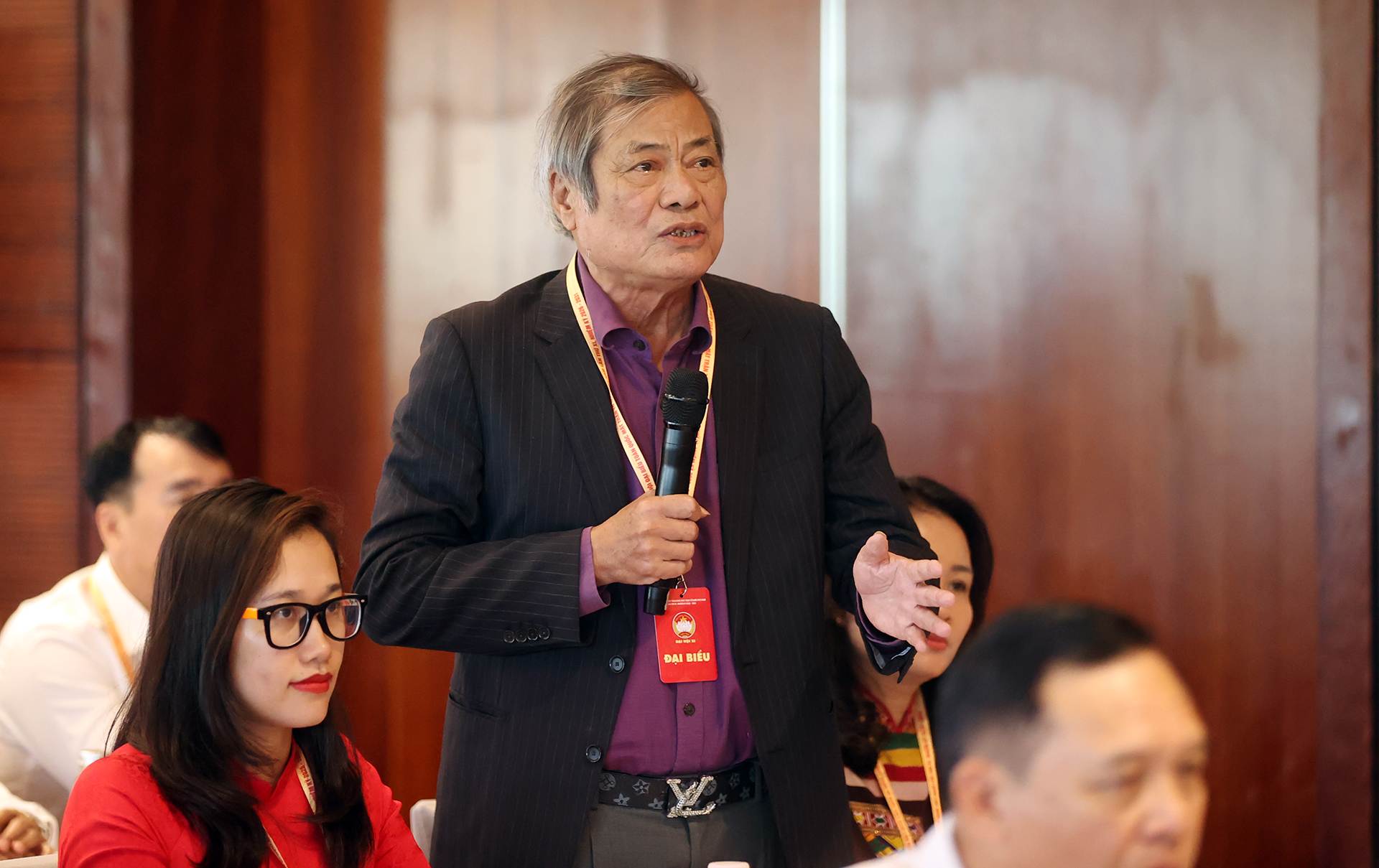
According to him, the demand for developing high-tech marine farming is very large, but people can hardly implement it themselves without linkage and support. This is also the role that the Front needs to promote.
The Vietnam Fatherland Front currently has a system of scientific associations, fisheries associations, marine farming associations and the participation of many large enterprises. Therefore, the Front needs to play a role in connecting businesses, scientists and fishermen to form a modern industrial marine farming foundation, thereby promoting the application of science and technology.
Assoc. Prof. Dr. Vo Si Tuan also emphasized the requirement to innovate thinking for Front officials in this field. Front officials do not necessarily have to understand the entire expertise, but must know how to use experts, promote the effectiveness of intellectual resources to organize, connect and promote development models.
In the immediate future, he proposed to select a number of localities to build models of applying science and technology in developing high-tech marine farming, with the pioneering role of the Front in connecting and organizing implementation. If this role is well performed, the Front system will affirm its important position in marine economic development.
Building a synchronous and interconnected "Digital Front" ecosystem from province to grassroots level
Expressing her opinion at the discussion session, Ms. Ngo Thi Kim Hoan - Standing Vice Chairwoman of the Central Committee of the Vietnam Fatherland Front of Hung Yen province affirmed that digital transformation in Front work must continue to be implemented strongly, practically and more synchronously.
The focus is on building a modern, interconnected, close-to-people, and close-to-people Front system; taking efficiency in serving the People and consolidating the great national unity bloc as a consistent goal.
In which, it is necessary to continue to innovate thinking, enhance the role and responsibility of leaders in the digital transformation of the Front system.
Identifying digital transformation is not only a technological task, but also a requirement to innovate leadership methods, operations and mass mobilization methods in the digital age. Heads of Fronts at all levels must be truly pioneers, directly direct, directly use and be responsible for the effectiveness of digital transformation in their units.
Build a synchronous and interconnected "Digital Front" ecosystem from province to grassroots level. Continue to improve the operating platform, database and digital interaction channels between Fronts at all levels and the People in the direction of unification, interconnection, and data sharing.
At the discussion, representatives of the Vietnam Women's Union said that it is necessary to take digital transformation as a foundation to improve the quality of activities to gather and attract union members.
It is necessary to use data to understand the needs of women and people in the community correctly; at the same time, apply technology to better serve members, take innovation to improve the effectiveness of movements, contributing to the successful implementation of the Digital Transformation Project of the Vietnam Fatherland Front.
Representatives of the Association also said that currently the Ho Chi Minh Communist Youth Union has a Youth application, the Women's Union has a Women's application and many other digital platforms. Therefore, it is necessary to build a unified digital ecosystem throughout the Front system.
Accordingly, this ecosystem will include components for women, farmers, youth and other forces to continue upgrading and perfecting the shared digital platform.
In addition, it is necessary to develop a database system for officials, members, and union members. Representatives of the Association said that there is a large intersection of members between organizations, such as among union members of organizations with female members and vice versa.
Therefore, when there is shared data, sharing needs and deploying synchronous impacts will be more effective, thereby better supporting members and union members.


