
Serious environmental pollution
Xa Cau village, Ung Thien commune, Hanoi city is the locality with the largest plastic waste recycling activity in Hanoi. However, along with this livelihood activity is the serious environmental pollution that has existed for decades, directly affecting people's lives.
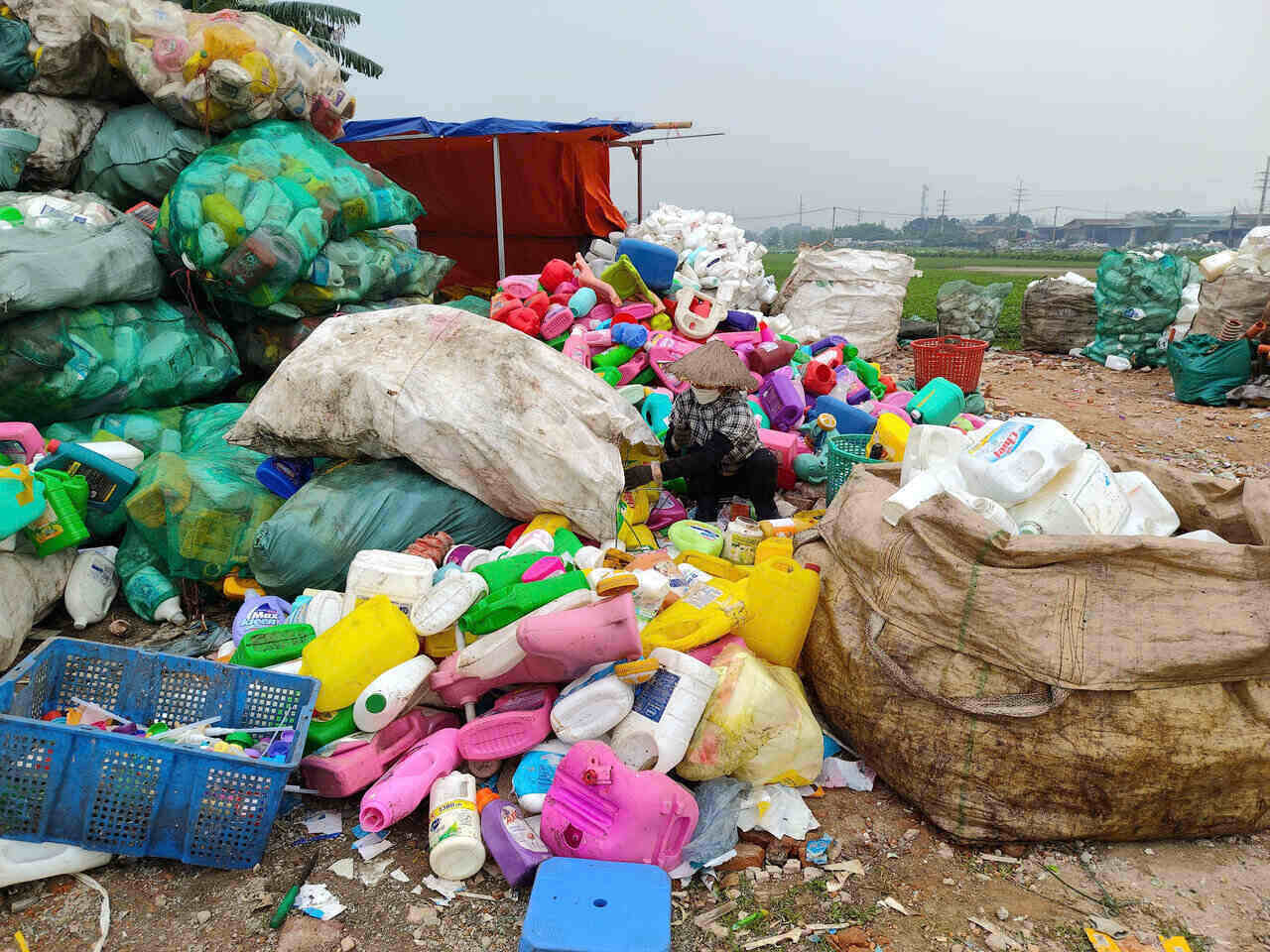
According to statistics from Ung Thien Commune People's Committee, Xa Cau village currently has about 200 households engaged in scrap collection, sorting and recycling. On average, each month, households collect from 120-180 tons of scrap of all kinds for recycling.
For many years, the scrap recycling profession has become the main source of livelihood for thousands of people in the locality. However, alongside this activity is the prolonged and increasingly painful environmental pollution. In the process of purchasing, sorting and recycling, a large amount of non-reusable waste is discharged into the environment.
Records of Lao Dong Newspaper reporters at a scrap collection point in Xa Cau village show that a strong stench rises from scraps such as bottles, jars, plastic cans, barrels, basins, bottle shells, water pipes... gathered by people into "mountains", even spilling into the rice field area.
Mr. N.V.D (resident of Xa Cau village) angrily said: "The scrap collected is piled up everywhere, from the roadside to the rice field bank, emitting a foul odor, and flies are breeding a lot. People living around are very worried because it affects their health. Knowing that this activity causes pollution, we are also powerless. We hope the authorities will soon have measures to handle it.
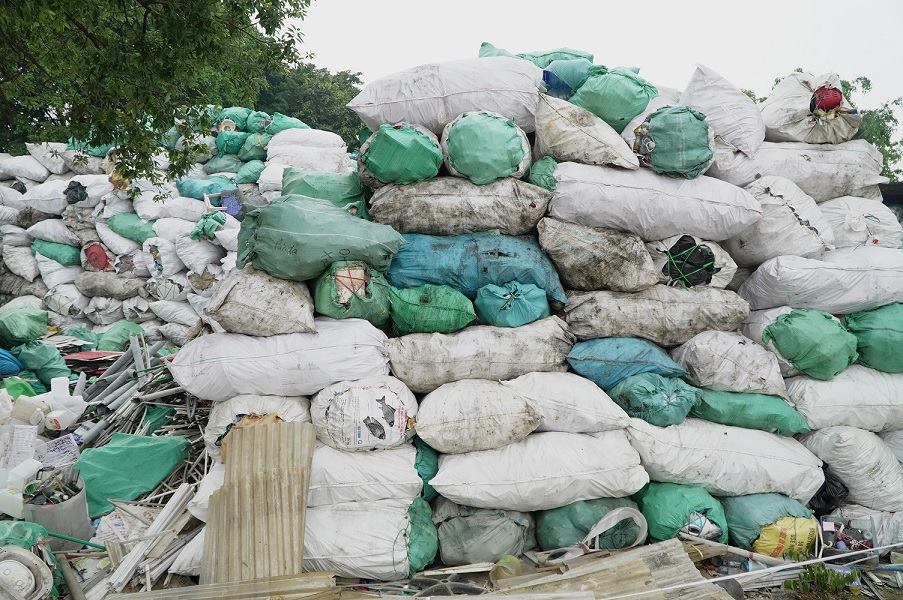
Not only causing environmental pollution, scrap recycling activities here also pose a high risk of fire and explosion. According to reporters' observations, many scrap purchasing and recycling facilities are located close together in residential areas. Plastic scrap and packaging are flammable, so if a fire occurs, the risk of fire spreading is very high.
Need to soon plan a recycling area separate from residential areas
On the afternoon of March 12, working with Lao Dong Newspaper reporters on the above situation, Mr. Nguyen Anh Tuan - Vice Chairman of Ung Thien Commune People's Committee, said that people's reflections on the environmental pollution situation in Xa Cau village are correct. Mr. Tuan also admitted that this pollution situation has existed for decades but has not been completely resolved.
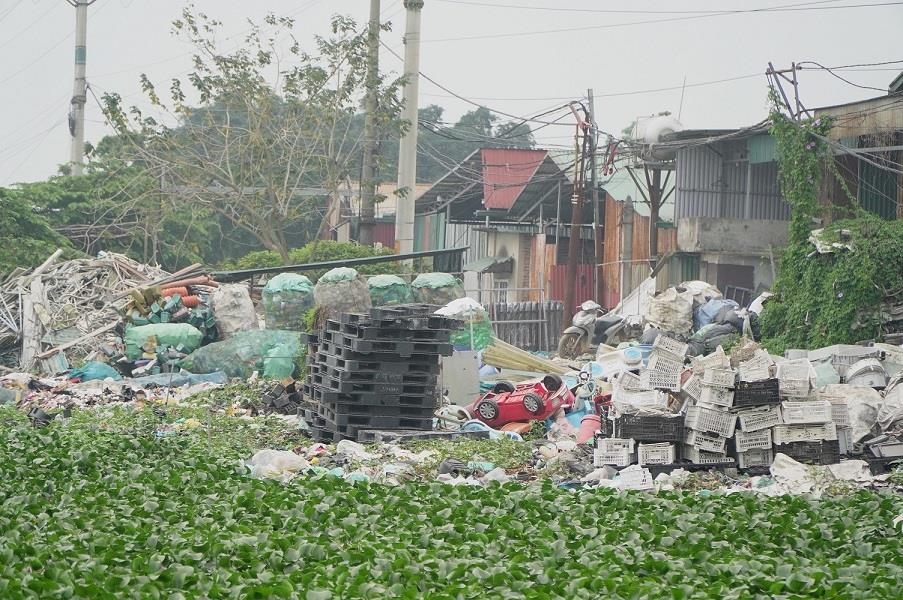
The commune identifies Xa Cau village as one of the hotspots for environmental pollution in the area and continuously directs functional agencies to conduct statistics and reviews.
Previously, during the recycling process, unusable waste was often dumped by people at spontaneous landfills. However, because the environmental unit only collects domestic waste and does not collect this type of waste, the amount of accumulated waste is quite large, causing many difficulties for treatment.
Also according to Mr. Nguyen Anh Tuan, from August 2025, after implementing the two-level government model, the commune has coordinated with the village to hire a unit to collect, weigh and treat waste. Households that generate waste must pay for collection and treatment costs themselves. In the immediate future, this measure aims to limit the occurrence of more accumulated waste in the area.
In addition, the commune has established an inter-sectoral delegation to inspect and handle 40 cases of violations related to the environment, especially the situation of plastic waste causing pollution.
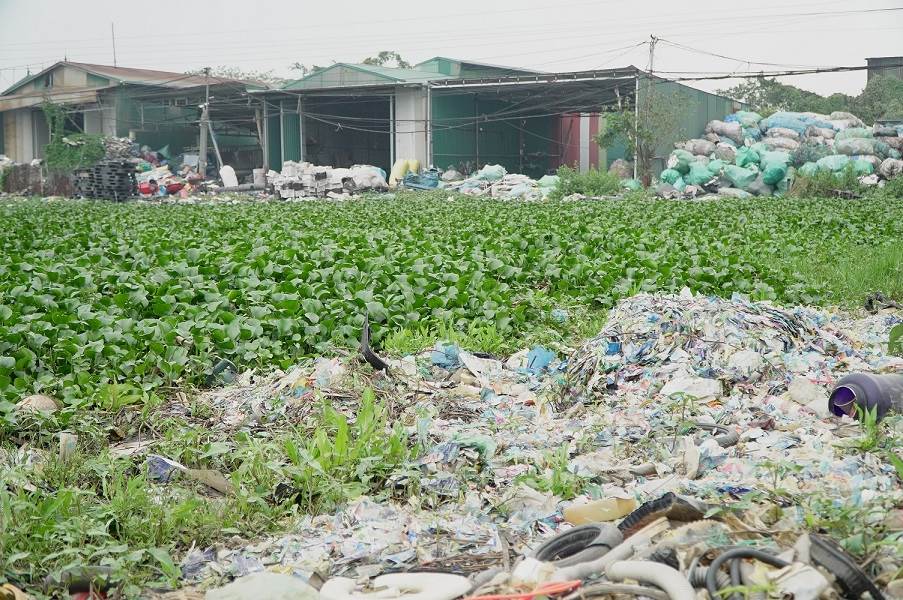
However, according to local leaders, completely eliminating the scrap recycling profession in Xa Cau village is very difficult, because this has become a source of livelihood for hundreds of households with thousands of people over the years.
In the long term, the local government is preparing a land planning project of about 2.3ha to submit to departments and branches for consideration and approval, thereby allocating resources to build a centralized scrap collection and treatment area. Planning a recycling area separate from residential areas is expected to both ensure livelihoods for people and gradually reduce prolonged environmental pollution in the locality.


