The gap in people's awareness
The case of Ms. Nguyen Ngoc Trinh (31 years old, from Dong Thap, currently living in Ho Chi Minh City) reflects the current situation that many young workers are facing. For the past 2 years, she has not participated in health insurance even though she is in the group that needs coverage. Previously, she worked as a garment worker but was not covered by insurance by the company; then she switched to freelance work, and she has not proactively bought health insurance. "Because of my illness, I did not pay attention. My parents also think that if I don't go to the hospital all year, buying insurance is sometimes a waste," Ms. Trinh shared.
The mentality of "if you are not sick, then let it be" appears in many young people, leading to a significant gap in the group of households - the group with the lowest health insurance participation rate in Ho Chi Minh City - according to the assessment of the city's Social Insurance.
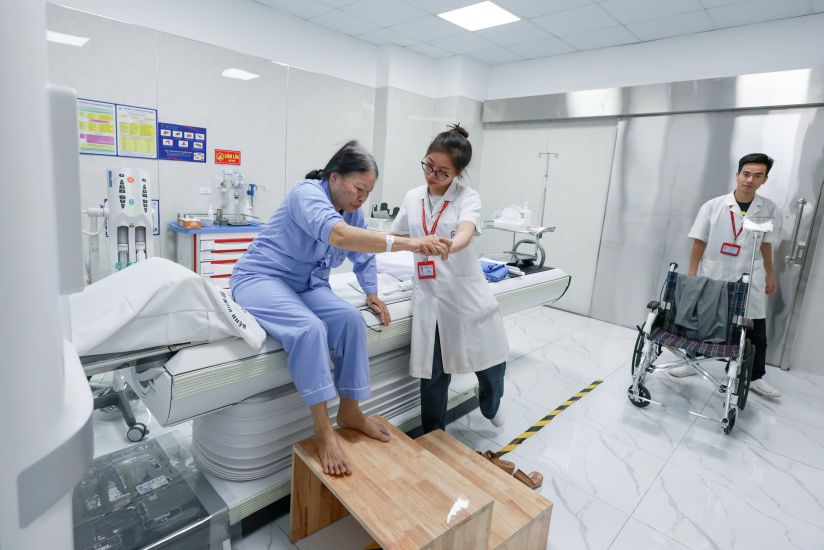
The practical experience at medical facilities also makes many people not interested in health insurance. Ms. Le Thi Hoa (Hanoi) said that during an examination at a central general hospital, she had to wait from 7:30 to 15:00 to get an ultrasound. "Every examination step has to be taken, waiting for the turn, the patient is exhausted. If I went to a private or international institution, it would not be so overloaded, Ms. Hoa shared.
These experiences reflect the cumbersome and unconnected procedures, causing many people, even with health insurance cards, to choose to buy medicine or see a doctor for services to avoid waiting.
Students - a mandatory group but lacking in big numbers
Student health insurance is a mandatory group, requiring schools to cover at least 98%. However, a report by Ho Chi Minh City Social Insurance shows that some colleges and universities have worryingly low participation rates. Many non-public educational institutions only have 26-50% of students with health insurance. Typically, the College of Transport has only 699/2,653 students participating (26.35%); Ho Chi Minh City College of Economics and Tourism has reached 48.99%; Hoa Sen Vocational College has 51.37%...
Mr. Hoang Ngoc Tram - Principal of the College of Transport - said that the actual rate of students participating in health insurance is higher than the figure of 26.35% because many students have joined their households. The school has regularly promoted and mobilized but it is still difficult to achieve 100% due to the lack of a penalty mechanism and many students are still having difficulties.
At Viet Giao Secondary School, Principal Tran Phuong said that the number of students who did not participate was mainly due to dropping out of school or having paid health insurance in the locality. The school currently has 110 students, 97 of whom have participated (88.18%) and will request the Social Insurance to update the list.
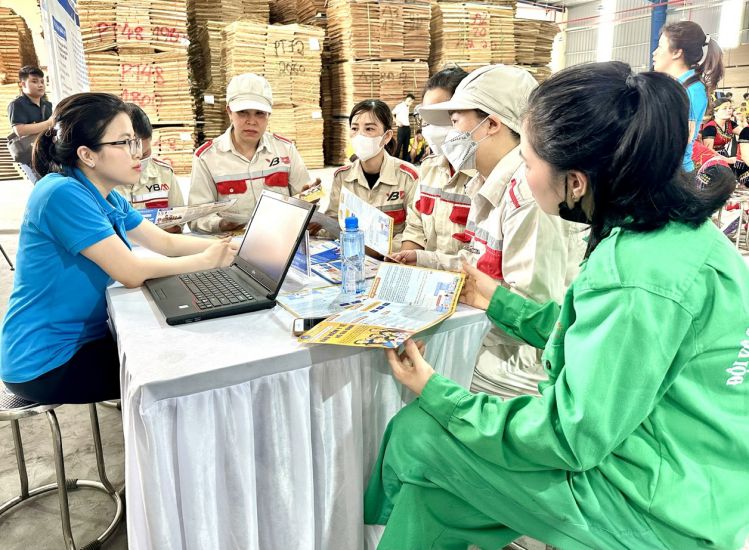
According to Mr. Tran Dung Ha - Deputy Director of Ho Chi Minh City Social Insurance, every year, the Social Insurance agency coordinates with universities and colleges to propagate and guide students to fulfill their obligations to participate in health insurance, while urging the school to comply with regulations.
However, there are currently no sanctions for educational institutions that do not achieve a coverage rate of 100%. The reason is that compulsory health insurance for students only applies to learners, while schools are not the unit responsible for paying health insurance as for compulsory social insurance.
And the question about the responsibility of the social insurance agency
A leader of Ho Chi Minh City Social Insurance said that the group with the lowest health insurance participation rate today is households, while other groups have high coverage. Although the Social Insurance sector has coordinated with the locality to propagate many times, participation still depends mainly on the awareness and level of interest of each household.
Due to the lack of complete population data, Ho Chi Minh City Social Insurance cannot accurately determine the rate of people participating in household health insurance in each ward and commune.
From the above realities, it can be seen that the responsibility of the Social Insurance agency is not small when the rate of health insurance participation in some groups of subjects - especially households and students - is still low. Part of the reason lies in the gap in propaganda work: The message about health insurance has not really reached the group of young workers, low-income people or freelancers - those with the mentality of "no illness, no need insurance". The lack of easy-to-understand, familiar, and suitable forms of communication for each target group makes health insurance sometimes considered an administrative obligation, not a long-term health protection right.
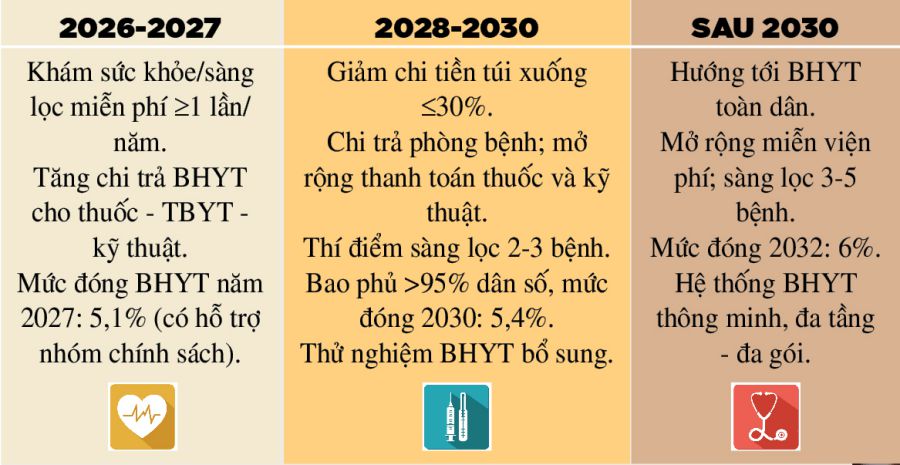
In addition, unfavorable experiences in medical examination and treatment using health insurance - cumbersome procedures, long waiting, and uneven service quality - continue to reduce people's confidence. To reach reach reaching out to the entire population, Vietnam Social Insurance needs to innovate communication methods, increase community interaction, expand management data and closely coordinate with the health sector to improve service quality, helping people see that health insurance is not only a payment but a "shield" to protect health and long-term finances.