
Respiratory syncytial virus (RSV) is one of the leading agents causing lower respiratory tract infections in young children, with about 1.4 million hospitalizations and 27,300 deaths per year in children under 6 months old worldwide.
In Vietnam, RSV is recorded as the cause of about 24-48% of cases of lower respiratory tract infections in children treated at children's hospitals. Notably, research at the National Children's Hospital shows that the disease burden is mainly concentrated in children under 3 months old, accounting for 42.7% of cases, followed by children from 3-6 months old.
At the Department of Pediatrics, Hanoi Medical University Hospital, in the last 6 months of 2025, nearly 500 RSV cases were received for inpatient treatment (excluding outpatient treatment).
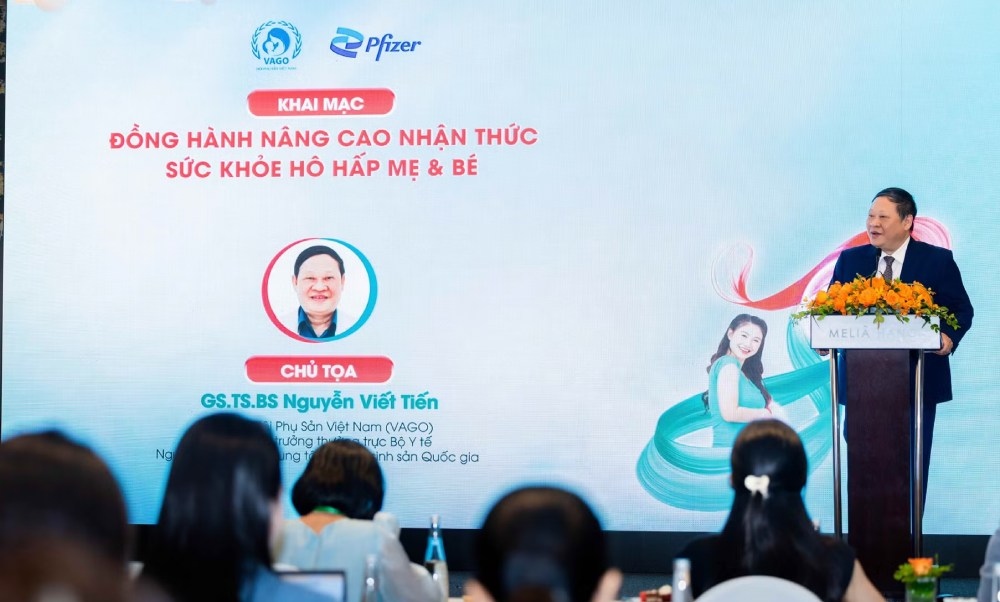
The above information was given by Prof. Dr. Nguyen Viet Tien - Chairman of the Vietnam Obstetrics and Gynecology Association, Former Standing Deputy Minister of Health at the scientific seminar "Strategy for Pregnant Women's Care: Mother Proactive - Child Protection," organized by the Vietnam Obstetrics and Gynecology Association in coordination with Pfizer Vietnam on July 26 in Hanoi.
According to Prof. Dr. Nguyen Viet Tien, high-risk groups include: Premature births, underweight, under 3 months old, congenital heart disease, chronic lung disease, immunodeficiency, malnutrition or neuromuscular disease. RSV is transmitted through droplets when coughing, sneezing or contacting respiratory secretions on surfaces. For adults, the baby's scent is love, but for infants, it can be a route of RSV virus infection.
Assoc. Prof. Dr. Nguyen Thi Dieu Thuy - Head of Pediatrics Department, Hanoi Medical University, Head of Pediatrics Department, Hanoi Medical University Hospital - said: The first 6 months of life are an immune gap that makes children vulnerable due to RSV infection. Notably, RSV damage creates favorable opportunities for pneumococcal bacteria present in the pharynx area to develop strongly, penetrate deep into the lungs, causing superinfection and pneumonia in young children.
For adults, a kiss for a baby is a way to express love. However, for infants, this seemingly harmless action can become a route of transmission of the RSV virus - the leading agent causing bronchiolitis and pneumonia in young children.
Modern prenatal care not only stops at monitoring the development of the fetus but is increasingly aimed at preventing risks that may affect the health of children after birth, including RSV. Child protection needs to be implemented through many synchronous measures such as periodic prenatal check-ups, maintaining a reasonable diet, medical advice and pregnancy immune care," Prof. Dr. Nguyen Viet Tien emphasized.
During pregnancy, the mother's immune system undergoes many changes to both protect the mother's body and create conditions for the fetus to develop. Especially in the last three months of pregnancy, mother's antibodies can be transmitted through the placenta to the fetus, helping the baby have a part of the ability to protect right from birth, especially in the first 6 months when the immune system is still weak.
According to experts, the pregnancy immune mechanism has been applied for many years in maternal and child health care. In Vietnam, the tetanus prevention program for pregnant women has been widely implemented. In the world, pregnancy immune care is also applied to protect mothers and children from diseases such as flu, whooping cough and is continuing to expand to respiratory agents, including RSV.


