Pregnant woman D. T. M (31 years old, Hai Phong) carrying twins naturally belongs to the group of twins with common placenta, two amniotic fluid chambers - a form of pregnancy that inherently contains many complex obstetric complications. Right from the 24th week of pregnancy, during monitoring at a private clinic in Hai Phong, doctors recorded signs of weight difference between the two fetuses. At that time, the degree of difference was not too large to make a specific diagnosis, but this was considered a warning sign requiring close monitoring.
By the 28th week of pregnancy, the developmental difference became more pronounced: one fetus developed appropriately for the gestational age, while the other was much smaller, below the first placenta. The pregnant woman was diagnosed with selective fetal slow growth and transferred to the Central Obstetrics and Gynecology Hospital for in-depth monitoring.
Here, through focused ultrasound and surveying the circulatory system of both fetuses using Doppler indicators such as umbilical artery, mid-brain artery, venous tube and uterine artery, doctors determined the weight difference to be about 29%, but the circulatory indicators were still within the permissible limits. The patient was diagnosed with type I selective fetal retardation - a stage that can still be monitored.
However, according to doctors, with a common placenta, monitoring does not mean absolute safety. Each ultrasound, each small change can change the course of action. Pregnant women are prescribed regular check-ups every 2 weeks, then shortened to weekly check-ups when the risk increases.
The turning point occurred when the fetus was 32 weeks and 2 days old. At this time, the weight difference between the two fetuses increased by 30%, and at the same time, the Doppler wave of the umbilical artery of the small fetus began to increase resistance - a sign that the source of fetal nourishment is decreasing. Faced with the risk of serious progression of the disease, doctors increased the frequency of monitoring to 2 times/week, and at the same time injected corticosteroids to support fetal lung maturity, proactively preparing for the possibility of premature termination of pregnancy.
The developments then became particularly tense. In just 5 days, the weight difference continued to increase to 32%. The small fetus fell into a state of almost no amniotic fluid, not observing the bladder - a sign that fetal irrigation seriously declined. Meanwhile, the large fetus appeared polyhydramnios with the deepest amniotic angle of 112 mm, and Doppler's indicators continued to worsen.
No longer a simple slow-growing condition, the pregnant woman was diagnosed with a 33-week twin, type I selective slow-growing syndrome accompanied by stage II twin blood transfusion syndrome. This is a dangerous complication in a common placental twin, when the circulatory imbalance between the two fetuses can cause both to fall into critical condition in a very short time.
Faced with rapidly worsening developments, the treatment team consulted with Prof. Dr. Nguyen Duy Anh, Director of the Central Obstetrics and Gynecology Hospital and decided to perform an emergency cesarean section.
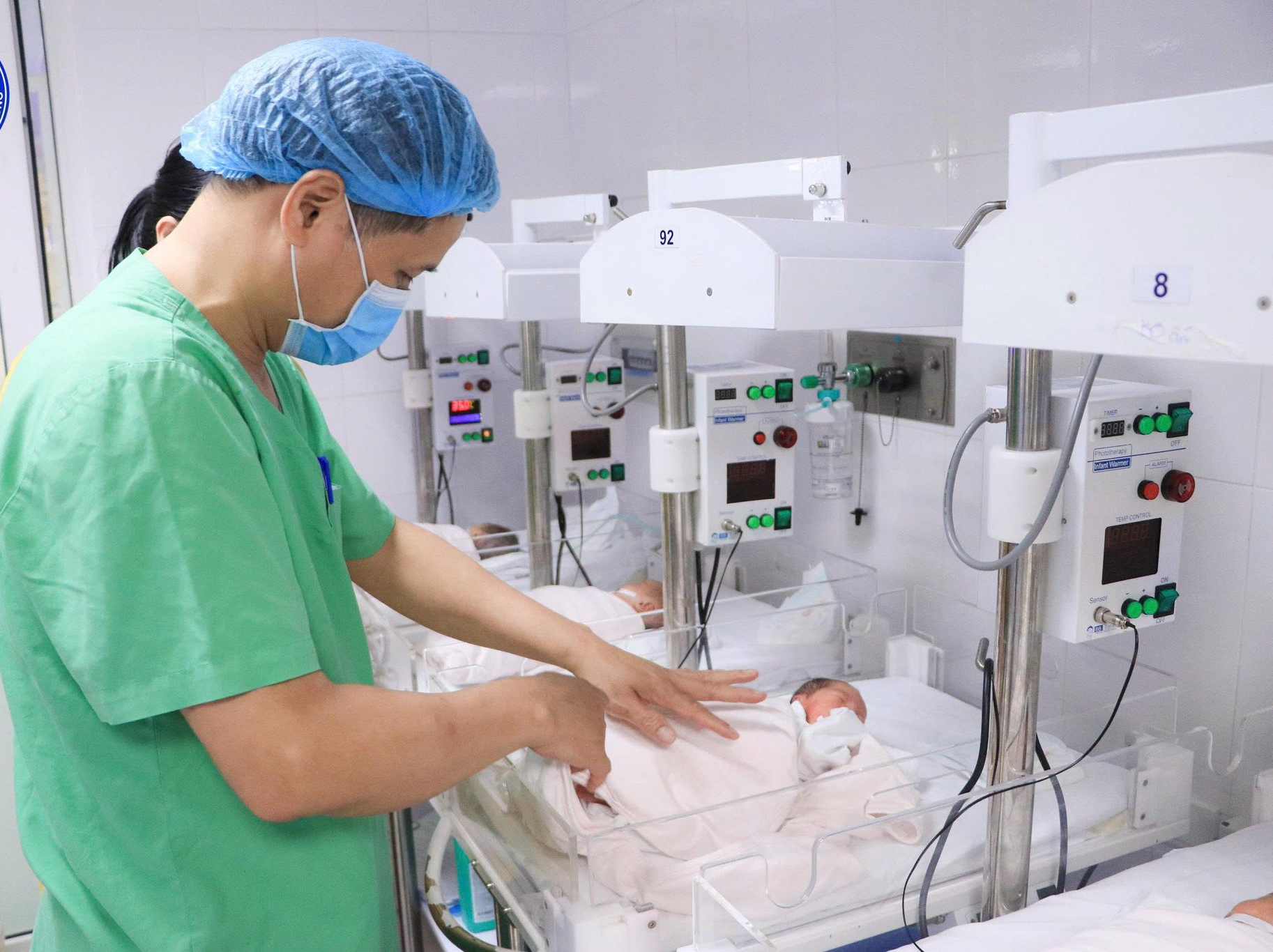
The surgery took place in a highly focused atmosphere. Two baby girls were born with weights of 1,200g and 1,900g respectively. Both cried immediately after birth and were transferred to the Neonatal Center for further monitoring and intensive care.
After birth, the older baby progressed well and was discharged from the hospital after 5 days. The younger baby continued to be cared for at the Neonatal Center.