
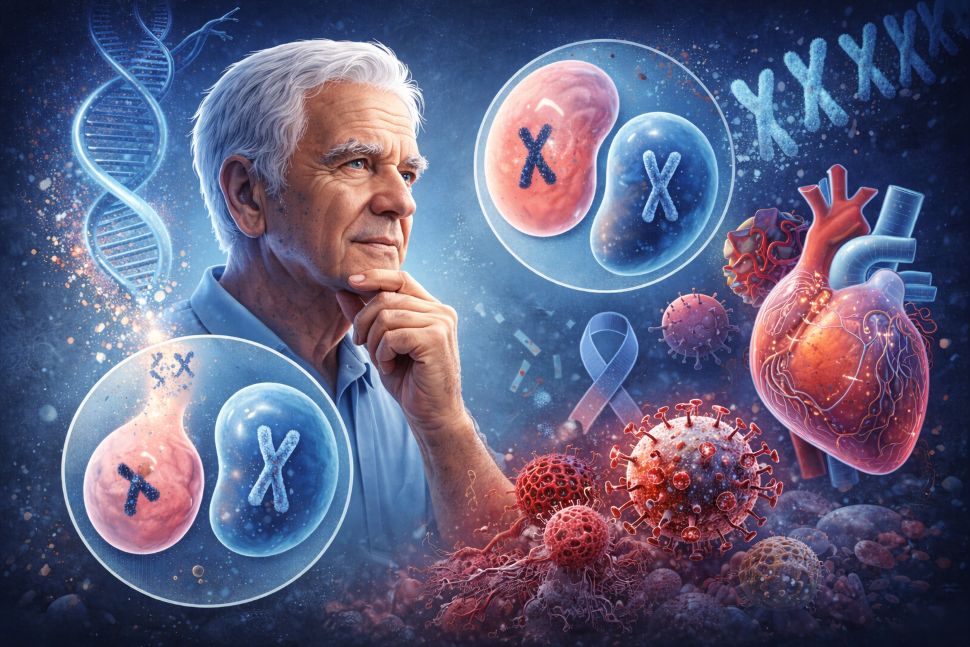
As men age, some cells in the body may lose the Y chromosome. Because this chromosome contains few genes, in addition to the role of determining gender, scientists previously thought that the loss of this chromosome did not cause significant impact.
However, recent studies show the opposite. Loss of Y chromosomes is associated with many diseases such as cardiovascular disease, cancer, neurodegeneration and even reducing life expectancy.
New genetic analysis techniques show that this phenomenon is quite common in older men. About 40% of men in their 60s have signs of Y-chromosomal loss in some cells. This number increases to 57% in the 90-year-old group. Environmental factors such as smoking or exposure to carcinogens can also contribute to promoting this process.
The loss of the Y chromosome does not occur simultaneously but only appears in a part of the cell. Cells without the Y chromosome can grow faster, even dominantly in some tissues or in tumors.
The Y chromosome is easily lost during cell division. Therefore, tissues with rapid regeneration can be more affected. It is noteworthy that this chromosome can disappear without causing cell death, which is rare with other chromosomes.
Although only carrying about a few dozen protein-coding genes, the Y chromosome still plays a certain role in cell activity. Some of these chromosome genes participate in regulating the activity of other genes and are related to the anti-cancer mechanism.
Many studies have recorded a link between the loss of the Y chromosome and the risk of heart attack, kidney disease and Alzheimer's. The frequency of this loss of chromosome is also found to be higher in deceased COVID-19 patients.
However, scientists have not yet clearly identified whether this is a direct cause or just an accompanying sign of the disease. Some studies on animals show that the deficiency of the Y chromosome can affect heart function and increase the risk of age-related diseases.
In addition to protein-coding genes, the Y chromosome also contains many uncoded genetic material segments that have the ability to regulate the activity of other genes. This can explain why the loss of the Y chromosome has a wide impact on many organs in the body.
The complete decoding of the Y chromosome has only been carried out in recent years. Scientists hope that in the future they will further clarify the mechanisms linked between this loss and health problems in men.


