
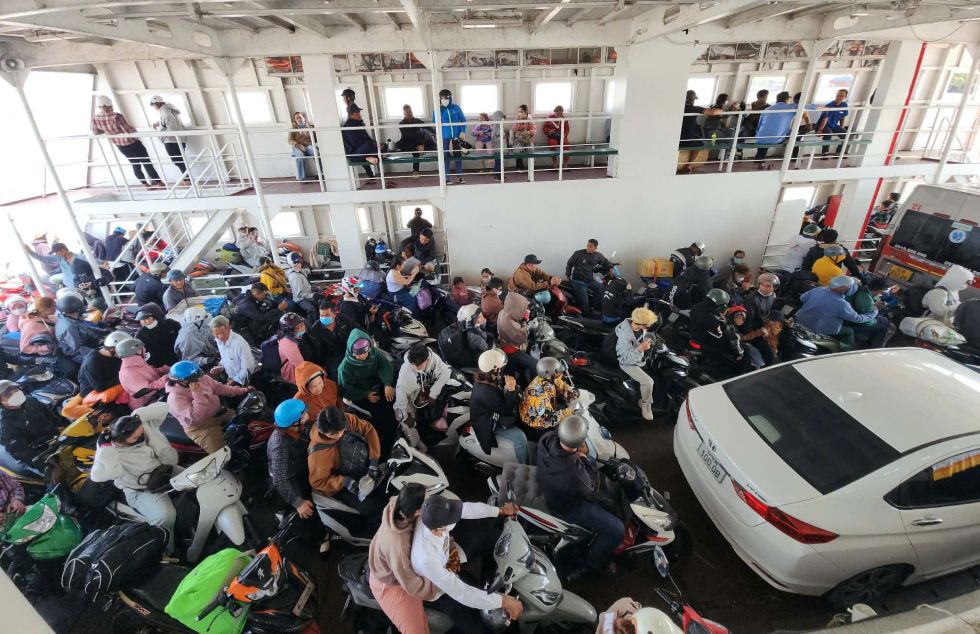
Recorded at Dai Ngai ferry connecting Dai Ngai commune with An Thanh commune (Can Tho City) from early morning, there was a scene of long lines of cars, passenger cars and motorbikes lining up waiting to cross the river. The line of vehicles stretched hundreds of meters, moving slowly. At times, people had to wait from one to two hours to get off the ferry.
The number of vehicles increased sharply due to coinciding with the time when workers returned to Ho Chi Minh City and neighboring provinces to work after the Tet holiday. In addition, the inauguration of the main hall of a pagoda in Tra Vinh province (now Vinh Long province) also attracted a large number of Buddhist pilgrims, causing the demand for ferry trips to increase.
Mr. Van Danh - a worker in Truong Khanh commune (Can Tho City) - said that on the morning of the 6th day of Tet, he and his wife went to Binh Duong to be able to return to work tomorrow. Worried about traffic jams on National Highway 1, he chose to go to Dai Ngai Ferry to National Highway 60 to save time. However, when he arrived at the ferry wharf, he was surprised by the scene of vehicles lining up waiting to cross the river.
Cars were packed, I had to wait more than an hour to get off the Dai Ngai ferry," Mr. Danh said.
Crossing the river, the journey is still not smooth when he continues to have to queue at Cau Quan ferry to go to Tra Vinh. According to Mr. Danh, although he has proactively chosen another direction to avoid traffic jams, due to the increased number of people returning to industrial parks after Tet, travel still takes longer than expected.
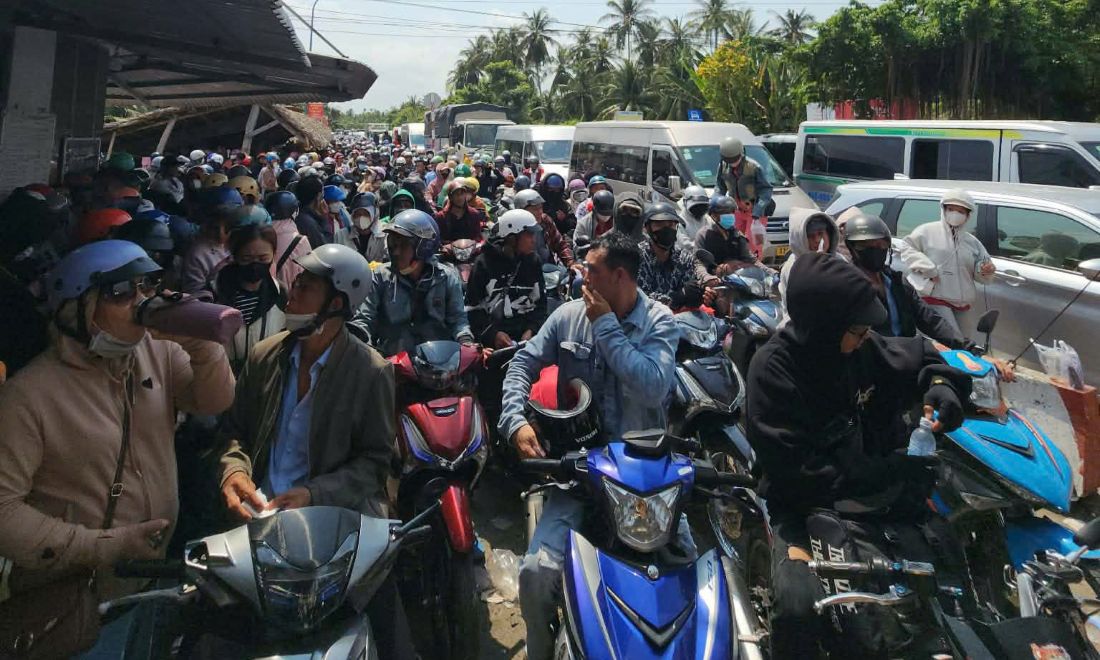
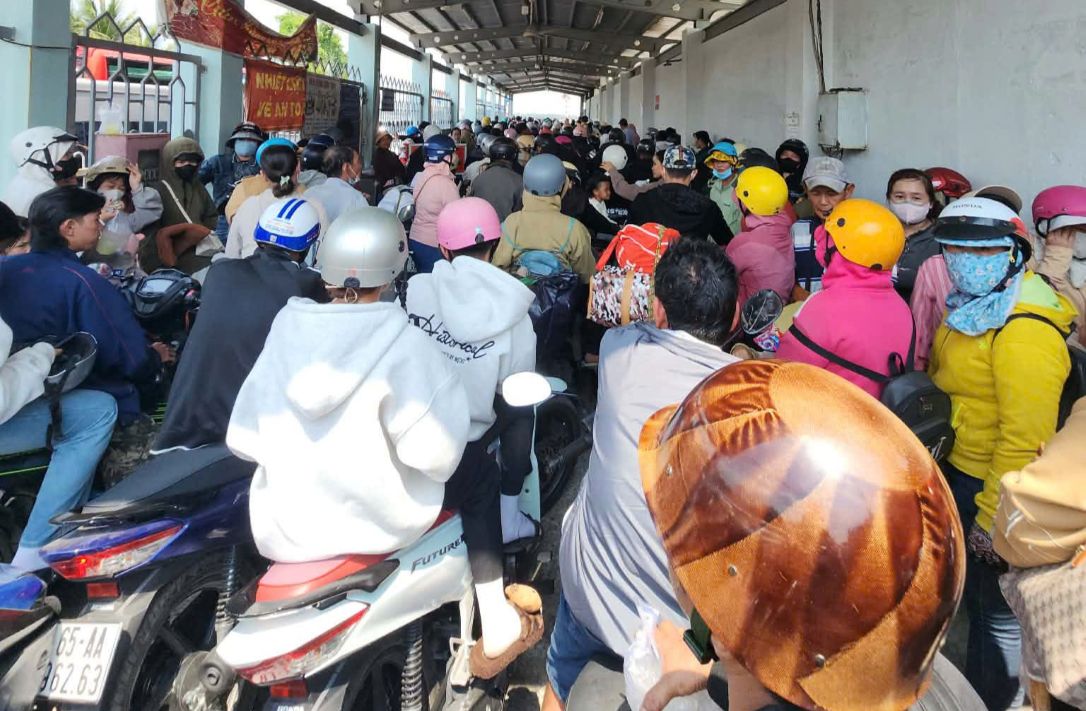
At Cau Quan ferry wharf on Cu Lao Dung bank (Can Tho City), a similar situation also occurred. Many vehicles from the Cu Lao Dung area to Tra Vinh had to queue in long lines in the sun.
A long-distance passenger car driver said that the number of passengers after Tet increased sharply, cars continuously increased trips, but when arriving at the ferry terminal, they still had to wait in order.
Ms. Yen Linh - a resident of Tai Van commune (Can Tho City) - said that she went to Tra Vinh to pilgrimage on the occasion of the inauguration of the main hall of the pagoda. Although she actively followed the direction of Dai Ngai 2 bridge to avoid congestion at Dai Ngai ferry, when she arrived at Cau Quan ferry (from Cu Lao Dung to Tra Vinh), she still encountered the scene of vehicles queuing in long lines, moving slowly.
I waited for more than an hour and a half to get off the ferry. Wanting to be fast is also impossible and getting back is also impossible because the back of the car is already crowded," Ms. Linh shared.
Representatives of the traffic control force at the ferry terminal said that ferry trips have been maximized in capacity, operating continuously to clear vehicles. However, due to the volume of vehicles congested at the same peak time after Tet, local congestion still occurred.
On the same day, on National Highway 1A, the section passing through Chen Kieu Pagoda area (My Xuyen ward, Can Tho city), the number of passenger cars and motorbikes increased sharply from the morning. The flow of vehicles lined up moving slowly, at many times having to stop to wait because passenger cars entered and exited the pagoda for people to go to temples at the beginning of the year. This area attracts a large number of Buddhists and pilgrims, causing traffic through the section to often be locally overloaded.
Not only local people go to pagodas, many families from Soc Trang, Bac Lieu, Ca Mau also take advantage of the last day of the holiday to both enjoy spring and return to Ho Chi Minh City to work. Motorbikes carrying bulky luggage, sleeper buses continuously enter and exit, causing traffic density to increase sharply.
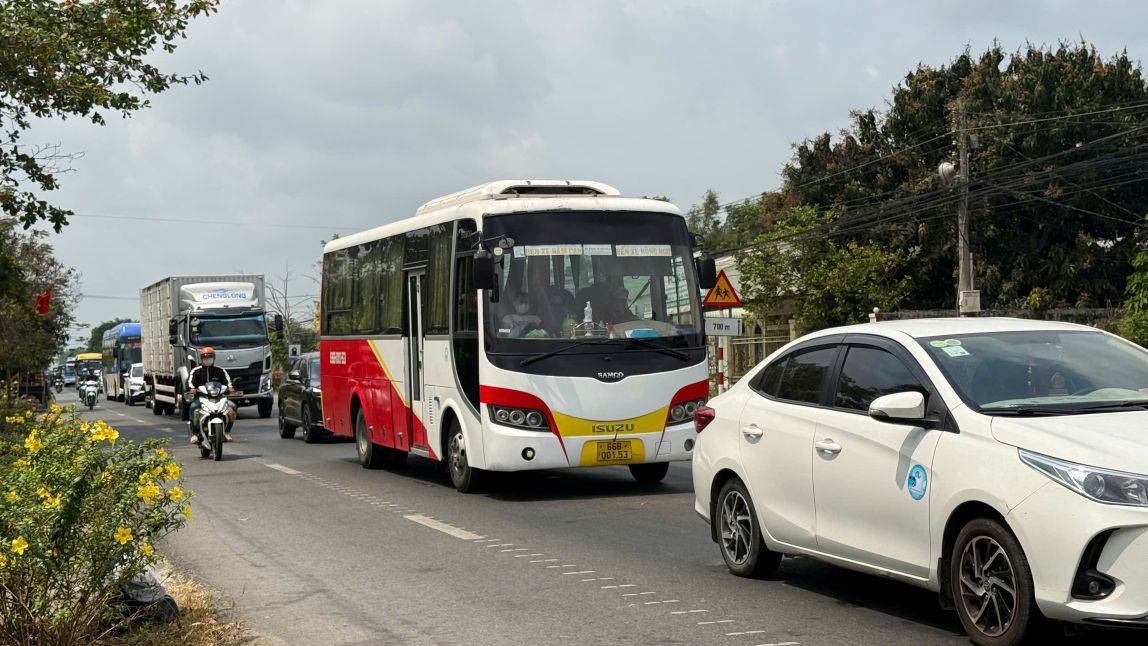
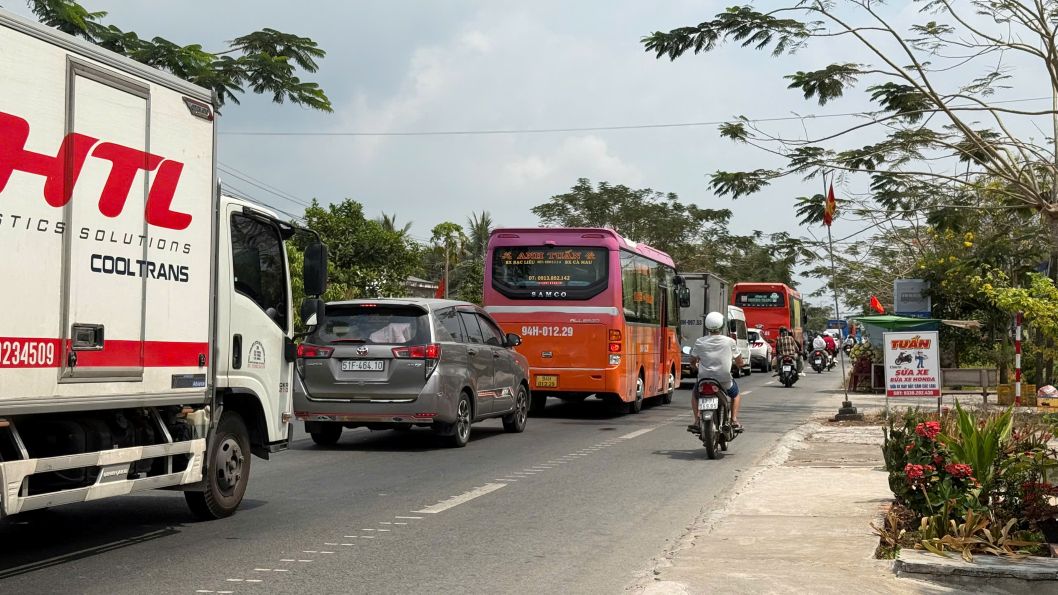
And on National Highway 1, the section passing through An Ninh commune (Can Tho City), in the first days of the year in the An Nghiep Industrial Park area, congestion also occurred due to people and tourists entering Tan Hue Vien tourist destination to visit Lien Hoa Bao Thap. My Xuyen Traffic Police Station directed officers and soldiers to strengthen traffic regulation and guide people to travel.


