
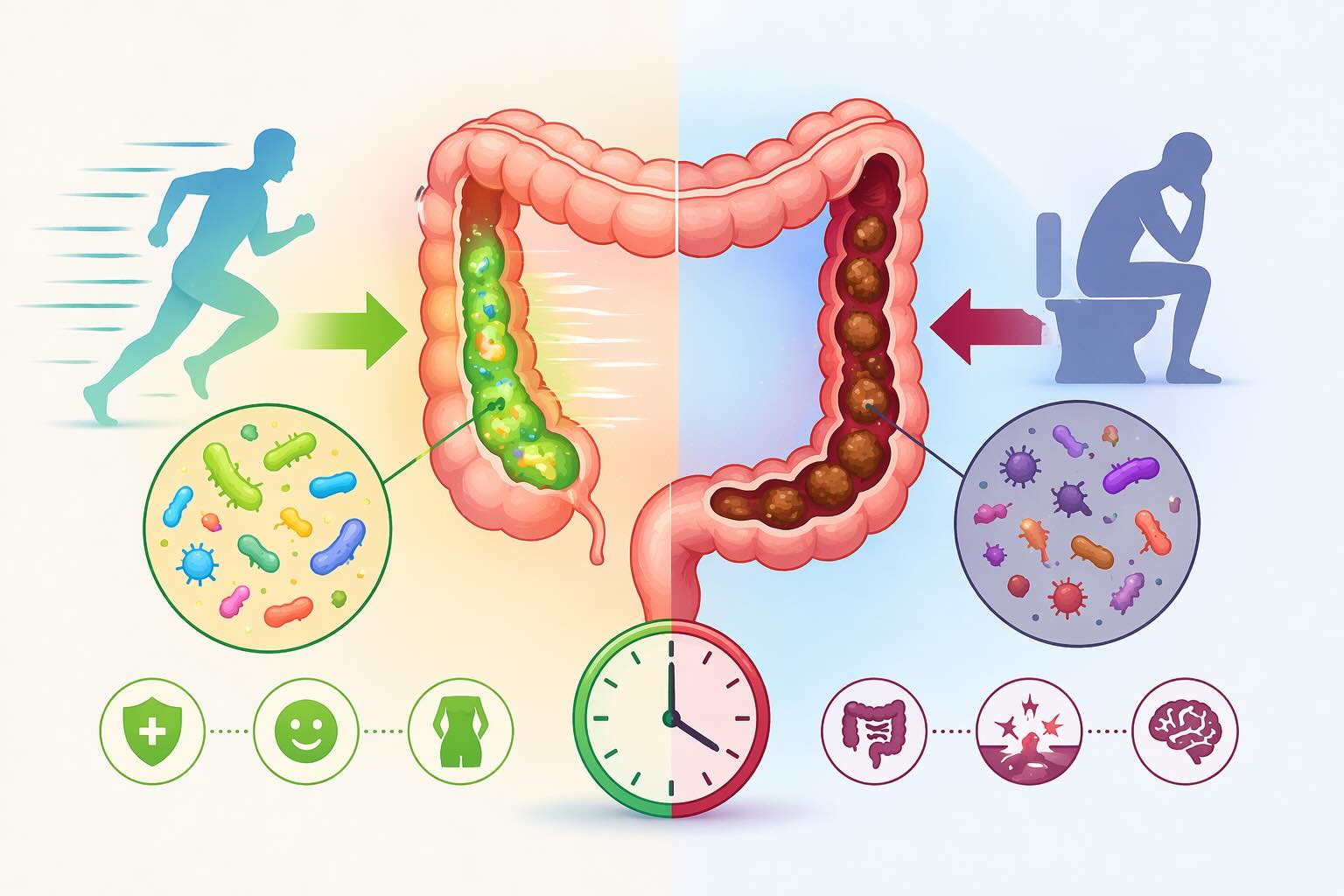
According to information published on Sciencealert, a newly published research summary shows that food transportation time in the gut is closely related to the gut microbiome, a factor that plays an important role in overall health.
The research team led by Nicola Procházková and Henrik Roager at the University of Copenhagen analyzed data from thousands of people, including both healthy people and patients with digestive disorders.
The results showed that people with faster and slower digestion had significantly different gut microorganisms. This time affects how bacteria ferment food, create metabolites and affect the environment in the intestines.
In particular, slow transportation time, often associated with constipation, can increase the risk of inflammation, metabolic disorders and even Parkinson's disease.
Conversely, too fast transportation time is also not ideal, as it can reduce the diversity of the microbiome. Both extreme states allow certain groups of bacteria to prevail, disrupting the balance of the microbiome.
Scientists believe that the longer food stays in the intestines, the more time bacteria have to ferment, thereby affecting acidity and other biological processes in the body. This shows that habits such as abstaining from urinating can prolong the time of waste in the intestines, thereby affecting the microbiota and digestive health.
A popular tool to assess this time is the Bristol scale, which helps estimate digestion rate based on the shape and thickness of the stool.
Research also shows that adding the factor "digest time" to the analysis can help predict the microbiome more accurately than just relying on diet. This can explain why with the same diet or probiotics, each person has different reactions.
Experts believe that understanding the "intestinal circadian rhythm" of each individual can help personalize diet and treatment methods, opening up a new approach to digestive health care.


