
At about 11:30 am on July 28, Giang Vo Ward Health Station (Hanoi) received a report from people about a case of an elderly person falling in the market area in the ward.
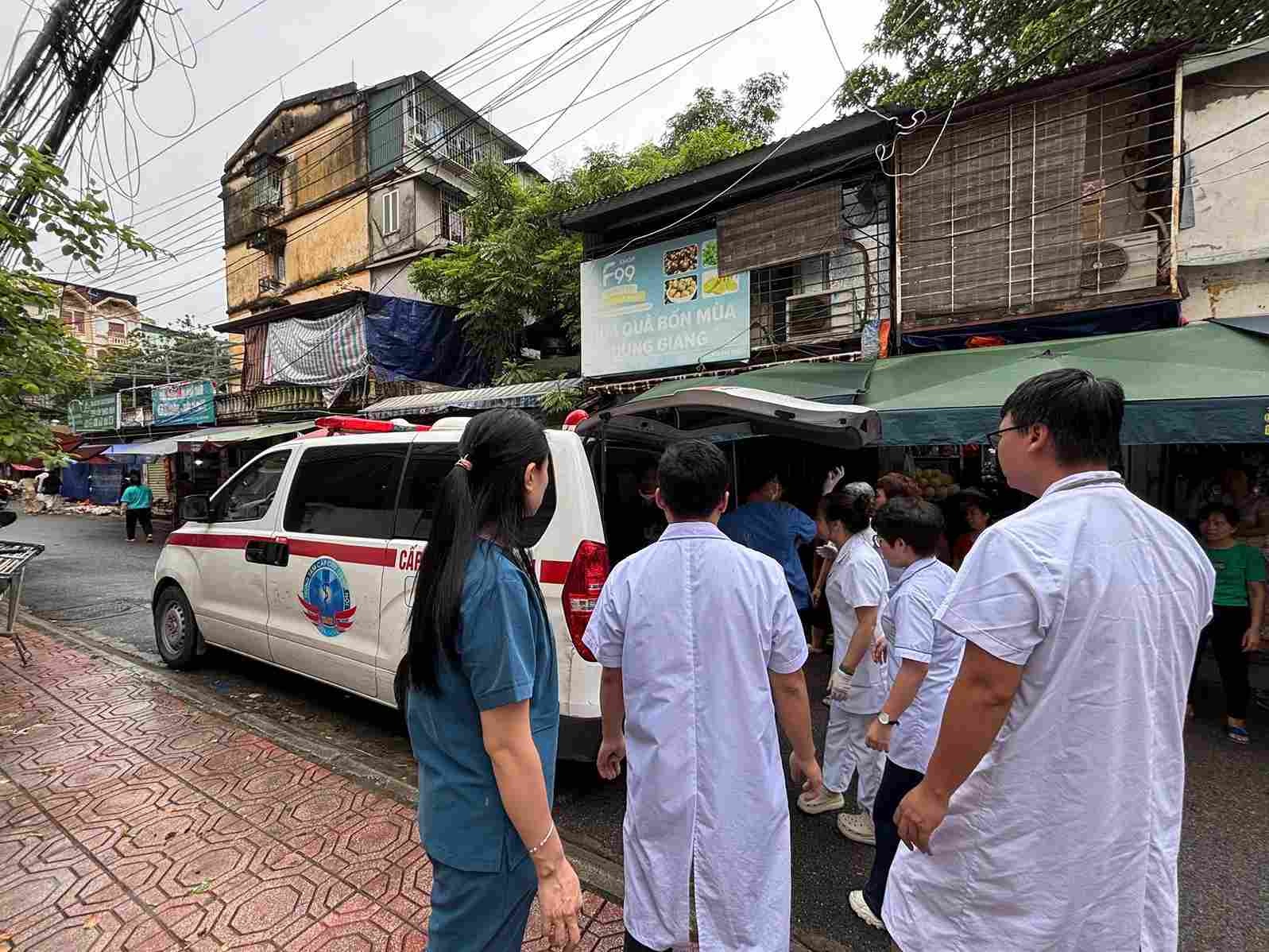
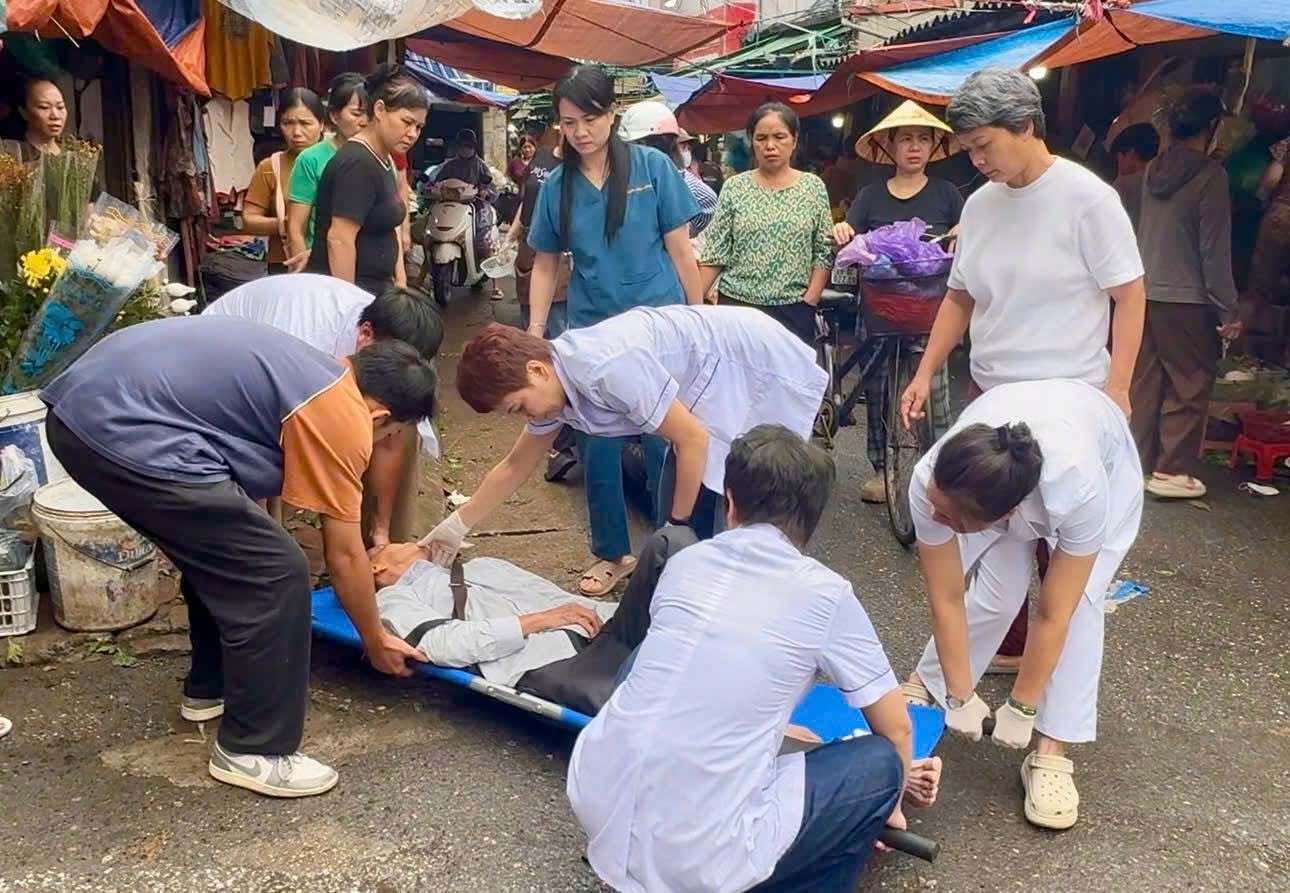
Immediately after receiving the information, the Board of Directors and the team of doctors and nurses of Giang Vo Ward Health Station urgently brought emergency equipment to the scene to examine, give first aid and assess the patient's condition.
Through initial examination, the patient showed signs of being unable to speak, crooked mouth after falling. Biomarkers recorded included blood pressure 188/98 mmHg, pulse 86 beats/minute and SpO2 reaching 98%.
According to family members, the male patient was born in 1954, has a history of high blood pressure but has not used medication for about a year recently.
At the scene, the medical team quickly assessed the state of consciousness, breathing, circulation, checked vital signs and implemented initial first aid measures according to professional procedures. The patient was then fixed and transported by stretcher to ensure safety.
Recognizing that the patient had signs suspected of stroke (stroke), Giang Vo Ward Health Station urgently contacted an ambulance, and at the same time coordinated to transfer the patient to Xanh Pon General Hospital for emergency treatment, diagnosis and in-depth treatment.
According to Giang Vo Ward Health Station, early detection of suspected stroke signs, performing first aid according to procedures and coordinating timely referrals have contributed to shortening the time to access treatment for patients, and at the same time continue to affirm the role of grassroots health care in initial emergency care, care and protection of people's health.
Giang Vo Ward Health Station recommends that people, especially those with high blood pressure, diabetes, cardiovascular disease and chronic diseases, need to comply with treatment and use medicine according to the doctor's instructions, and absolutely do not stop taking medicine on their own.
In addition, people should regularly monitor blood pressure, have regular health check-ups and maintain a healthy lifestyle to reduce the risk of stroke.
When people are found to have signs such as crooked mouth, weakness or paralysis of limbs, difficulty speaking, slurred speech, loss of balance, severe headache or sudden consciousness disorders, it is necessary to call emergency services or quickly take the patient to a medical facility capable of treating stroke as soon as possible. People should not arbitrarily give patients medicine or wait for symptoms to improve on their own, to avoid missing the "golden time" in stroke treatment.


