
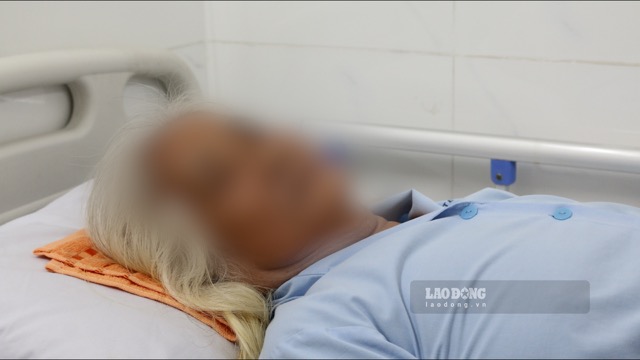
Ms. Nguyen Thi Hong (name changed, 82 years old, Tan Binh ward, Ho Chi Minh City) said that she was diagnosed with diabetes about 4 years ago. At that time, the symptoms that made her feel most clearly were fatigue.
At that time, I went for an examination, the doctor measured my blood sugar and found that my blood sugar was high. After that, the doctor informed me that I had diabetes and prescribed medication for treatment," Ms. Hong recounted.
Recently, Ms. Hong had to be hospitalized due to abdominal pain, fatigue and urinary tract infections. Previously, in May, she was hospitalized for treatment of urinary tract infections for 8 days, was given medication and her health stabilized, so she was discharged from the hospital. In addition to diabetes and urinary tract infections, Ms. Hong also suffers from many other diseases related to old age such as osteoporosis, spinal degeneration and bone and joint problems.
Ms. Hong is just one of many cases admitted to the Department of Endocrinology, Thong Nhat Hospital due to diabetes complications in the elderly. For elderly people with diabetes, hospitalization can stem from many causes, from acute complications such as increased or decreased blood sugar to chronic complications in the cardiovascular system, eyes, kidneys, and nerves. In particular, multiple diseases and the use of many types of drugs make the treatment process in this group of patients more complicated.
According to BS.CKII Nguyen Thi May Hong, Head of the Department of Endocrinology, Thong Nhat Hospital, Ho Chi Minh City, diabetes patients admitted to the hospital are often divided into many groups of causes.
Among them, one of the acute causes is blood sugar disorders. Prolonged or excessive hyperglycemia can lead to serious complications such as increased osmotic pressure or ketoacidosis due to diabetes.
However, according to Dr. May Hong, hypoglycemia is also a special condition to pay attention to, especially in the elderly. This is a medical emergency and when the condition progresses severely, the patient may need the support of relatives or medical staff for timely treatment.
Elderly people are often prone to severe hypoglycemia. Once hypoglycemia of grade 3 occurs, patients need support and may have to be hospitalized for treatment, and at the same time adjust the treatment regimen," said Dr. May Hong.
Besides acute complications, chronic complications are also a common cause of hospitalization for diabetic patients. These complications include major and minor vascular complications.
In the group of major vascular complications, patients may experience diseases related to brain blood vessels, coronary arteries and peripheral arteries. These are all serious cardiovascular complications that can increase the risk of death.
For small-vascular complications, diabetes can cause damage to the retina, kidneys, and peripheral nerves.
Diabetic retinitis is one of the important causes of vision loss, even blindness. Meanwhile, kidney damage can start from the appearance of albumin in urine, then the kidney's filtration function gradually declines and can progress to end-stage chronic kidney disease, requiring periodic blood filtration.
Another common complication that causes patients many difficulties is peripheral neuropathy. Patients may experience numbness, tingling, ants crawling, or burning sensation in the feet, as if wearing gloves or socks.
When the sensation in the foot is reduced, the patient may be injured without realizing it. For example, they step on a sharp object but do not feel pain, thereby not taking care of the wound properly. This is one of the factors leading to foot infection due to diabetes," Dr. May Hong analyzed.
If the infection progresses severely, the patient may have to have lesions removed, even amputated limbs. This not only affects mobility and living ability but also increases the burden of care for the family and treatment costs.


