
After many years of waiting for a child, Ms. Ngan (character name changed, 29 years old, Ho Chi Minh City) was diagnosed with difficulty conceiving due to endometriosis and both husband and wife carrying the Thalassemia gene, with a risk of inheritance for their child.
At the Reproductive Support Center, Tam Anh General Hospital, MSc. Dr. Tran Ngoc Van Anh has indicated in vitro fertilization (IVF) combined with pre-implantation embryo screening (PGT) to select healthy embryos that do not carry the disease gene.
After stimulating the ovaries, Ms. Ngan obtained 9 mature eggs, successfully cultured 6 5-day good quality embryos. PGT test results revealed 2 embryos carrying gene abnormalities. A few months ago, doctors transferred a healthy embryo, not carrying genetic abnormalities, into the uterine cavity. Currently, her pregnancy has been 9 weeks and is developing well.
My husband and I are very happy because we can finally welcome our child healthy as expected," Ms. Ngan shared.
Also on the journey to find her child and screen for the disease, Ms. T.T. V (Xuan Thoi Son commune, Ho Chi Minh City) shared that both husband and wife carry the latent Thalassemia gene. The husband carries the sudden deletion of the South East Asian alpha zero Thalassemia (--SEA) gene, and the wife carries the sudden beta globin gene at codon 26 GAG>AAG that creates Hemoglobin E.
On the weekend off from work, the couple went to the overtime service clinic of Tu Du Hospital for examination and the doctor advised on the risk of child inheritance in this case.
Recorded at Children's Hospital 1, many children come for periodic treatment of thalassemia every day. According to Dr. Nguyen Minh Tuan, Head of Dengue Fever - Hematology Department, Children's Hospital 1, Thalassemia is a hereditary disease that makes red blood cells easily destroyed early, causing anemia and iron deposition in the body.
The disease is common in two main forms: alpha Thalassemia and beta Thalassemia. For diagnosis, patients need to undergo tests such as blood charts, ferritin, hemoglobin electrophoresis and genetic tests.
Thalassemia has many levels. Mild forms usually only carry the disease gene, with few symptoms. Intermediate forms have symptoms of anemia from 2-6 years old. Meanwhile, severe forms often appear from 4-6 months old with signs such as severe anemia, enlarged spleen, bone deformities and slow development if not treated promptly.
According to Dr. Tuan, severe patients need lifelong blood transfusions and iron excretion to limit heart, liver, and endocrine complications and help children develop almost normally.
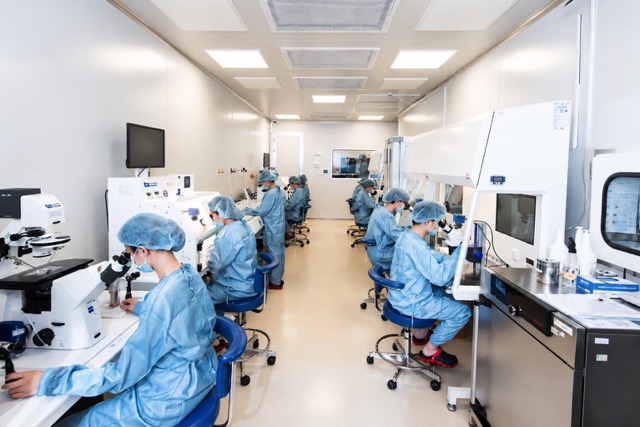
According to Dr. Van Anh, in Vietnam, according to statistics from the National Institute of Hematology and Blood Transfusion in 2022, the rate of carrying the Thalassemia gene is about 13% of the population, estimated at about 14 million people nationwide carrying the disease gene.
To prevent the disease, experts recommend that people should have Thalassemia gene screening before marriage and before birth, especially for couples carrying the same disease gene because the risk of giving birth to children with severe forms of the disease can be up to 25%.
Currently, thanks to in vitro fertilization combined with embryo screening, couples carrying the disease gene still have the opportunity to have healthy children, without Thalassemia.


