Although sugar does not contain purines, the final metabolite of sugar in the body is uric acid, which can increase uric acid production. In addition, consuming too much fructose can lead to fat accumulation, thereby affecting the uric acid excretion process.
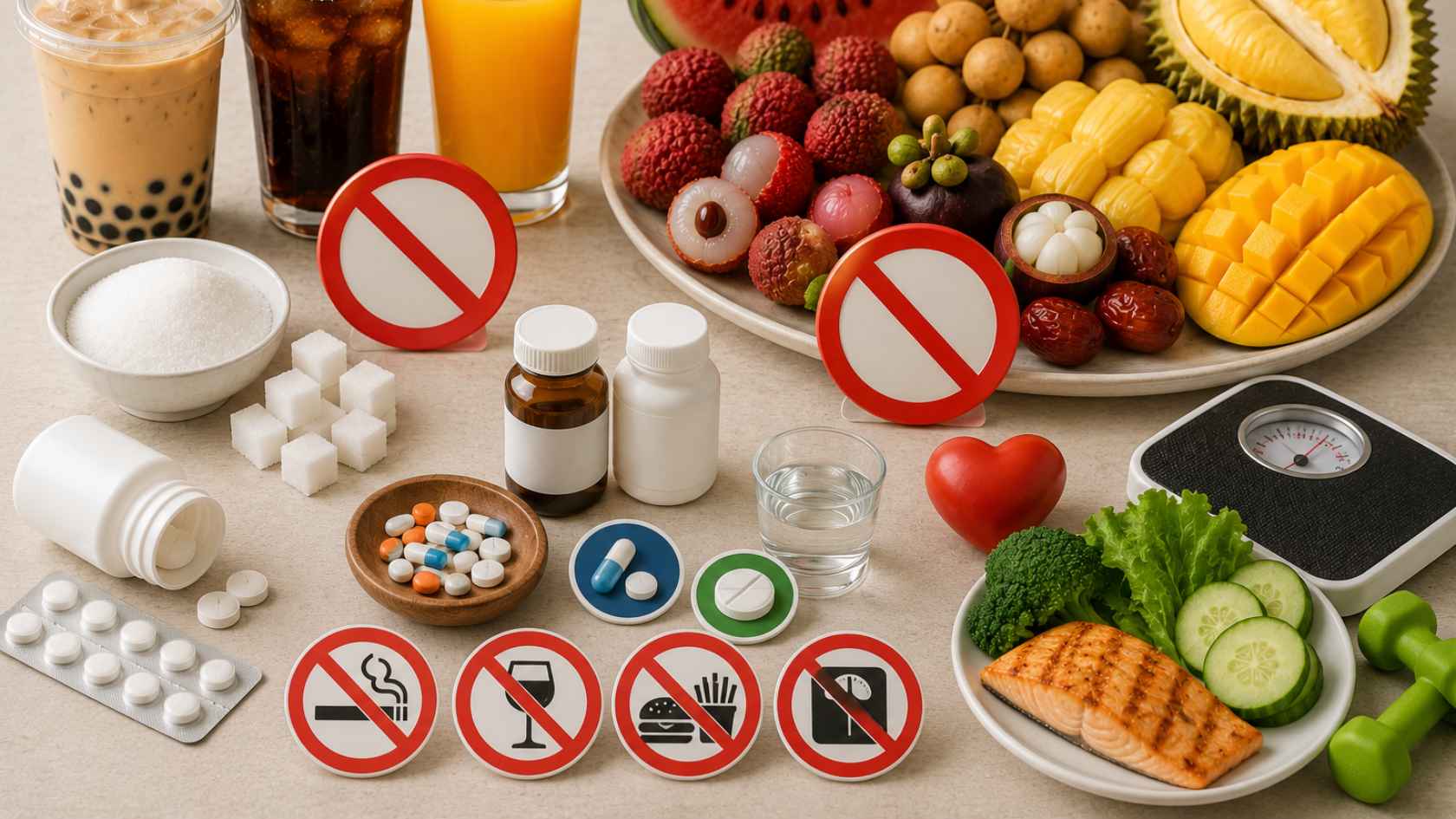
Therefore, patients with hyperuricemia and gout are advised to limit the use of sugary drinks such as milk tea, cola and fruit juice. People with gout should also limit some high-sugar fruits such as watermelon, lychee, longan, durian, jackfruit, Chinese apple, mangosteen and mango.
Treating gout with drugs mainly includes two groups. The first is to use pain relievers in the acute phase to quickly reduce or control pain. The second is to use hypouricetics for a long time, combined with lifestyle adjustments until uric acid levels reach the target level.
However, being diagnosed with hyperuricemia does not necessarily mean you will definitely have gout. Hyperuricemia is an important factor that can lead to gout, but only when this condition progresses to arthritis or the formation of tophi lumps is it called gout.
In fact, many people with hyperuricemia never develop gout arthritis throughout their life. However, even when they are in a state of asymptomatic hyperuricemia, changing unhealthy habits is still very important. Patients should avoid eating too much, limit smoking, excessive alcohol consumption and control weight, because these factors can increase the risk of developing gout.
Uric acid control is not only based on abstaining from a few foods but also requires combining many factors such as diet, exercise, weight control, limiting alcohol and using medication when indicated. People with high uric acid should be monitored periodically to assess the progression and risk of related complications.
In particular, you should not arbitrarily stop using anti-uric acid drugs when the symptoms of joint pain have subsided. Treatment needs to be assessed by a doctor based on uric acid levels, the number of gout attacks, joint conditions and accompanying conditions. The goal is to maintain uric acid at an appropriate level for a long time, thereby limiting the formation of urate crystals and reducing the risk of recurrence of gout attacks.
In addition, people at risk of increased uric acid should maintain drinking enough water, eating regularly and exercising regularly. When symptoms such as sudden swelling, heat, redness, severe pain appear, especially in the big toe, it is necessary to go to the doctor to determine the cause and appropriate treatment, instead of self-medicating with pain relievers or anti-uric acid drugs.