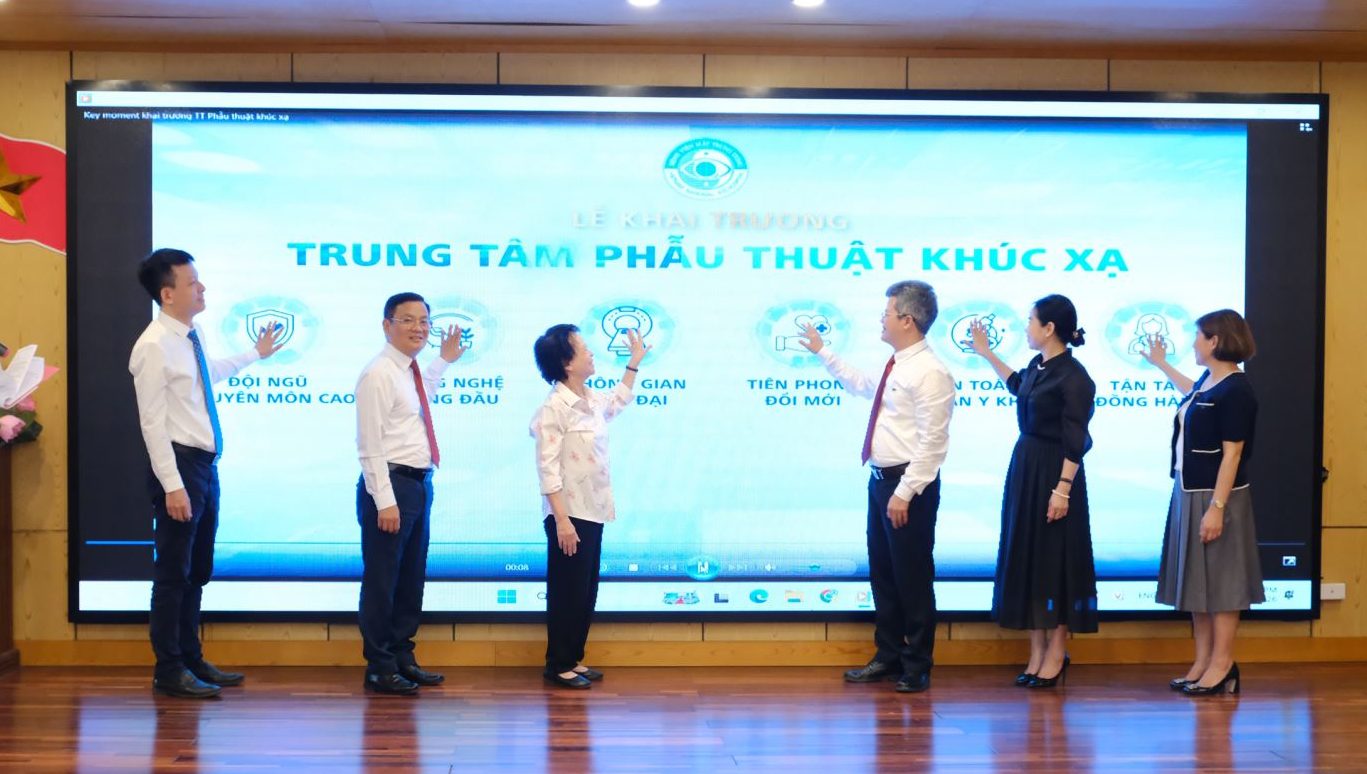
At the opening ceremony of the International Standard Refraction Surgery Center at the Central Eye Hospital on May 12, Assoc. Prof. Dr. Pham Ngoc Dong, Director of the Central Eye Hospital, said that refractive errors in children are increasing.
Vietnam currently has about 2 million blind and visually impaired people, of which about 1/3 are poor people who cannot be treated. Notably, more than 80% of blindness cases can be prevented or cured if detected early.
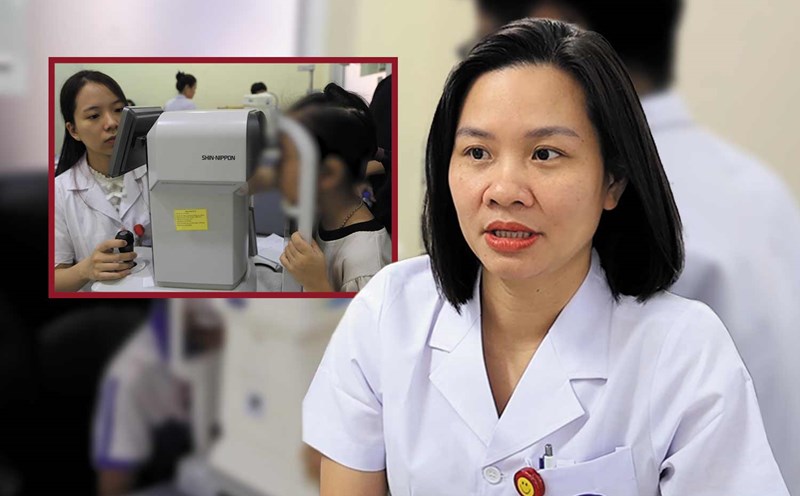
Refractional errors such as nearsightedness, farsightedness, and astigmatism are increasing sharply in children and adolescents. The incidence rate in students is about 20% in rural areas and up to 40% in urban areas," Assoc. Prof. Dr. Pham Ngoc Dong warned.
According to statistics, Vietnam has about 3 million children with refractive errors who need glasses, most of whom are nearsighted. Eye examinations and glasses for children are considered low-cost but highly effective measures in reducing the risk of blindness.
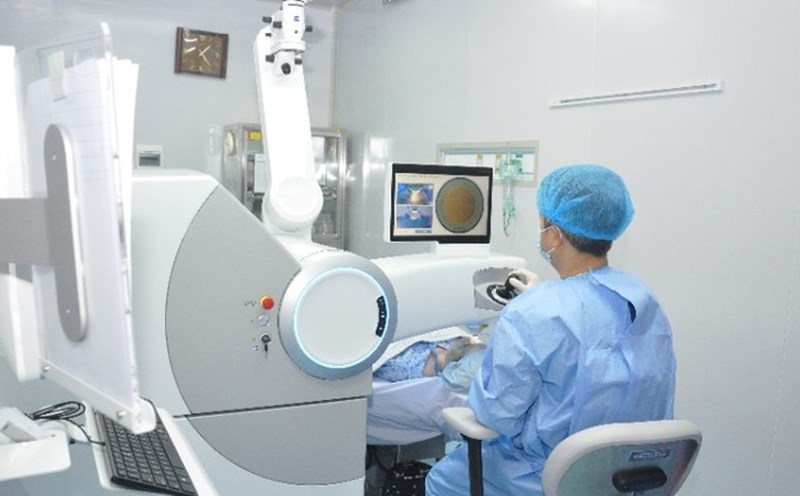
Putting the Refraction Surgery Center into operation marks a new step in applying modern technology to treat refractive errors such as nearsightedness, farsightedness and astigmatism.
Refraction surgery has been implemented since the 2000s and has now performed hundreds of thousands of treatments, helping many people improve their vision and no longer rely on glasses.
Assoc. Prof. Dr. Pham Ngoc Dong added that laser refractive surgery is currently an effective treatment method, increasingly widely applied thanks to its safety and clear vision improvement ability. Many people after surgery can live, study and work more conveniently without wearing glasses.
The new center is invested in a system of clinics, operating rooms and modern medical equipment from leading world brands, aiming for a deep and individualized treatment model for each patient.
Hospital leaders said that putting the Refraction Surgery Center into operation not only improves the quality of treatment but also contributes to promoting Vietnam's ophthalmology industry to develop in a modern direction, approaching international standards.
In the context of the increasing rate of school-accompanied nearsightedness, especially in major cities, the center is expected to help people access advanced, safe and effective vision treatments earlier.
The health sector aims to reduce the rate of blindness to below 4 people/1,000 people by 2030, while increasing the rate of examination, early detection and treatment of eye diseases for people, especially children and the elderly.