
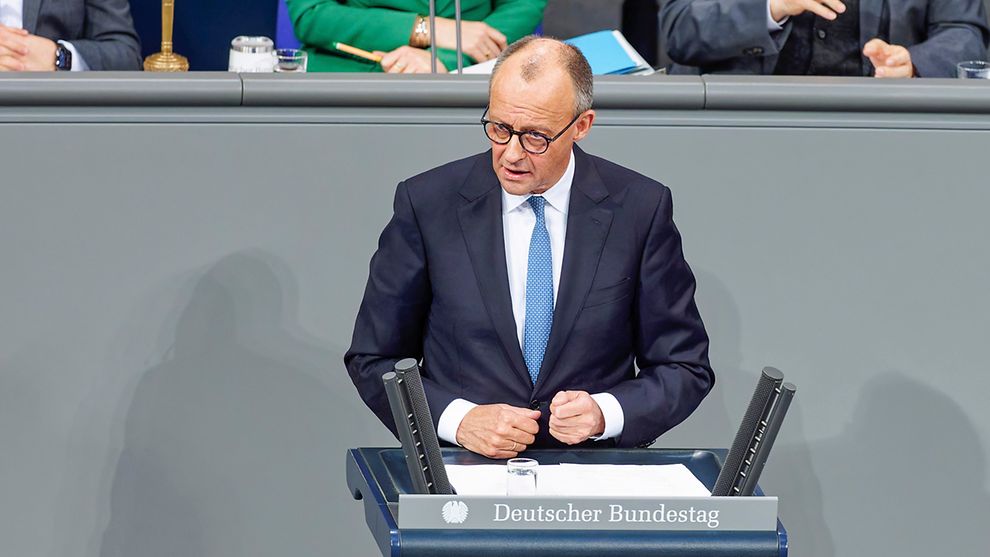
German Chancellor Friedrich Merz said that a ceasefire between Ukraine and Russia is a prerequisite before international forces can be deployed. At the same time, he emphasized that the world is still "very far" from this scenario and that such a vision "is simply impossible to implement without Russia's consensus" - a factor considered a key barrier today.
The order must be as follows: First, a ceasefire, then security assurances for Ukraine as a condition of a long-term agreement with Russia. Nothing of this can be done without Russia's consent. And perhaps we are still very far from that goal" - the German Chancellor said at a press conference in Seeon, in Bayern, southern Germany.
Mr. Merz added that even in the event of progress, any subsequent step related to the deployment of German troops will also have to overcome domestic legal barriers, including the decision of the federal government and the approval of the Bundestag, which is the German Lower House.
These assessments were made in the context of the "coalition ready to act" meeting in Paris on January 6, British Prime Minister Keir Starmer and French President Emmanuel Macron announced that they had signed a statement of intention to deploy forces to Ukraine and establish "military centers" throughout the country if a peace agreement with Moscow is reached.
According to the plan outlined in Paris, Britain and France will deploy troops to build protected weapons facilities and participate in monitoring the US-led ceasefire. However, this force is described as a non-combat formation, with a scale that has just stopped at the expected level, possibly reaching "several thousand" troops.
From the Russian side, Foreign Ministry spokeswoman Maria Zakharova warned that Moscow would consider any deployment of Western troops in Ukraine as "an external intervention", while emphasizing that all such units and facilities would be considered by the Russian Armed Forces as "legitimate military targets" - a warning that increases the risk to the plan.
Ms. Zakharova reaffirmed Russia's position that peace can only be achieved when resolving the "root causes" of conflict, including restoring Ukraine's neutral status, demilitarization, ensuring the rights of minority groups, as well as recognizing territorial changes arising from the 2014 and 2022 referendums.


