
The island nation's economy is suffering a double impact from recession and high inflation. The context became more tense after military campaigns in Venezuela in early January disrupted important energy supplies from outside.
Diplomatic sources said that US Chargé d'Affaires Mike Hammer has not announced a specific roadmap for Cuba's future other than fuel restriction measures. Observers believe that Washington is currently focusing on human rights issues but has not clarified response options if widespread social unrest occurs.
Although US Secretary of State Marco Rubio mentioned the prospect of economic freedom, the reality in Havana is still very difficult. Foreign diplomatic missions are developing contingency plans for a scenario of declining security and order.
Humanitarian activities are also greatly affected as the World Food Program warns fuel shortages are hindering relief efforts after Hurricane Melissa. Country Director Étienne Labande confirmed the shortage of fresh food in major cities and warned of the risk of a humanitarian crisis if electricity and water are completely cut off.
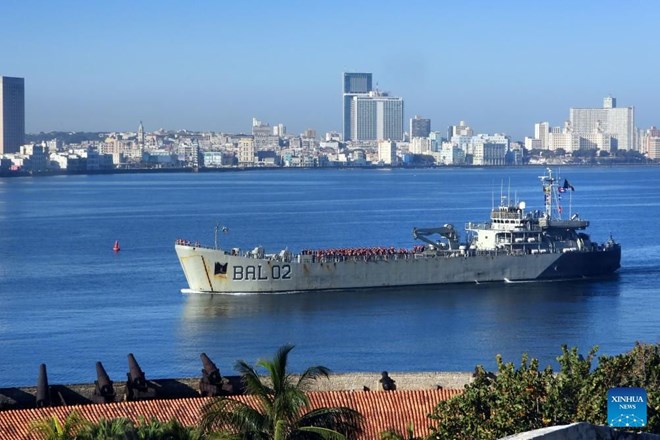
Pressure increased after President Donald Trump signed a decree sanctioning oil suppliers to Cuba. Mexico, despite being a major trading partner, also had to temporarily suspend oil ships. President Claudia Sheinbaum sent 800 tons of relief goods and called on the international community to pay attention to the difficult situation of the Cuban people.
At an event at the end of January, Mr. Mike Hammer declared that the current measures are a real blockade. The impact of fuel shortages has caused many Canadian and Russian airlines to cancel flights to Cuba, seriously affecting the tourism industry.
The atmosphere in Cuba is currently quite tense as the government has to close schools and non-essential agencies to save energy. Student Adrian Rodriguez Suárez said he had to switch to distance learning and return to his hometown, although the power outage situation in localities is even more serious than the capital.
People's lives are disrupted when many social events are canceled and people have to switch to cooking with firewood instead of gas stoves. In the difficult context, community support activities still take place, such as drivers supporting free patient transportation.
In the center of Havana, famous tourist destinations such as Yarini bar are currently deserted. The majority of remaining visitors are international reporters on duty to report on upcoming socio-political developments in this country.


