
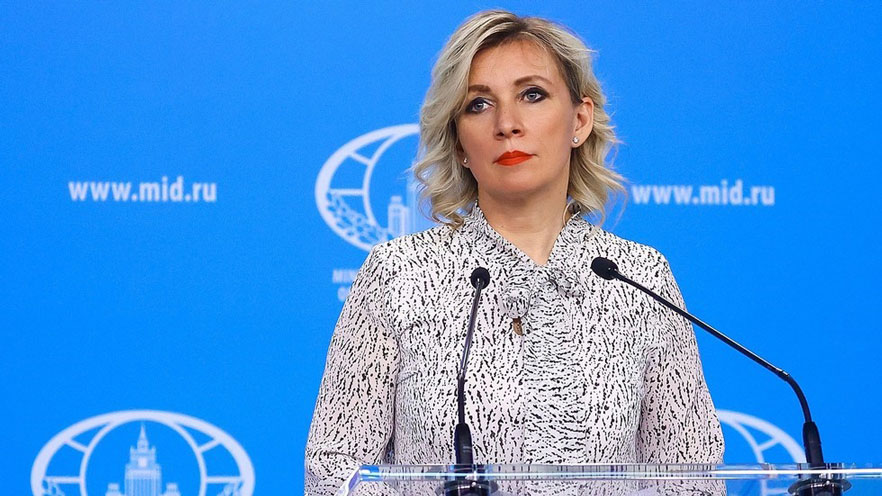
On January 26, Foreign Ministry spokeswoman Maria Zakharova said that the European Union (EU)'s decision to completely ban Russian gas essentially means that this bloc is giving up its own "freedom", because in the long term the EU will only shift to heavily dependence on another supplier.
It is difficult to say whether the European Union is in a proactive position or falls into a state of dependence. Time will tell. But no matter what, they have given up their freedom," Zakharova said.
The statement was made in the context that EU countries have just finalized a bill requiring member states to completely stop gas supplies from Russia no later than 2027.
This controversial document is designed to be passed by a strengthened majority mechanism, allowing the EU to overcome the opposition of some countries such as Hungary and Slovakia - countries that are still significantly dependent on Russian energy.
In November 2025, Hungary announced it would take the case to the European Court of Justice, arguing that the ban threatens national energy security. Meanwhile, the EU has faced a wave of rising energy prices since it began cutting off Russian oil and gas after the conflict in Ukraine escalated in February 2022.
Leaving a distance from relatively cheap gas pipelines from Russia also makes the EU increasingly dependent on imported liquefied natural gas (LNG), especially from the US.
Last week, the German Environmental Rescue Association said that the country is currently almost completely dependent on LNG sources from the US. The German economy - which relied on Russia for about 55% of gas demand - suffered a major shock when participating in Western sanctions against Moscow.
The German economy declined in 2023 and 2024, in which many officials and public figures repeatedly pointed out that high energy prices are one of the main reasons for slow growth.
In mid-January, the German Chamber of Commerce warned that this situation is linked to the number of bankruptcies at a level they described as "alarming".


