
After a technical expert meeting between member countries on February 25, the European Commission confirmed that it had requested Ukraine to accelerate the restoration of the Druzhba pipeline - a oil pipeline dating back to the Soviet Union, which was the lifeline supplying Russian oil to many Central European countries.
The incident occurred on January 27, when Druzhba was heavily damaged in an attack believed to be caused by Russia. The disruption to supply has angered Hungary and Slovakia - two countries still exempted from sanctions to continue importing Russian oil - accusing Kiev of "extortion".
Budapest even launched a "double blow" veto, paralyzing the 90 billion euro loan to Ukraine and a new package of sanctions targeting Russia.
In that context, the Adria pipeline, also known as JANAF, emerged as the most feasible solution. This pipeline starts from Croatia, connects with many Central European countries and is assessed to have enough capacity to meet the entire annual demand of Hungary (5.75 million tons) and Slovakia (4.66 million tons).
In Brussels, Croatia affirmed that non-Russian crude oil is being transported through Adria to the two countries mentioned above. Representatives of the European Commission emphasized that at the present time "there is no immediate risk" to the Union's energy security.
However, Budapest and Bratislava still insist on preserving the right to receive cheap Russian oil under the Druzhba contract. Croatia is considering whether it can receive Russian crude oil at its ports under the legal framework of the EU and the US, but has not yet made a final decision.
Energy tensions have overshadowed the visit to Kiev by European Commission President Ursula von der Leyen on the occasion of the 4th anniversary of Russia's launch of a comprehensive military campaign. She was expected to announce the final approval of the 90 billion euro loan and the 20th sanction package, but ultimately neither of them has been approved.
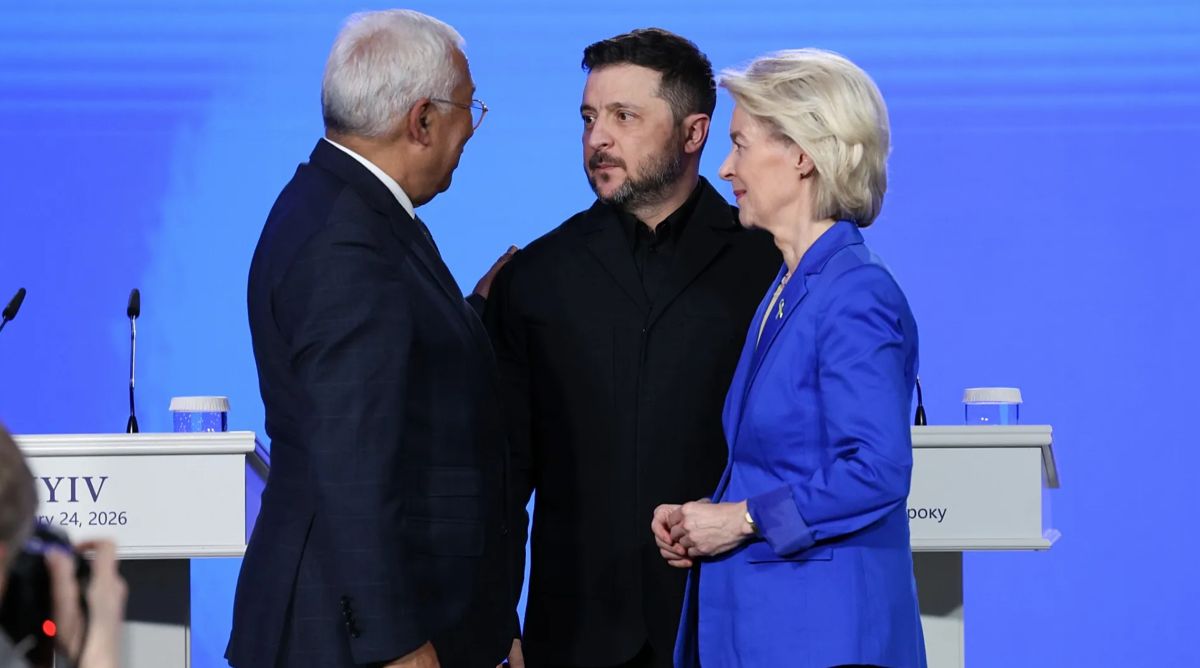
Standing next to her, Ukrainian President Volodymyr Zelensky did not give a specific repair timeline. He warned that restoring infrastructure amidst ongoing attacks poses a major risk to life. "When repairing, Russia attacks again," he said, saying the price to pay is too high.
In documents sent to Brussels, Kiev affirmed that it is "actively carrying out repairs and restorations", but emphasized that security measures must still be maintained due to the daily missile threat. Ukraine also criticized "ultimatums and political pressure" from Hungary and Slovakia as actions "favorable to the aggressor".
Last week, Budapest and Bratislava announced the cessation of diesel exports to Ukraine; Slovakia also threatened an emergency power cut. Hungarian Prime Minister Viktor Orbán announced that he would deploy troops to protect oil infrastructure and establish a no-fly zone near the Ukrainian border. He affirmed that Hungary "cannot be blackmailed".
The EU's difficulties are increasingly clear: On the one hand, it must ensure energy security for all members, and on the other hand, it needs to soon disburse the huge loan that the EU agreed to in December 2025 to support Kiev.


