
According to Xinhua News Agency, the US Federal Reserve (Fed) on July 29 (local time) decided to keep interest rates unchanged at 3.5 - 3.75%. This move is similar to the previous 4 sessions.
The growth rate of the US consumer price index (CPI) in June decreased to 3.5% compared to the same period last year, lower than the 4.2% of May, mainly due to a sharp drop in oil prices. However, inflation is still significantly higher than the 2% target set by the Fed.
In a statement after the meeting, the Federal Open Market Committee (FOMC) said that inflation is still above the 2% target, partly due to supply shocks that caused prices to rise in some sectors, including energy.
FOMC also assessed that US economic activity continued to grow steadily despite high instability, including the impact of the conflict in the Middle East.
Among the 12 FOMC members, 9 members voted in favor of keeping interest rates unchanged. Three members voted against including Fed Chairman Dallas, Fed Chairman Cleveland and Fed Chairman Minneapolis. They want to raise interest rates by another 0.25% right in this meeting.
This is the first time since 2016 that a Fed policy decision has recorded 3 votes of disagreement in the same direction. Before the meeting, Fed Governor Christopher Waller and a number of other officials expressed their support for further policy tightening if inflation persists.
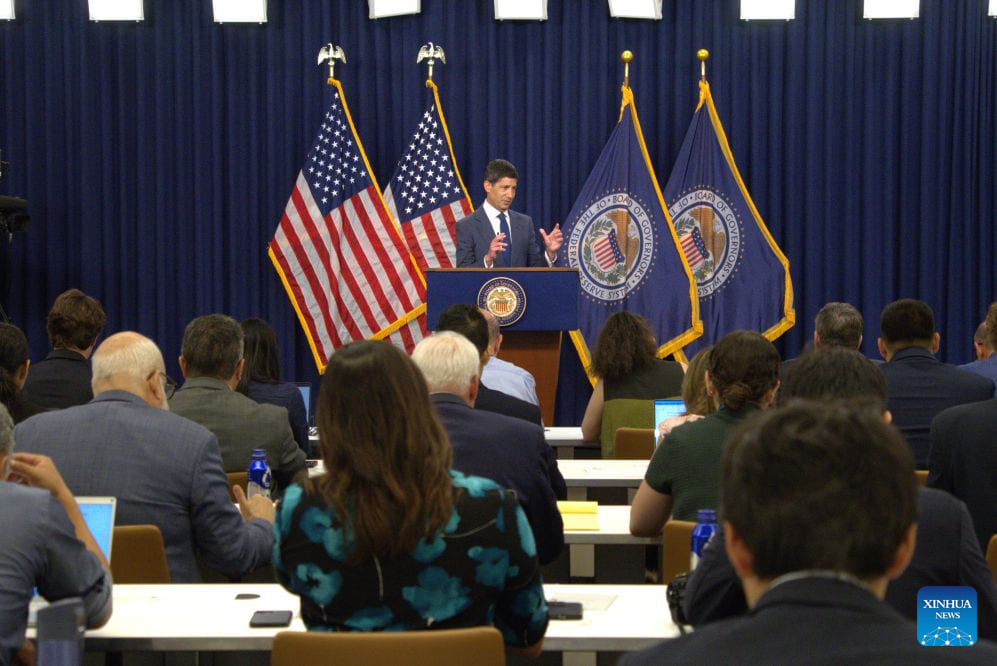
Fed Chairman Kevin Warsh - who chaired the 2nd policy meeting since taking office - affirmed that the Fed does not accept allowing inflation to remain high for a long time.
Speaking at a press conference after announcing the interest rate decision, Mr. Warsh said that it is necessary to observe more the actual reaction of the market, instead of being influenced by the orientation messages from the Fed.
The Fed Chairman described the decision to keep interest rates unchanged in July as a serious assessment of the economic situation, but it would not mean that the Fed would stop adjusting monetary policy.
Notably, the Fed continues not to give any signals about the interest rate roadmap in the coming time, in order for the market to react based on fundamental economic factors instead of statements from this agency.
Mr. Warsh said that the Fed considers market reactions as an important source of information to assess the economy: "We are making efforts to ensure that that source of information is as direct and least influenced as possible.
After the Fed's decision, the US stock market simultaneously dropped. The Dow Jones index lost 2.19%, down to 51,594.14 points; S&P 500 decreased 1.52%, to 7,316.15 points; while Nasdaq Composite decreased 1.74%, to 24,442.94 points.


