
Gold falls ahead of Fed interest rate decision
Gold price last night fell sharply to near the threshold of 4,000 USD/ounce. The fluctuation range in the session of gold is quite wide, from the area of 4,011 USD/ounce to 4,082 USD/ounce. Although still maintaining the psychological support level of 4,000 USD/ounce, gold price has not been able to overcome the resistance zone around 4,041-4,072 USD/ounce.
The market is currently focused on the monetary policy meeting of the US Federal Reserve (Fed). Most investors predict that the US central bank may keep interest rates unchanged, but the possibility of the Fed issuing a tougher signal still makes traders cautious.
Expectations of high interest rates have supported the USD to appreciate. The USD Index is trading around its highest level in more than a year, creating direct pressure on gold prices as the precious metal becomes less attractive to investors holding other currencies.
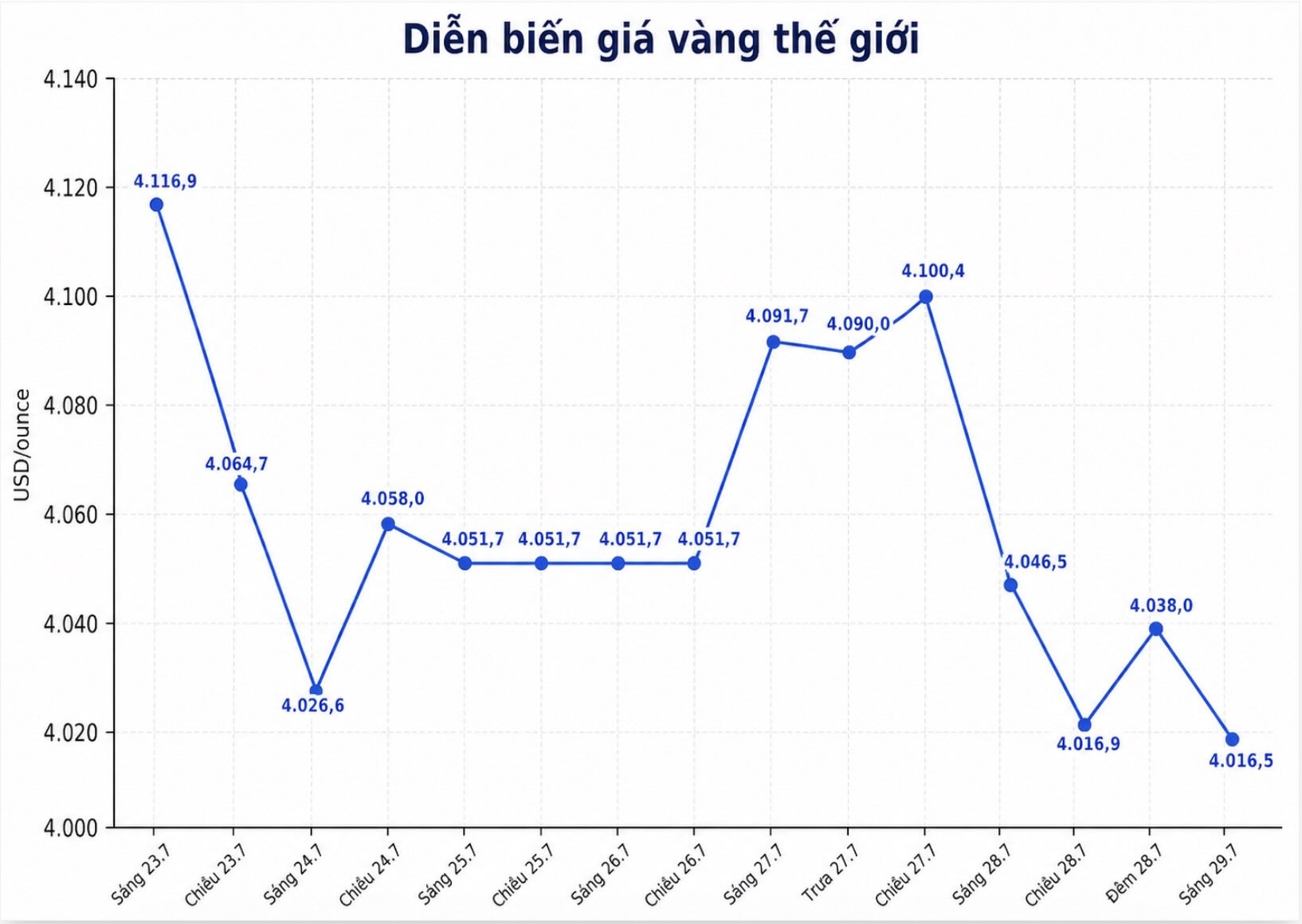
Strong USD, interest rates put pressure on gold
In recent months, gold prices have been greatly affected by changes in US monetary policy expectations. Previously, the market had expected the Fed to soon cut interest rates, but increased inflationary pressure and oil price movements have narrowed this possibility.
Rising oil prices in recent times have increased concerns about inflation, causing investors to assess that the Fed may maintain its tightening policy for longer. This has increased US bond yields and is detrimental to gold.
Notably, although crude oil prices and US bond yields showed signs of cooling down in the latest trading session, gold still decreased. This shows that market sentiment is currently more focused on the possibility that the Fed may maintain a cautious stance in the upcoming meeting.
In the past 5 months, gold prices have continuously moved in a downward pattern with subsequent peaks lower than previous peaks. The market is waiting for a signal strong enough to determine the next trend of the precious metal.
It can be seen that this Fed meeting may become a decisive factor in the short-term direction of gold prices. If the Fed signals to maintain high interest rates for longer than expected, gold prices may continue to be under pressure and test lower support zones. Conversely, if the Fed's message is softer, the expectation of interest rate cuts may boost cash flow back to precious metals.
In addition to deciding interest rates, investors will also monitor important US economic data such as GDP growth and the PCE inflation index to be released in the coming days.
Recent figures show that the US economic picture is intertwined. Some indicators reflect weakening consumer confidence, inflation showing signs of cooling down, but retail, labor market and some business sectors still maintain strength.
This makes it impossible for the market to clearly determine whether the Fed will shift to a policy easing trend in the near future.
The information in the article only reflects market developments, not investment recommendations. Investors need to carefully consider risk factors before making a decision.


