Xu hướng giá xăng dầu thế giới
Việt Nam tăng giá xăng dầu với tất cả các mặt hàng xăng dầu từ 16h ngày 26.10. Trong đợt tăng giá mới nhất, mỗi lít xăng E5 RON 92 tăng 1.430 đồng; xăng RON 95 thêm 1.460 đồng. Sau điều chỉnh, xăng E5 RON 92 ở mức 23.110 đồng một lít, còn xăng RON 95 lên mức 24.330 đồng một lít - ngưỡng cao nhất 7 năm (kể từ tháng 9.2014). Các mặt hàng dầu cũng đắt thêm 120-1.170 đồng một lít, kg tuỳ loại.
Từ cuối tháng 9, giá xăng dầu đang gần đạt mức cao nhất mọi thời đại ở nhiều quốc gia khi nhu cầu tăng cao và nguồn cung thiếu hụt khiến giá xăng dầu toàn cầu ở mức gần cao nhất trong 3 năm. Năm 2001, giá xăng trung bình trên toàn cầu là khoảng 0,60 USD/lít.
Giá xăng tăng mạnh gây sự gián đoạn lớn khắp Trung Quốc, Mỹ, Anh và Châu Âu. Giá xăng và dầu diesel cũng tăng đột biến ở một số quốc gia trong đó có Ấn Độ và Nam Phi.
Theo Hindustan Times, giá xăng dầu ở nước nào đắt nhất, rẻ nhất liên quan tới những quốc gia là nơi sản xuất xăng dầu cho thế giới, quốc gia hoàn toàn nhập khẩu xăng dầu hoặc nhập khẩu phần lớn xăng dầu.
Nếu có sản xuất trong nước, giá xăng dầu rõ ràng sẽ thấp hơn so với nơi nhập khẩu. Tuy nhiên, cũng có nhiều yếu tố khác ảnh hưởng đến giá nhiên liệu trên toàn thế giới do vậy giá xăng dầu không chỉ khác biệt theo từng quốc gia mà còn khác biệt giữa các khu vực.
Giá xăng đắt nhất thế giới, rẻ nhất thế giới
Theo globalpetrolprices.com tính tới 30.9.2021, Hong Kong (Trung Quốc) là nơi có giá xăng đắt nhất thế giới với giá 1 lít xăng là 2,56 USD. Nếu tới thăm Hong Kong và chọn phương án thuê xe tự lái, du khách cần sẵn sàng chi trả một khoản tiền lớn cho nhiên liệu.
Tiếp sau Hong Kong là Hà Lan, với giá xăng ở mức 2,18 USD/lít. Vị trí thứ 3 thuộc về Cộng hòa Trung Phi, nơi một lít xăng sẽ tiêu tốn của tài xế 2,14 USD.
Những quốc gia khác có giá xăng khá đắt là Na Uy, Israel, Đan Mạch, Monaco, Hy Lạp, Phần Lan và Iceland.
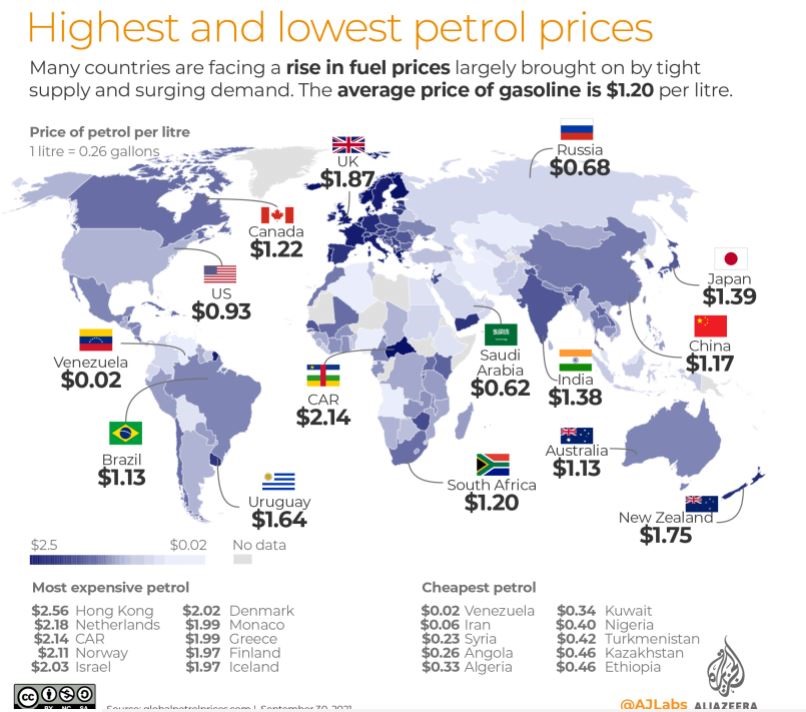
Trong khi đó, một trong những mức giá xăng thấp kỷ lục thế giới là Venezuela - nơi 1 lít xăng có giá 0,02 USD, rẻ hơn mua một bao diêm. Iran có giá mỗi lít xăng là 0,06 USD và giá xăng dầu ở Syria là 0,23 USD.
Một số nơi khác trên bản đồ toàn cầu có giá xăng thực sự phải chăng là Angola, Algeria, Kuwait, Nigeria, Turkmenistan, Kazakhstan và Ethiopia. Tất cả những quốc gia vừa liệt kê có giá xăng thấp hơn 0,50 USD.
Dầu thô trở thành xăng như thế nào?
Xăng, dầu diesel và nhiều loại nhiên liệu khác được sản xuất từ dầu thô - loại nhiên liệu hóa thạch được ví như "vàng đen" được bơm lên từ trong lòng đất. Nhiều sản phẩm gia dụng gồm nhựa, chất tẩy rửa và quần áo cũng có nguồn gốc từ nguồn tài nguyên không thể tái tạo này.
Giá dầu thô cao ảnh hưởng đến một số ngành, từ vận tải đến sản xuất. Dầu thô được phân loại theo độ dày (nặng, trung bình và nhẹ) và hàm lượng lưu huỳnh (ngọt - lưu huỳnh thấp, chua - lưu huỳnh cao). Dầu thô ngọt nhẹ là loại cấp độ cao nhất, được tìm kiếm nhiều nhất.
Dầu thô Brent và WTI (West Texas Intermediate) là tiêu chuẩn toàn cầu cho dầu thô ngọt nhẹ. Dầu thô Brent được khoan ngoài Biển Bắc giữa Vương quốc Anh và Na Uy trong khi WTI được lấy từ các mỏ dầu của Mỹ.
Dầu được khai thác từ các mỏ dầu sẽ được vận chuyển đến những nhà máy lọc dầu khác nhau, đưa vào lò chưng cất thành các loại nhiên liệu và sản phẩm khác nhau. Các sản phẩm nhẹ hơn bao gồm khí dầu mỏ hóa lỏng có thể chiết xuất ở nhiệt độ thấp trong khi những sản phẩm nặng nhất, trong đó có nhựa đường, được chiết xuất ở nhiệt độ cao hơn nhiều.
Giá xăng đã thay đổi như thế nào trong 20 năm qua (2001-2021)
Giá xăng dầu tại các điểm bán phụ thuộc vào nhiều yếu tố khác nhau, bao gồm giá dầu thô, chi phí vận tải, thuế và chi phí phân phối, theo Al Jazeera.
Năm 2001, dầu thô Brent được giao dịch với giá khoảng 25 USD/thùng. Một thùng tương đương khoảng 159 lít. Đỉnh điểm năm 2008, Brent có giá khoảng 140 USD/thùng sau đó giảm xuống còn 45 USD khi cuộc khủng hoảng tài chính toàn cầu ảnh hưởng tới nhu cầu tiêu thụ năng lượng.
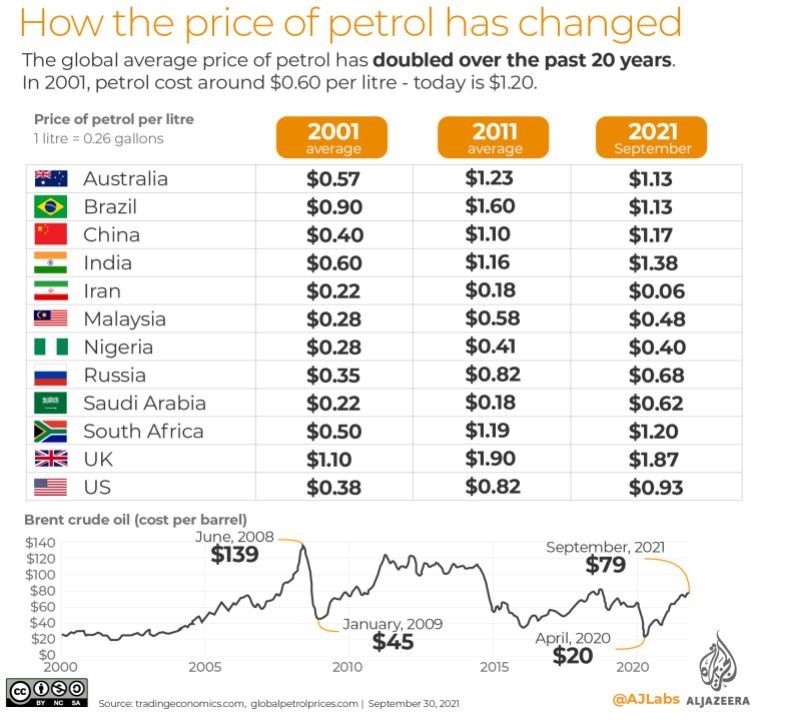
Tháng 4.2020, giá dầu một lần nữa giảm mạnh xuống mức thấp kỷ lục khi đại dịch COVID-19 bùng phát toàn cầu, khiến nhiều quốc gia phong tỏa và nhu cầu xuống mức rất thấp.
Tháng 9.2021, nhu cầu tăng cao cùng với sự thiếu hụt nguồn cung đã đẩy giá dầu thô lên mức cao nhất trong gần 3 năm ở mức xấp xỉ 80 USD/thùng. Các nhà phân tích tại Goldman Sachs dự đoán giá dầu Brent sẽ đạt 90 USD/thùng vào cuối năm nay.
Những quốc gia nhiều dầu mỏ nhất
Trung tâm sản xuất dầu mỏ của thế giới là OPEC - Tổ chức các nước xuất khẩu dầu mỏ. Được thành lập tại Baghdad, Iraq năm 1960, tổ chức đa quốc gia này gồm 13 quốc gia sở hữu khoảng 80% trữ lượng dầu thô đã được xác định của thế giới.
Theo Cơ quan Thông tin Năng lượng Mỹ, các nước thành viên OPEC sản xuất khoảng 40% lượng dầu thô của thế giới và chiếm khoảng 60% tổng lượng xăng dầu giao dịch quốc tế.
OPEC nhận định nhu cầu dầu trở lại mức trước đại dịch vào năm 2022 và dự kiến tăng sản lượng 1,7 triệu thùng mỗi ngày vào năm 2023.
Venezuela có trữ lượng dầu được xác định là lớn nhất thế giới với 303.806 triệu thùng, tiếp theo là Saudi Arabia với 258.600 triệu và Iran với 208.600 triệu theo bản tin thống kê hàng năm năm 2020 của OPEC. Ba nước này chiếm tới gần một nửa trong số 1,55 nghìn tỉ thùng dầu dự trữ của thế giới. Các quốc gia ngoài OPEC có trữ lượng lớn nhất gồm Nga (80.000 triệu thùng) và Mỹ (52.637 triệu thùng).
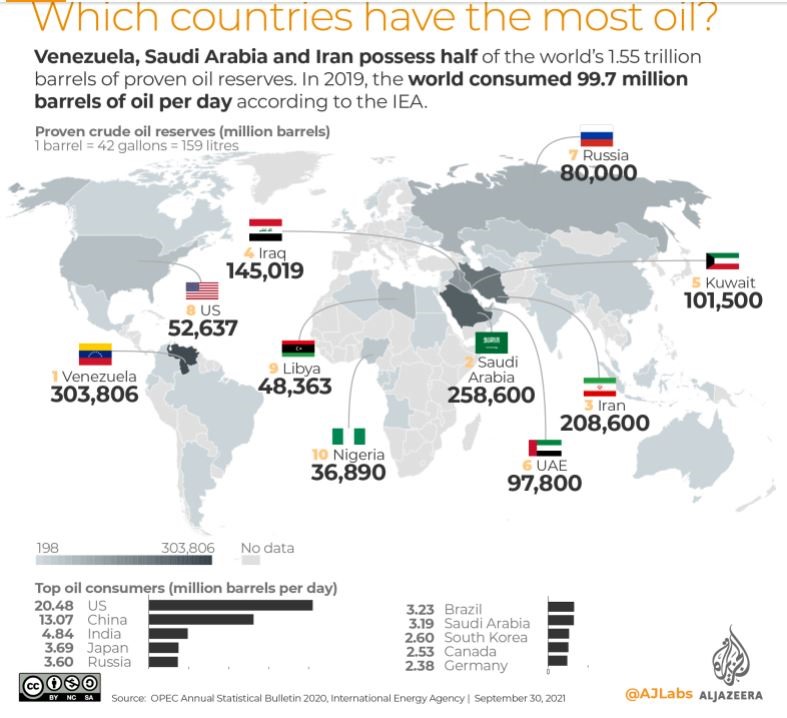
Theo Tổng thư ký OPEC Mohammad Barkindo, dầu sẽ giữ vị trí số một trong hỗn hợp năng lượng toàn cầu, cung cấp 28% nhu cầu năng lượng toàn cầu vào năm 2045.