
Iranian officials recently sent unprecedentedly tough signals to Ukraine. Mr. Ibrahim Azizi - Chairman of the National Security Committee of the Iranian Parliament - declared that Iran considers Ukraine a legitimate military target.
Immediately after that, the Iranian Foreign Ministry accused Ukrainian President Volodymyr Zelensky of being involved in hostile actions, showing that Tehran's view has changed significantly.
In fact, relations between the two countries are not always tense. For many years, Iran and Ukraine have maintained a limited level of cooperation, mainly in the economic field, with modest trade turnover. Both have almost no deep strategic interests, so they maintain a state of "no conflict".
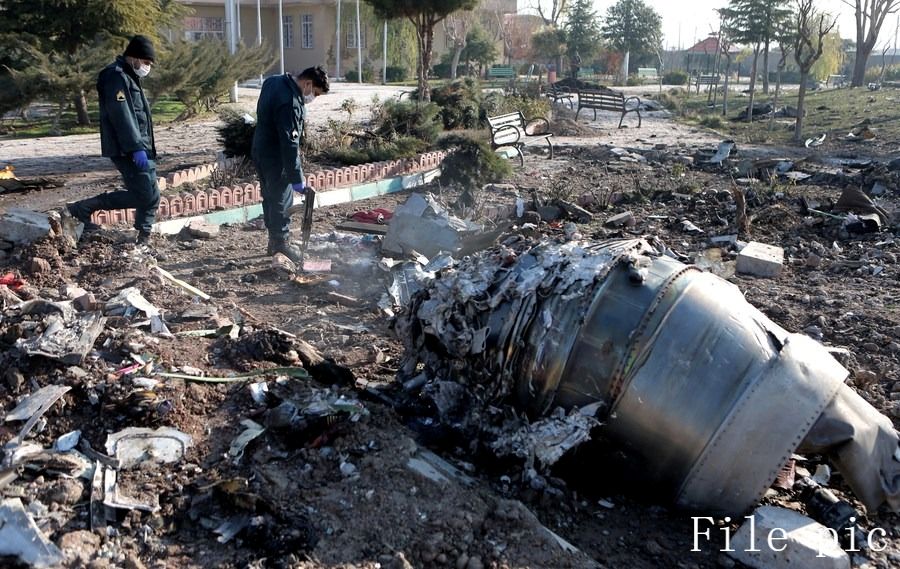
The first turning point occurred in 2020, when Iran mistakenly shot down a Ukrainian civilian plane near Tehran. The incident quickly worsened bilateral relations, when Kiev demanded an international investigation and compensation, while Tehran argued that this pressure was political.
However, tensions only really increased after 2022, when the Russia-Ukraine conflict broke out. Iran maintained a cautious stance, not condemning Russia and opposing anti-Moscow resolutions at the United Nations. This view makes Kiev see Tehran as one side leaning towards Russia, although Iran still declares neutrality.
The statement by the late Supreme Leader Ali Khamenei, in which NATO was blamed for the tension, further strengthened Ukraine's perception that Iran is on its opponent's side. Since then, bilateral diplomatic channels have continuously arisen disputes, with many summons of ambassadors and mutual protests.
Another factor that worsens relations is the accusations that Iran supplies drones to Russia. Although Tehran denies it, Kiev still considers this evidence of Iran's indirect involvement in the conflict. This makes Iran's image in Ukrainian media and politics shift from neutral to hostile.
Developments in the Middle East since the end of 2023 continue to deepen disagreements. Ukraine expresses its support for Israel in military operations, which Iran strongly opposes. For Tehran, this stance means Kiev has abandoned neutrality and sided with forces that Iran considers opponents.
Ukraine's support for US sanctions and expression of agreement with President Donald Trump's policy towards Iran is also seen by Tehran as a political alliance against itself.
All of the above factors - from geopolitical differences, conflicts of interest to accumulated lack of trust - have pushed Iran-Ukraine relations into a period of rapid decline. Recent statements by Iranian officials are not a temporary reaction, but the result of a long-term accumulation of conflicts.
In the current context, the risk of direct confrontation remains open, but it is clear that the two sides are moving away from the possibility of dialogue. Iran-Ukraine relations, which are already fragile, are now facing a new turning point with many uncertainties ahead.


