
Hungary and Slovakia have reached an agreement to build a new oil pipeline to ensure energy supply in the context of Ukraine continuing to block the flow of Russian oil through the Druzhba line.
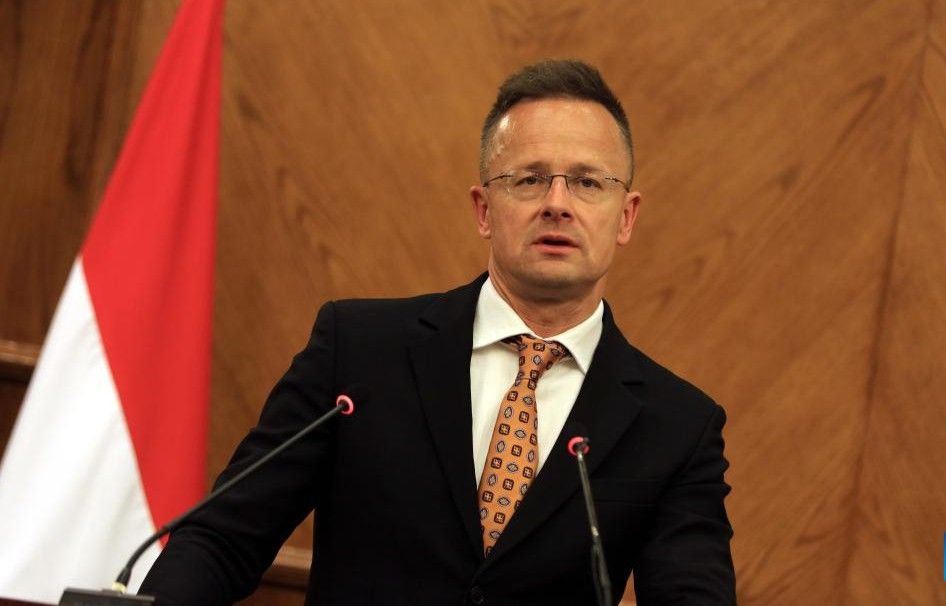
The information was announced by Hungarian Foreign and Trade Minister Peter Szijjarto when he arrived in Brussels to attend the meeting of European Union (EU) Foreign Ministers on March 16. According to him, the decision to build a new pipeline is a necessary step after months of unsuccessful efforts to restore oil flow through Ukraine.
Kiev refuses dialogue
According to Hungary, Budapest and Bratislava once proposed holding a meeting in Brussels with the Minister of Energy of Ukraine to discuss the restoration of operation of the Druzhba line - the long-standing Russian oil transport pipeline connecting Russia with Central Europe.
However, Kiev has rejected this proposal.
Mr. Szijjarto said that Hungary even sent a delegation led by Deputy Minister of Energy Gabor Czepek to Kiev and stayed for more than 3 and a half days to find ways to resolve the situation. However, the Ukrainian side did not accept holding an official meeting.
Not only that, Ukraine also refused to allow experts from the EU, Hungary and Slovakia to technically inspect the Druzhba pipeline.
According to the Hungarian Minister, this shows that Druzhba can completely operate again and the current blockade is more political than technical.
Pressure" from Germany
Tensions are not limited to relations with Ukraine.
Mr. Szijjarto revealed that at the EU Foreign Ministers' Council meeting in Brussels, he faced "direct threats" from German Foreign Minister Johann Wadephul.
According to him, Berlin is putting pressure on Budapest to change its position towards Kiev.
The Hungarian Minister said that in his current tenure of more than 11 years, this is the first time he has encountered such pressure in a EU high-level meeting.
However, he affirmed that the Hungarian government will not change energy policy just because of political pressure.
New pipeline to "avoid" blockade
In that context, Hungary and Slovakia signed an agreement to build a new oil pipeline to transport gasoline and diesel directly connecting two oil refineries in Bratislava and Szazhalombatta.
Both facilities are operated by the Hungarian energy corporation MOL and mainly process Urals crude oil from Russia.
Since January 27, Russian oil through Druzhba has been disrupted, causing factories to temporarily use oil from Hungary's strategic reserves.
The Szazhalombatta plant is also connected to the Adriatic pipeline running through Croatia. Budapest currently hopes to receive Russian oil transported by sea through this route if Zagreb allows transit.
Spreading energy crisis
The disruption of Russian oil flows has put great pressure on the Central European region.
The Slovak government declared a oil crisis on February 18. In response to the blockade of the pipeline, Bratislava also cut off emergency power supply and diesel fuel to support Kiev.
Hungary also responded by blocking the EU's military loan package worth about 90 billion euros for Kiev, and warned that it would continue to prevent Brussels' decisions in favor of Ukraine.
The European Commission has proposed funding for the repair of the Druzhba pipeline if necessary, but Budapest and Bratislava are still determined to demand the restoration of Russian oil flows.


