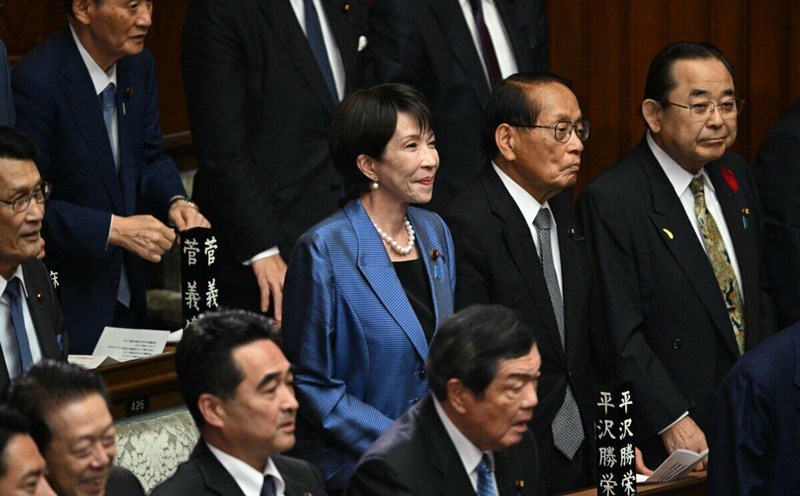
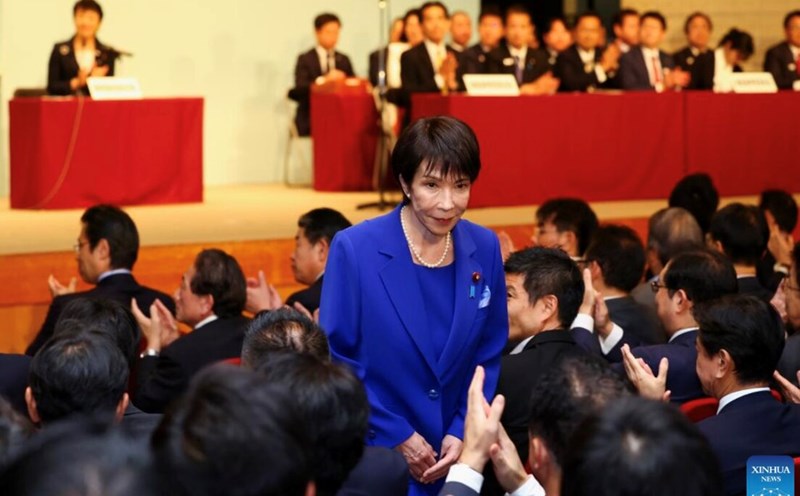
On February 8, Japanese voters went to vote in the early House of Representatives election, which is predicted to bring overwhelming victory to the conservative coalition led by Prime Minister Sanae Takaichi, thereby consolidating the power of the first female prime minister in the country's history.
Voting stations are distributed in 289 areas across the country. The ballot box is expected to close at 8:00 PM (local time) on the same day. This is also the time when television stations are expected to announce forecasts based on post-voting surveys.
The election takes place in the context of Ms. Takaichi seeking a new term to promote an ambitious agenda, including sharply increasing defense spending, adjusting security policies and tightening immigration controls.
According to many public opinion polls, the coalition between the ruling Liberal Democratic Party (LDP) and the Japan Renovation Party (Ishin) may win more than 300 out of a total of 465 seats in the House of Representatives - a significant increase compared to the 233 seats that the coalition holds.
Although Ishin formally does not belong to the LDP and is often classified as an opposition group, this party is currently closely cooperating with the government and supports many of Ms. Takaichi's key policies. Meanwhile, the remaining opposition is considered too fragmented to create real challenges, despite efforts to form a new centrist coalition and the emergence of far-right forces.
Ms. Takaichi, 64, took office as prime minister in October 2025, when she was elected leader of the LDP. This ultra-conservative politician pledged to "work, work and work", with a style that is both tough and flexible, creating significant support from young voters. She announced that she would resign if the LDP does not win a majority in the House of Representatives.
Rising living costs are the central issue of the election campaign. Prices are escalating while real wage growth is not keeping up with inflation, causing many households to face difficulties.
According to the International Monetary Fund (IMF), Japan's economy only grew by 1.1% last year and is expected to grow by about 0.7% in 2026. To reassure voters, Ms. Takaichi pledged to suspend the 8% consumption tax on food for two years, following the 21.3 trillion yen (136 billion USD) economic stimulus package passed last year.
In addition to the economy, Ms. Takaichi promoted amendments to security policies to strengthen offensive military capabilities, lift the arms export ban and gradually move away from post-war peace principles.
An overwhelming victory is also said to create conditions for her to adjust foreign policy, strengthen the Japan-US alliance and pursue a more pragmatic approach to China.