
Amidst Middle East tensions showing no signs of cooling down, Kremlin spokesman Dmitry Peskov on March 24 made a rare tough statement regarding the risk of conflict spreading to the Caspian Sea region.
Answering reporters in Moscow, Mr. Peskov emphasized that Russia "does not want" any scenario that would cause war in the Middle East to overflow into this region. When asked specifically about the reaction if that happened, he said briefly but decisively: Russia will view that situation in an "extremely negative" direction.
Located between Europe and Asia, the Caspian Sea is the largest closed sea in the world, bordering 5 countries including Russia, Iran, Kazakhstan, Turkmenistan and Azerbaijan.
This region is not only rich in oil and gas reserves but also acts as a strategic "energy corridor" connecting Central Asia with Europe, and is also an important transportation route in transcontinental logistics projects.
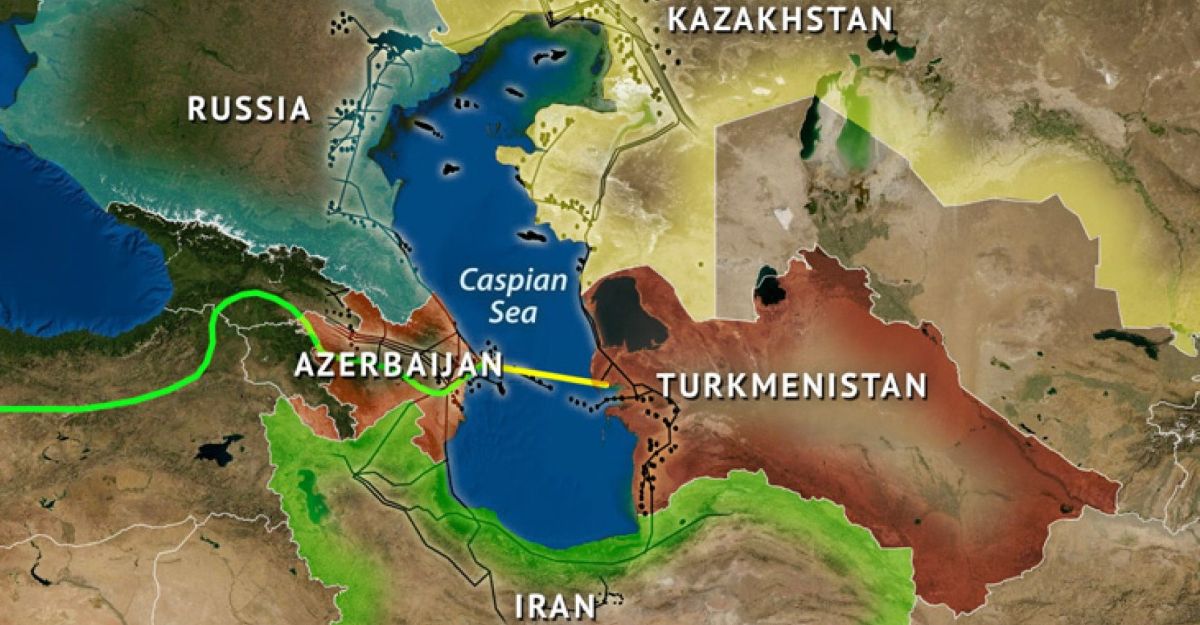
The Caspian Sea has long been considered Russia's "strategic buffer zone". The Middle East conflict - especially related to Iran - spreading here will not only change the regional security balance but also directly threaten Moscow's interests.
Observers believe that Mr. Peskov's statement implies an early warning: Russia does not want a "new front" to form right next to its southern flank.
Notably, when asked about media reports that Israel had carried out attacks on Russian ships in the Caspian Sea, Mr. Peskov appeared cautious.
We have not seen this information. Honestly, I have no data on that issue," the Kremlin spokesman said, refusing to comment further.
Russia's statement was made in the context of the conflict related to Iran showing signs of becoming more complicated, with the risk of spreading to many geographical spaces outside the Middle East.
If the Caspian Sea is caught up in this vortex, the consequences will not only stop at military. Energy and trade transport routes in the Asia-Europe region may be disrupted, leading to chain reactions to the global market.
Russia's early statement shows that Moscow wants to "frame" the scope of the conflict, and sends a message to the parties involved that the Caspian Sea is not an area that can be dragged into military calculations.
Meanwhile, the Kremlin's failure to confirm or deny information about Russian ships being attacked shows a reality: the behind-the-scenes developments of this conflict may be much more complicated than what has been publicized.


