Russia discovers decades-old secrets from the Soviet era

Khánh Minh |

The Russian expedition has just discovered a secret that has lasted for decades since the Soviet era at the bottom of the Arctic Ocean.

The Russian scientific expedition identifies locations of nuclear waste disposal that have been forgotten. This discovery not only helps clarify waste disposal activities during the Cold War, but also raises new concerns about environmental risks in the context of the rapidly warming Arctic.

In a recent survey mission in the Barents Sea, a Russian research vessel found remnants of Likhter-4, a Soviet-era barge that was intentionally sunk in 1988.

This ship used to carry 2 reactor compartments dismantled from submarine K-22, along with 146 boxes containing solid radioactive waste.

The confirmation of the location of Likhter-4 is considered a breakthrough, after many years scientists have encountered deadlock due to inaccurate archival records and harsh survey conditions in the Arctic.

According to researchers, from the 1960s to the late 1980s, the Soviet Union brought a large volume of used nuclear fuel, reactor parts and sealed radioactive materials into the deep northern sea areas, with the aim of isolating them from residential areas and public surveillance.
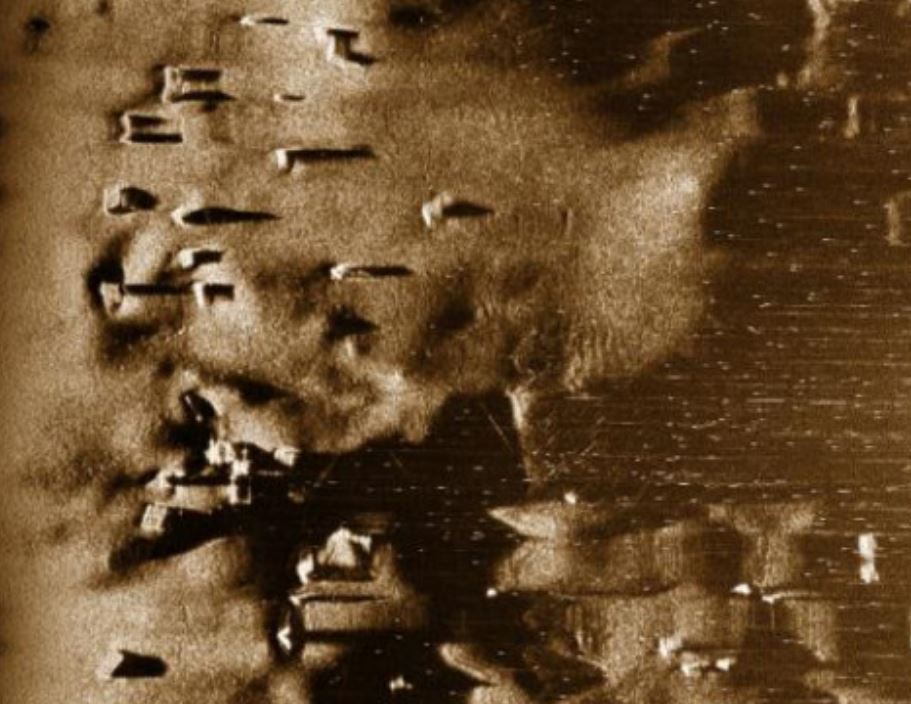
Mot so thung kim loai chua chat thai phong xa ran nam rai rac. Anh: Vien Han lam Khoa hoc Nga
Some metal barrels containing solid radioactive waste are scattered under the seabed. Photo: Russian Academy of Sciences

However, many documents related to these activities are incomplete or contradictory, making environmental risk assessment difficult over the decades.

To track down Likhter-4, Russian scientists combined rebuilding storage materials with modern survey technology. Horizontal scanning sonar, gamma spectrometers and remote control devices were deployed to map the seabed and check the condition of the shipwreck.

The measurement results showed that there were no signs of radioactive leakage actively entering the surrounding water column. Some small radiation levels recorded were thought to be due to remaining surface pollution, not due to structural damage or shielding.

In parallel with that, the expedition also confirmed the location of another barge, commonly known as Nikel, which was suspected of containing nearly 580 tons of radioactive waste.

Sonar images and visual data have helped researchers map this object, thereby adding an important piece to the picture of the "nuclear graveyard" at the bottom of the Arctic.

Another focus of the mission is the K-27 submarine, which was sunk in 1981, in Stepovoy Bay with nuclear fuel still on board.
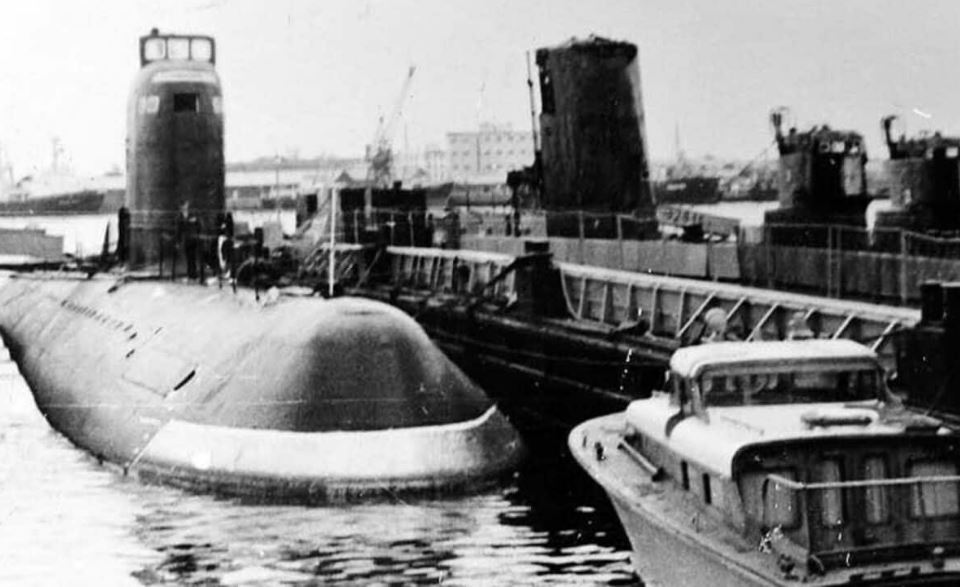
Tau ngam K-27. Anh: Vien Han lam Khoa hoc Nga
K-27 submarine. Photo: Russian Academy of Sciences

The K-27 once encountered a serious reactor incident in 1968 and was considered too dangerous to dismantle using technology at that time.

Although the latest survey has not detected leaks into the water environment, scientists still consider the K-27 to be one of the most dangerous submerged nuclear objects in the world, due to the use of a rare lead-bismuth reactor system.

Faced with these findings, Russian researchers are considering establishing a permanent underwater monitoring station near sensitive points to monitor long-term stability and detect any fluctuations early.

Khánh Minh
RELATED NEWS

Discovering the whereabouts of a Russian oil tanker once seized by the US

|

The oil tanker Marinera, flying the Russian flag, seized by the US military in international waters in the North Atlantic Ocean, has just been discovered off the northeast coast of Scotland.

Greenland scenario appears to vote on Russia's annexation in the next few days

|

Mr. Medvedev unexpectedly put forward a scenario that Greenland could hold a referendum to annex Russia if the US is slow.

The outcome of the Russian ship suspected of damaging the Baltic Sea cable

|

Although Finland released the ship originating from Russia suspected of causing the Baltic Sea cable to break, the investigation continues.

Ha Long Canned Food store doors are closed, locked

|

Hai Phong - Many days after the Ha Long Canned Food scandal, the products of this brand continue to be absent from supermarkets and convenience stores in Hai Phong.

It's a bit of a bit of a bit of a bit of a bit of a bit.

Scene of the accident that killed 4 people on the highway section through Thanh Hoa

|

Thanh Hoa - Through the scene of the accident that killed 4 people and injured many others on the highway, it can be seen that the vehicles collided with each other very strongly.

US warns Iran will pay a heavy price for suppressing protests by force

|

US President Donald Trump warned that Iran would pay a heavy price if it continued to suppress protests by force, and declared readiness to support the Iranian people.

Parents' representative board accused of overcharging, school forced to stop sponsorship

|

Gia Lai - Mobilizing hundreds of millions of VND to build a roof and clean up, the Parents' Representative Board of Nguyen Van Cu Elementary School was accused by parents of overcharging.

Hue Tet flowers suffer heavy losses after floods, traders still order early

|

HUE - After rain and floods, favorable weather helps farmers in flower villages in Hue City urgently restore production, hoping to catch up with the Tet flower crop.

Discovering the whereabouts of a Russian oil tanker once seized by the US

Song Minh |

The oil tanker Marinera, flying the Russian flag, seized by the US military in international waters in the North Atlantic Ocean, has just been discovered off the northeast coast of Scotland.

Greenland scenario appears to vote on Russia's annexation in the next few days

Khánh Minh |

Mr. Medvedev unexpectedly put forward a scenario that Greenland could hold a referendum to annex Russia if the US is slow.

The outcome of the Russian ship suspected of damaging the Baltic Sea cable

Khánh Minh |

Although Finland released the ship originating from Russia suspected of causing the Baltic Sea cable to break, the investigation continues.