
Although the progress is assessed positively, disagreements over control of the Strait of Hormuz remain a major bottleneck that cannot be removed.
In the context of high-level talks between the US and Iran in Islamabad (Pakistan) lasting until early morning on April 12 (local time), President Donald Trump attracted attention when he declared that whether an agreement is reached or not "does not make a difference".
Speaking to reporters before leaving the White House for Florida, Mr. Trump emphasized: "Whatever happens, we still win. Whether there is an agreement or not is not important to me.
According to the US President, negotiations between the two sides took place "for hours". He confirmed that Vice President JD Vance is directly in Pakistan to negotiate with Iranian officials.
We have completely defeated that country, so let's wait and see what happens. Maybe they reach an agreement, maybe not - it doesn't matter. From the perspective of the United States, we still win," Mr. Trump added.
The contacts between the US and Iran - mediated by Pakistan - are considered the highest-level direct negotiations between the two countries in decades, taking place amid escalating military tensions in the Middle East for many weeks.
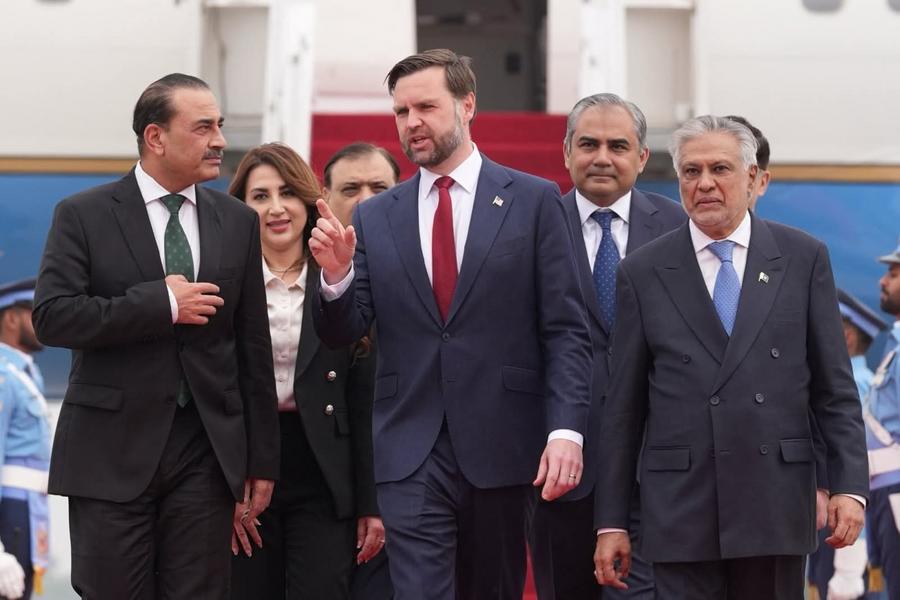
Although the general atmosphere is described by Pakistani sources as "positive", the negotiation process is still in a stalemate due to disagreements related to control over the Strait of Hormuz.
A source close to the Iranian delegation said that the US has made "unacceptable" requests on this issue, along with some other terms.
The Strait of Hormuz has long been considered the world's "energy throat", the transit point for about 1/5 of global oil. Therefore, any change in control or freedom of navigation here could strongly impact the energy market and global supply chains.
The impact of the crisis is not limited to the Middle East. In Ireland, about 1/3 of gas stations have run out of supplies, forcing police to escort convoys of fuel trucks.
In parallel with negotiations, military developments in the region show signs of temporarily cooling down. No airstrikes were recorded in the Gulf countries on April 11, after weeks of escalating tensions.
However, Israeli Prime Minister Benjamin Netanyahu warned that Israel's military campaign against Iran has not ended, showing that the risk of conflict breaking out again is still present.
In another development, the US Central Command said that 2 guided-missile destroyers have begun mine clearing operations in the Strait of Hormuz. These are the first US warships to pass through this area since the conflict broke out.
Meanwhile, Qatar announced that it would fully resume maritime operations for its ships in the Persian Gulf from April 12. However, the above move does not mean that Qatar has gained absolute freedom in the Strait of Hormuz.
Diplomatically, French President Emmanuel Macron said he had a phone call with Iranian President Masoud Pezeshkian, calling for "full respect for the ceasefire", including in Lebanon.


