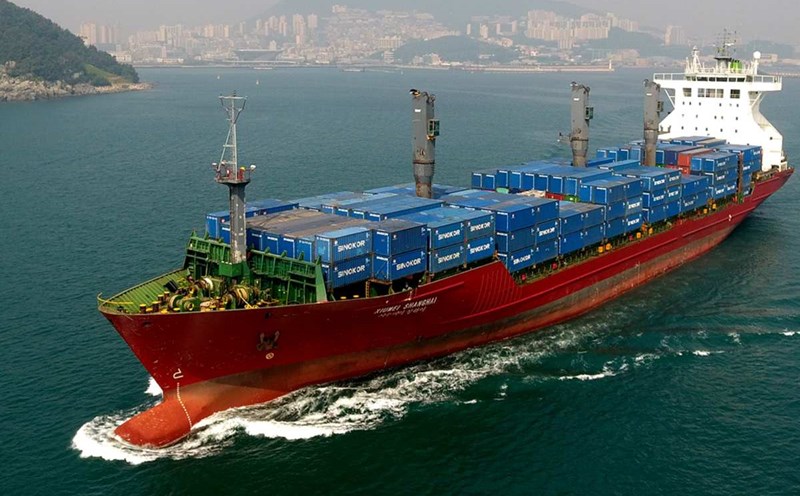
Kpler ship tracking data has just confirmed unexpected developments in the Strait of Hormuz when 3 oil tankers of the Iranian National Shipbuilding Corporation (NITC), which is subject to strict sanctions from the US, passed through the strait earlier this week. The ships carrying 5 million barrels of crude oil, headed straight to the Gulf of Oman amidst the global trading fleet still paralyzed.
The names of these ships include the Suezmax Sinopa ship and the pair of very large crude oil tankers (VLCC) Stream and Serena. Notably, accompanying this group was also the Nora ship - a ship that was arrested by Malaysia earlier this year for being involved in illegal oil transfer activities.
The reality at the scene is at a red alert level. According to a report from the Baltic Exchange, more than 540 oil tankers containing about 300 million barrels of oil, worth up to 32 billion USD, have been stuck in the Gulf since the conflict broke out on February 28. Experts discovered that the risk to the maritime industry has skyrocketed after Israeli attacks on Iranian gas fields led to responses to regional partner infrastructure.
Even an oil tanker caught fire fiercely near the port of Khor Fakkan in the UAE, showing that there is no area that is really safe for transport ships that are not "priority" of Tehran.
In that context, the Iranian Parliament is considering a proposal to impose taxes and fees on any ships wishing to pass through the Strait of Hormuz. This is seen as Tehran's effort to turn this strait into a strategic "fee station" under direct military control.
US Treasury Secretary Scott Bessent recently revealed plans to lift temporary sanctions on 140 million barrels of Iranian oil stuck at sea to cool down energy prices.
Mr. Bessent explained that this is an effort to supplement immediate supply for the market in the next 10 to 14 days. Economists have discovered that this is actually a "big shot", using the opponent's own resources to eliminate the price manipulation advantage that Iran is holding in the Gulf region.