
At the Congress of the Vietnam Volleyball Federation for the 2026-2031 term, new Chairman Duong Manh Tien emphasized the goal of making domestic tournaments a sporting product with commercial value.
According to Mr. Tien, Vietnamese volleyball cannot just stop at calling for sponsorship but needs to cooperate with businesses to create value together. When the tournament becomes an attractive product, commercial exploitation capacity will expand and new revenue sources may increase.
This is a necessary direction. However, to turn the goal into real revenue, Vietnamese volleyball can refer to the way Thailand and Japan organize and promote tournaments.
Selling experiences instead of just selling tickets
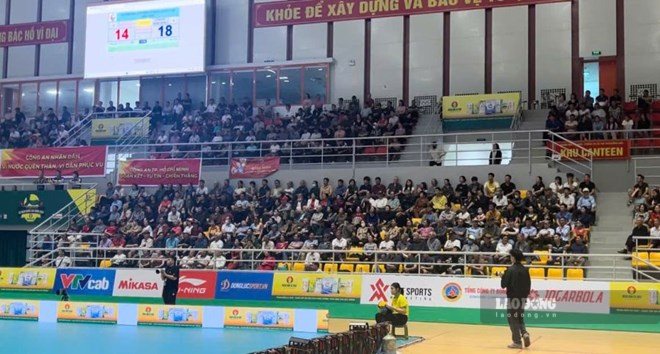
Ticket revenue is a direct source of income for a professional tournament. However, audiences will not spend money if the experience at the stadium is not much different from watching on television.
In Vietnam, the ticket price for the national championship once caused controversy when it ranged from 100,000 to 200,000 VND. The problem is not in the price but in the value viewers receive.
Thailand has repeatedly turned international volleyball tournaments in Bangkok into festivals for fans. In addition to matches, there are also photo photography areas, souvenir sales, exchange activities and meetings with athletes. Ticket buyers participate in a series of experiences, not just watching matches.
In Japan, SV. League also sees revenue from audiences as a foundation for developing other business activities. The tournament aims to increase viewership and retail sales, instead of just focusing on professional achievements.
With Vietnamese volleyball, entrance tickets should be diversified into many packages such as season tickets, family tickets, student tickets or tickets with the right to interact with players. When tickets are associated with specific experiences, their value will be much higher.
Player becomes representative face
Vietnamese volleyball has many attractive athletes such as Tran Thi Thanh Thuy, Vi Thi Nhu Quynh, Hoang Thi Kieu Trinh or Nguyen Ngoc Thuan, Dinh Van Duy, Quan Trong Nghia.
However, their image is mainly spread naturally, not yet within a common communication strategy.
Thailand is a successful example of turning stars like Nootsara Tomkom or Pleumjit Thinkaow into faces promoting many activities, from commerce to community. Even when they no longer compete, they still maintain their influence.
In Japan, teams exploit the image of athletes through jerseys, souvenirs, fan meetings and behind-the-scenes events. When fans love a player, they tend to stick with the team longer.
Vietnamese clubs therefore need to invest in communication, building a unique image for each athlete instead of just appearing when competing.
Digital content must become assets
Domestic volleyball tournaments are now widely broadcast, but the main content still revolves around matches and results.
Meanwhile, digital content can bring more value: attracting audiences, increasing attraction to sponsors, promoting players and expanding revenue from advertising or copyright.
Japan maintains a professional broadcasting system, while developing many separate contents on the foundation of the league and clubs. The stories behind the stadium help fans stick with the team throughout the season.
Vietnamese volleyball can completely exploit the behind-the-scenes training, dressing room, tactics or athlete life. A beautiful shot only creates attraction for a moment, but attractive stories will keep the audience longer.
Building a community of audiences
Long-term revenue comes not only from the current fan base but also depends on creating a new generation of audiences.
In Thailand, major tournaments always come with activities for students and teenagers such as training with players, visiting stadiums or interacting with idols. Japan even requires teams participating in the SV. League to build U15 teams. This regulation both serves youth training and helps clubs stick with the locality and school.
In Vietnam, teams can completely organize school volleyball festivals, take players to school for giao lưu or distribute free tickets to students. This is a way to build a future audience.
Orienting the tournament to become a commercial product is a positive sign. However, that product will only be truly valuable when the audience is willing to buy tickets, the players are attractive, the content is attractive enough and the club is connected to the community.
Vietnamese volleyball is not lacking in professional quality or outstanding faces. What is missing is a professional operating system to turn the interest of fans into sustainable economic value.


