
Although facing in the semi-finals, France vs Spain is likened to the "final" of the 2026 World Cup. Argentina is the defending champion, but France and Spain are the 2 best teams at the tournament in North America.
The winning team is likely to enter the final in New York as the strongest candidate for the championship. But behind that, France and Spain are also in a wider battle to affirm their contemporary dominance.
1998 marked a turning point in football history. Before that milestone, 2 European superpowers dominated international football, Italy and Germany.
The proof is that in 3 decades and 15 major tournaments held after 1966, Italy won 2 titles, while Germany had 5. Between them are appearances in EURO 1968, 1972, 1976, 1980, 1992, 1996, and World Cup 1970, 1974, 1982, 1986, 1990, 1994.
Since that milestone, the power order has completely changed, when Italy missed the World Cup finals for the third consecutive time and Germany could not reach the round of 16 for the third time.
The last 15 major tournaments usually feature France or Spain in the final matches, from the World Cup (1998, 2006, 2010, 2018, 2022, 2026) to EURO (2000, 2008, 2012, 2016, 2024).
Spain leads in the number of titles (4 cups), but France has 4 times more times reaching the World Cup final and 2 times winning the championship.
Interestingly, these 2 countries always tend to become the biggest obstacles to each other's ambitions. France defeated Spain in the knockout rounds in 2000 and 2006; while Spain responded similarly in 2012 and 2024.
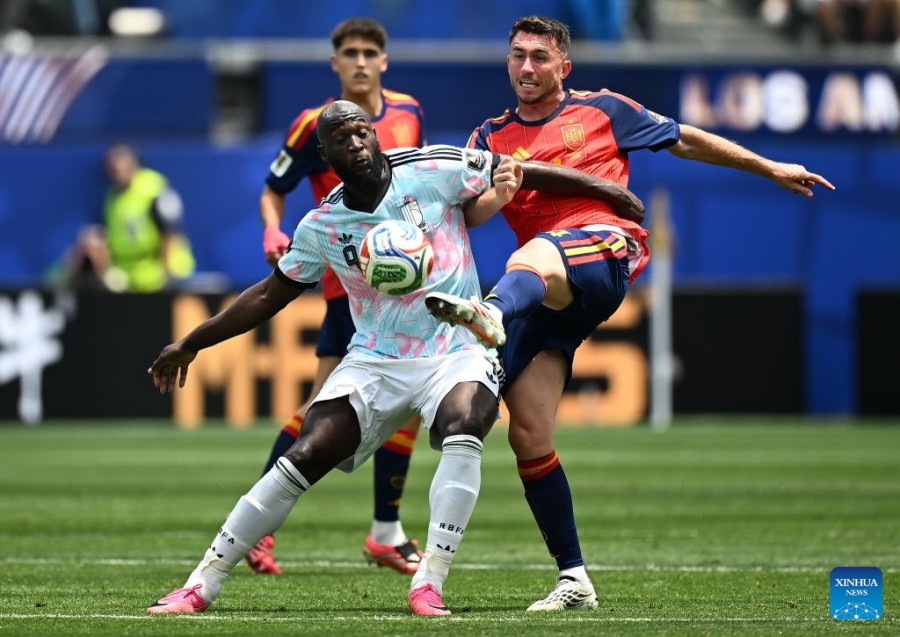
Between them, there are both similarities and deep contrasts. France and Spain are currently considered to be the places that train the most world-class talents.
France benefits from the "talent mine" of Paris, which has the highest concentration of football talents in the world. Spain has 2 core regions: Barcelona and the Basque Country.
The influence of the Basque Country is deeply imprinted in the EURO 2024 championship, while the treble in the 2008-2012 period was built on Barcelona's legendary framework.
The intersection and connection between the two football backgrounds is also very strange.
Coach Didier Deschamps' hometown is right next to the Spanish border. Conversely, Aymeric Laporte - the French center-back of Basque origin whom Deschamps once ignored - is now a pillar of the Spanish national team's defense.
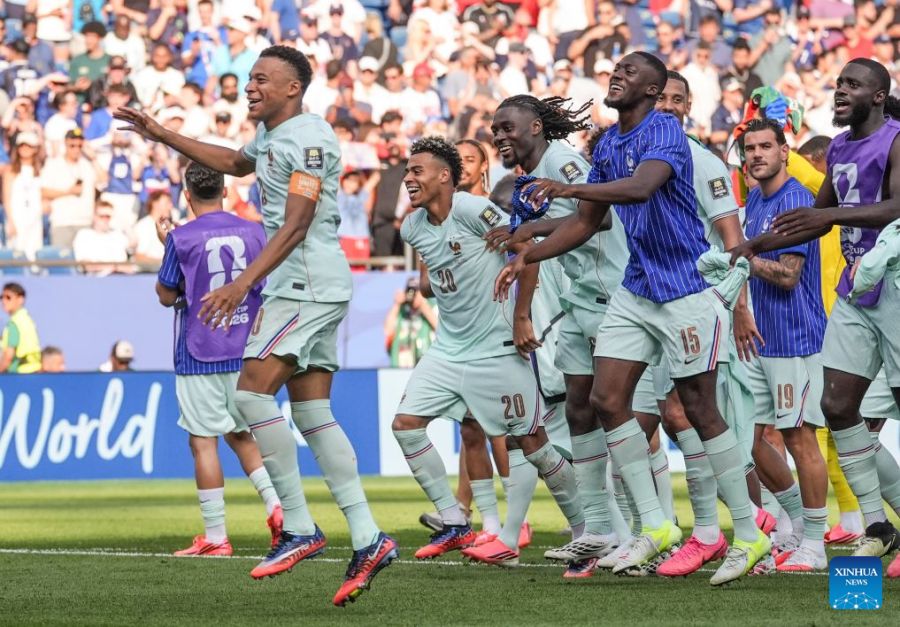
At the club level, when Paris Saint-Germain reached its peak, it was thanks to the Spanish strategist, Luis Enrique. Conversely, Real Madrid also once dominated the Champions League with a hat-trick of championships under the French legend, Zinedine Zidane.
While the French gave birth to the European C1 Cup, Spanish clubs dominated this tournament. In 25 seasons from 2000 to 2024, Spain won the championship 12 times thanks to Real Madrid or Barcelona, while France did not.
However, France soon cleverly took advantage of exporting players to top European leagues to accumulate experience, which Spain later also applied by combining the Real-Barca framework with stars playing in the Premier League.
Currently, the captains of both sides are representing 2 completely opposite football philosophies.
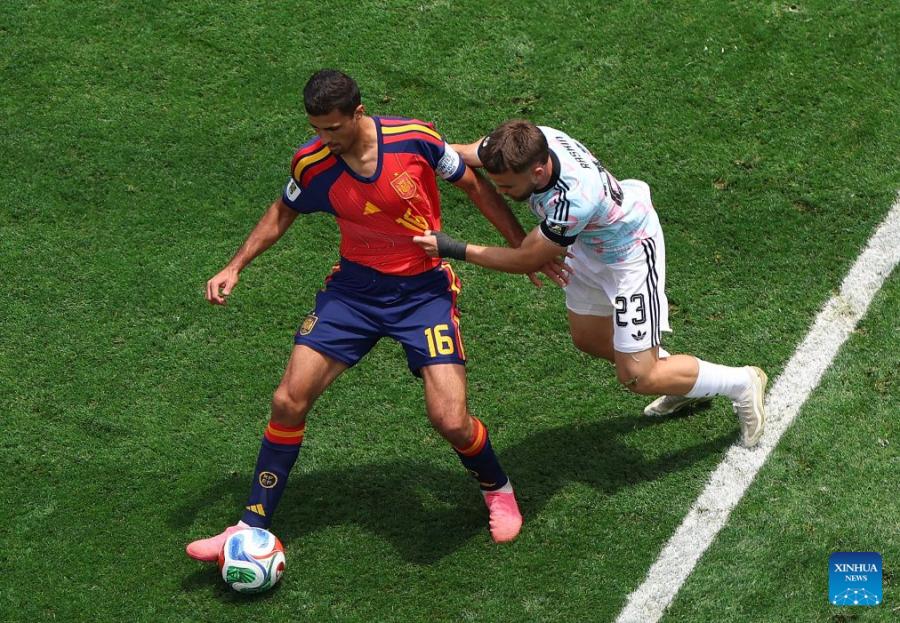
France possesses a super fast and breakthrough striker, Kylian Mbappe. Meanwhile, Spain is operated by a midfielder who regulates the play, Rodri, although he has a superior physique to previous generation midfielders.
Historically, Spain was a revolutionary that changed the mindset of world football with the ball control style of Pep Guardiola and Vicente del Bosque.
France does not redefine the game, but they play it in the best way thanks to the perfect combination of artists and physical athletes, like the way they have Zidane, Thierry Henry before and Mbappe, Michael Olise now.
At this time, France may have more individuals capable of deciding the match, but Spain has a strongly connected team.
Therefore, this semi-final is not only to find the name to enter the final match, but also to affirm which side is the country with the strongest football background in the past 30 years.


